
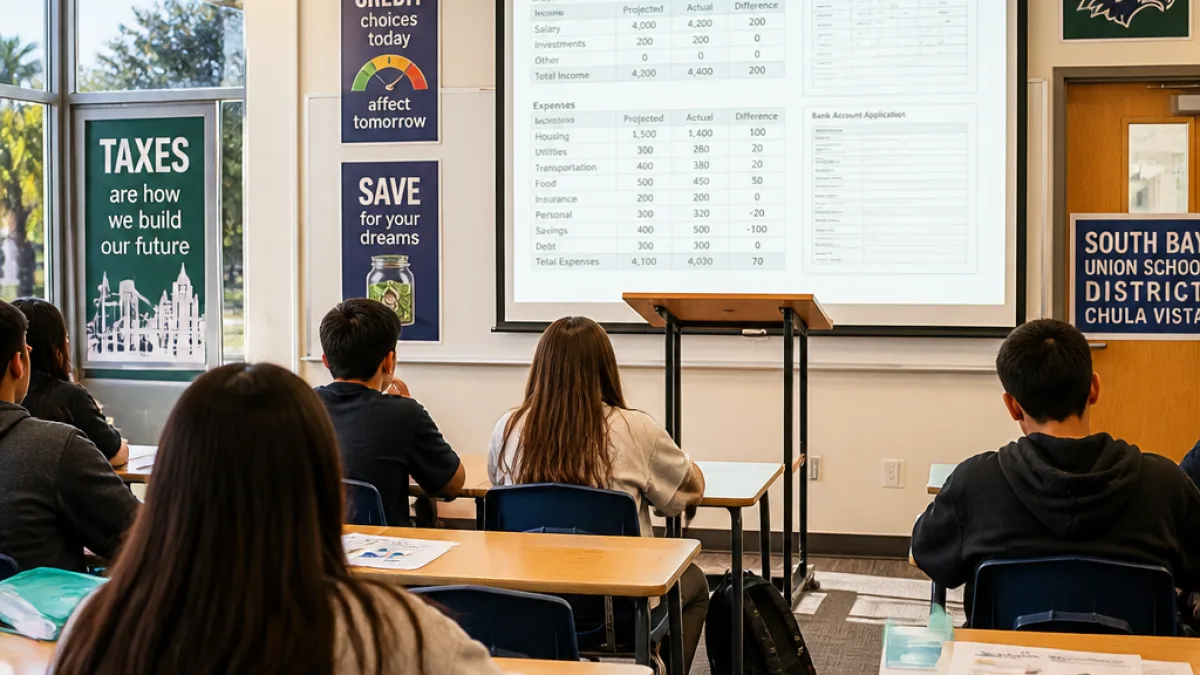
CHULA VISTA, Calif. — One year before California will require a semester of personal finance for high school graduation, a Chula Vista teacher has already put a full course into practice, giving students hands-on experience with budgeting, taxes and saving.
Local classroom ahead of state mandate
Allison Saiki, who teaches at Olympian High School in the Sweetwater Union High School District, launched a financial literacy class in 2025 after nearly two decades in the district. Her work comes as the California Legislature prepares to make personal finance a mandatory component of the high school curriculum under AB 2927, which takes effect next year.
Saiki said she began developing the curriculum in 2019 while teaching financial algebra and saw an opportunity to make mathematics more relevant by tying it to real-life money management. She sought out established resources, obtained certification through Next Gen Personal Finance and spent years building lessons she considered essential for teens entering adulthood.
“And now I have California behind me to say, yes, we do need this for our kids,”
Saiki told ABC 10News the law’s adoption validates the need she identified years earlier. She is currently the only instructor teaching financial literacy in the Sweetwater district and among a small number of teachers in San Diego County offering the course.
Course focus and classroom practice
The class emphasizes practical, everyday financial skills rather than abstract theory. Saiki’s syllabus is organized around core questions that guide classroom units and student projects. Topics include earning, protecting and growing money, as well as paying what is owed and turning knowledge into action.
- Budgeting and saving
- Understanding income and taxes
- Checking accounts and financial tools
- Credit, debt management and protection
- Putting financial plans into practice
In an observed class, students were challenged to apply lessons to realistic scenarios and make choices about banking, spending and long-term planning. Saiki said the approach helps pupils see the direct application of math and decision-making in everyday life.
Implications for Chula Vista students and families
With the new state requirement looming, Saiki’s program provides a local template for other schools in the district and county that will need to meet the mandate. School districts must prepare to offer a semester-long course that satisfies graduation rules; finding trained teachers and approved curricula will be part of that rollout.
| Course Unit | Focus |
|---|---|
| How do we earn money? | Income, employment basics |
| Where do we put our money? | Banking, accounts and tools |
| How do we grow our money? | Saving, investing fundamentals |
| How do we pay what we owe? | Credit, loans and debt management |
District officials did not immediately provide details on how Sweetwater Union High School District plans to expand the offering, but Saiki’s experience highlights several immediate needs: teacher training, curricular materials and classroom time to meet the mandated semester length.
Students in Saiki’s class say the lessons are useful for decisions they expect to face soon, including managing their first paycheck and understanding the basics of taxes. Saiki described the work as bridging classroom learning and the real financial choices young adults make.
As California moves toward uniform personal finance instruction across high schools, programs developed by local educators like Saiki may serve as models for other campuses in Chula Vista and beyond. Her class represents an early step in preparing the district’s students for a requirement that will affect every graduating class statewide.















