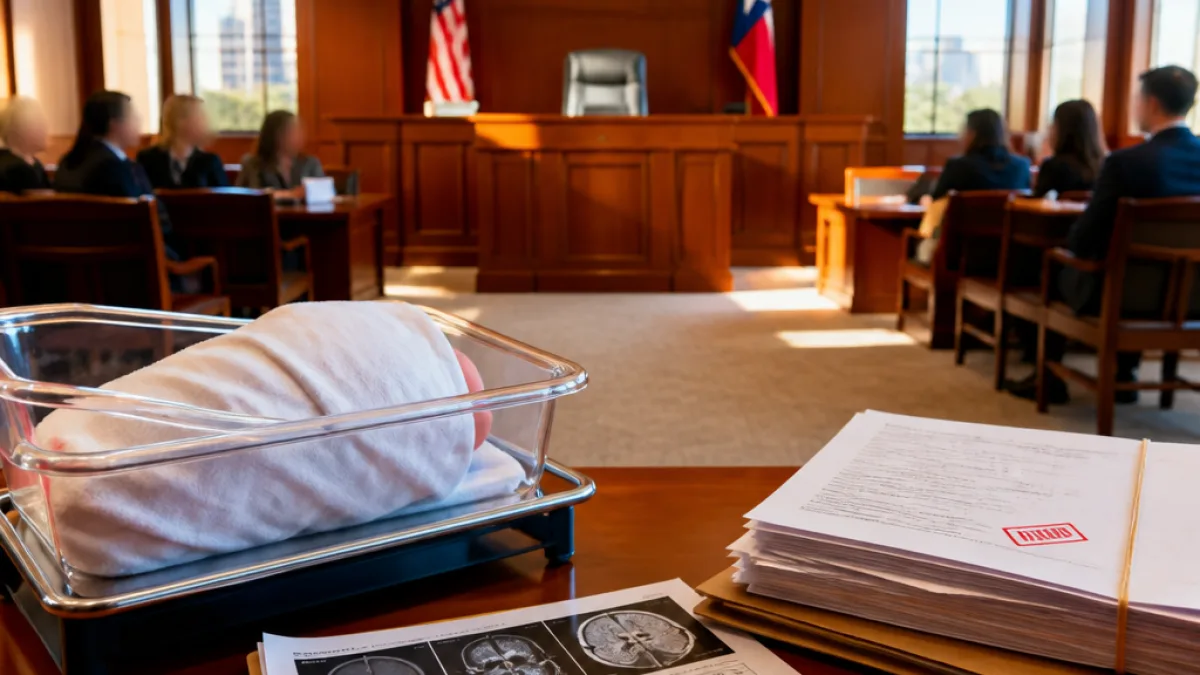
DALLAS — A California couple and their surrogate faced off Tuesday in a Dallas courtroom as the dispute over a newborn with a serious congenital heart defect intensified, with each side contesting who should have authority to make medical decisions for the child.
The couple, Nausheen Gilkar and Omar Ahmed, testified that the infant — whom they have named Rumi — has “declined significantly” since birth and is experiencing complications they say stem from a postnatal procedure. The surrogate, McKenna West, has sought sole conservatorship and has called the child Gabriel.
What was said in court
On the witness stand, Gilkar described the couple’s anguish and asserted parental rights while she wept. In court she said,
"He's our child," Nausheen Gilkar said, wiping away tears on the witness stand. "She's unstable."
West, meanwhile, told the judge she had been 23 weeks pregnant when she made an appointment for an abortion — a decision she said she did not ultimately feel comfortable carrying out. West said she believed the baby, despite the diagnosis, "had a great chance at survival and a great chance at leading a long life."
Case background and current posture
West flew from Alaska to Texas and gave birth on Aug. 12 in that state, where most abortions are banned. After the birth, the couple obtained a restraining order barring West from seeing or holding the baby. The judge did not issue a final ruling on custody or conservatorship at Tuesday’s hearing; the restraining order remains in place pending further court action.
Attorneys representing West say she is pursuing sole conservatorship to make medical decisions for the newborn. The couple opposes that request and contends attempts to deny them parental rights stem from disagreement over their earlier position that the pregnancy be terminated.
The infant’s medical condition
Court documents filed by the couple’s lawyer before Tuesday’s hearing describe the newborn as being in critical condition and possibly suffering from complications following a post-birth procedure. Doctors have diagnosed the baby with hypoplastic left heart syndrome — a congenital defect in which the left side of the heart is underdeveloped and cannot pump blood normally.
| Detail | Information |
|---|---|
| Birthdate | Aug. 12 |
| Parents (intended) | Nausheen Gilkar and Omar Ahmed |
| Surrogate | McKenna West |
| Medical condition | Hypoplastic left heart syndrome |
Legal and political dimensions
The dispute has drawn attention beyond the courtroom, with right-to-life groups and several Republican officeholders aligning with West. The case highlights how state abortion restrictions and varying surrogacy laws can complicate cross-state arrangements when medical emergencies arise. Texas’ near-total ban on abortion and its legal landscape form the backdrop for the conflict, according to court testimony.
Attorneys for both sides asked the judge for relief: the couple requested recognition of their parental rights and continued protection under a restraining order, while West seeks formal conservatorship so she can make medical decisions for the infant.
What comes next
It was not immediately clear when the judge would issue an order in the case. The restraining order barring West from contact with the child remains in effect while the court considers competing requests for custody and medical decision-making authority.
Observers and lawyers say the case could raise broader questions about how surrogacy contracts are enforced when parties disagree on prenatal and postnatal choices, and how courts balance the intended parents’ contractual rights with a surrogate’s assertions about the child’s best interests.
- Parties: Intended parents Nausheen Gilkar and Omar Ahmed; surrogate McKenna West.
- Medical issue: Newborn diagnosed with hypoplastic left heart syndrome; reported post-birth complications.
- Legal posture: Couple holds restraining order; West seeks sole conservatorship; no final custody ruling yet.
The case will continue to be monitored by medical and legal professionals given the immediate health needs of the infant and the potential precedents it may set for surrogacy and reproductive law disputes that cross state lines.
Kevin Nakamura, WE NEWS state correspondent, contributed reporting from Dallas.