
Faculty concern grows over incoming students' numeracy
BERKELEY — A University of California, Berkeley mathematics professor has publicly criticized the preparedness of new undergraduates, saying sizable numbers of students arrive lacking basic arithmetic and algebra skills and that instructors are spending class and office hours on topics they expect to have been learned years earlier.
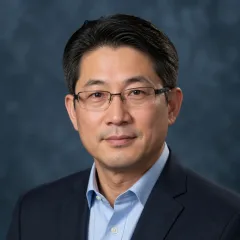
Zvezdelina Stankova, a mathematics professor at UC Berkeley and founder of the Berkeley Math Circle, outlined those concerns in an opinion piece published this month in the San Francisco Standard. Stankova, who earned a doctorate from Harvard and has organized local math competitions, wrote that many students in introductory calculus are not ready for college-level material.
“Some students are five to eight years behind in mathematics,” Stankova wrote, adding that office hours meant for calculus discussion often turn into lessons on fractions and basic algebra.
Her commentary ties the classroom difficulties to changes in admissions processes implemented over the last several years. Standardized testing for UC applicants was phased out in 2020 after then‑UC president Janet Napolitano set aside a task force recommendation to retain the SAT or ACT. The university system made tests optional later that year amid pandemic disruptions and equity concerns, and a court ruling subsequently required UC to be test‑blind through 2025.
Admission standards and diagnostic comparisons
Stankova and other faculty members have argued that removing or sidelining standardized tests has weakened the ability to identify applicants with strong quantitative skills. She is among thousands of faculty who signed letters earlier this year calling for the SAT and ACT to be restored in some form to university admissions.
The op‑ed cites a pre‑2020 diagnostic exam given to Calculus I entrants that showed 71% of students were either ready or nearly ready for the course. Stankova used that figure to contrast what she said is a changed preparedness profile among recent admits.
| Measure | Detail |
|---|---|
| UC Berkeley acceptance rate | 10.5% |
| Pre‑2020 Calculus I diagnostic | 71% ready or nearly ready |
| UC testing policy (timeline) | Phased out in 2020; optional later that year; court required test‑blind through 2025 |
The campus maintains one of the lowest acceptance rates among public universities in the United States, admitting about 10.5% of applicants, a fact Stankova mentioned when arguing that selectivity alone does not guarantee incoming students’ preparedness in specific subject areas.
Classroom impact and faculty response
According to Stankova, the academic consequence at the classroom level is significant: instructors spend time reteaching middle‑school material instead of covering intended college curriculum. That dynamic, she wrote, shifts office hours from advanced discussion to remedial instruction.
- Faculty say remedial needs can reduce course depth and slow progression through required material.
- Some instructors and departments have considered increasing preparatory offerings or prerequisite checks to address gaps.
- Other faculty who have expressed concern advocate for reinstating standardized testing as part of a broader assessment of applicants.
University spokespeople and administrators did not immediately provide a response to Stankova’s op‑ed for this report. UC Berkeley has previously defended its admissions approach as part of efforts to broaden access and address inequities that standardized testing can magnify.
Broader debate over testing and equity
The debate Stankova joined is part of a national conversation over how best to balance academic standards with equitable access. Critics of test‑optional and test‑blind policies argue that eliminating standardized measures makes it harder to compare applicants from disparate educational backgrounds; proponents contend that tests can reinforce socioeconomic disparities and that admissions should rely on a fuller portfolio of achievement.
For Berkeley residents and campus stakeholders, the dispute raises practical questions about how the university supports students who arrive underprepared and how departments adapt curriculum and advising to ensure degree progress. The mathematics department’s experience also underscores connections between secondary education, college readiness, and admissions policy.
As UC systemwide rules evolve and the court‑mandated test‑blind period continues through 2025, local faculty and administrators will be watching outcomes closely — both in student performance in gateway courses like calculus and in broader measures of academic success.