
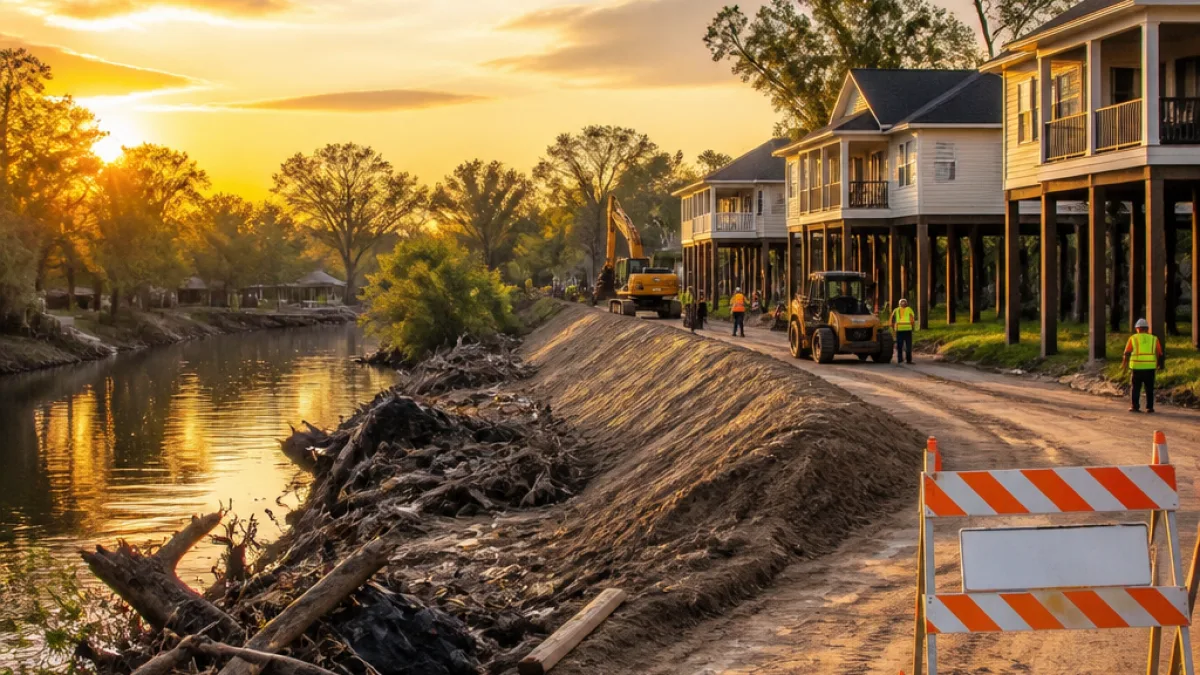
Ten years after torrential rains inundated Baton Rouge and surrounding parishes, the event known locally as the Great Flood of 2016 remains a defining moment for the region. The storm reshaped priorities for development, infrastructure spending and emergency planning while leaving visible changes across neighborhoods and bayous.
Flood response, federal dollars and local projects
Beginning in the early hours of Aug. 11, 2016, relentless rainfall produced flash flooding that overwhelmed roads, homes and businesses in Baton Rouge, Lafayette and nearby areas. In the immediate aftermath, the area received billions in federal dollars for rebuilding, home elevation, and flood-control work. Those investments have produced a mix of completed projects, ongoing work and individual property-level changes.
Local officials and residents point to multiple pieces of infrastructure and cleanup work completed or advanced since the flood:
- Laurel Ridge levee in Ascension Parish — completed.
- Bayou debris removal in Livingston Parish — a $50 million effort to clear blockages.
- Work on Bayou Manchac — straightening and de-snagging to improve flow.
- Ditch unclogging in Baton Rouge to improve local drainage.
At the same time, larger regional initiatives remain in various stages of planning or construction, including the Comite River Diversion Canal and the so-called Five Bayous project aimed at reducing basinwide flood risk.
| Project | Parish | Notes |
|---|---|---|
| Laurel Ridge levee | Ascension | Completed |
| Bayou debris removal | Livingston | $50 million cleanup |
| Bayou Manchac work | Regional | Straightening and de-snagging |
Home elevations and local resilience
One direct, visible outcome of recovery programs has been the elevation of homes in lower-lying neighborhoods. In Ascension Parish, officials say residential elevation has been part of a grants program meant to reduce future flood losses.
- Since 2020, 44 homes in Ascension have been elevated through the parish grants program, with five more pending.
- An additional 19 homes received initial approval for grants but did not complete the process; some of those properties were elevated through other means.
A drive along La. 42 in Ascension still offers a visible reminder of the flood’s reach: houses perched on piers or earthen mounds in areas that required military high-water vehicles to pass during the 2016 event.
“This is a flood of epic proportions. This makes the flood of 1983 a mere distant memory,”
The words came from then-Central Mayor Jr. Shelton days after the storm. The phrase captured a local sense that the 2016 flood had rewritten expectations about rainfall, runoff and vulnerability across the Baton Rouge region.
Policy shifts and regional cooperation
The scale of damage and the federal response prompted changes in how local governments approach development and drainage. Officials have said the catastrophe spurred new drainage planning efforts and pushed for better coordination across parish lines, tied in part to enhanced data-sharing and joint projects to manage basinwide water flow.
While several projects have reached completion, planners and residents alike emphasize that flood mitigation is a long-term endeavor. Large-scale constructions such as diversion canals and multi-bayou programs require years of permitting, funding and construction, and their full benefits will continue to be realized over time.
As Baton Rouge marks the 10th anniversary, memories of flooded classrooms, submerged vehicles and neighborhoods forced to shelter in place continue to inform conversations about growth, infrastructure and emergency preparedness. For many residents, the visible elevated houses, cleared bayous and new levees are reminders both of loss and of investments intended to prevent a repeat of 2016.
Local officials and community groups say the anniversary is an occasion to review progress and renewed commitments — even as they acknowledge that the region remains vulnerable and that additional work is needed to reduce future risk.


















