
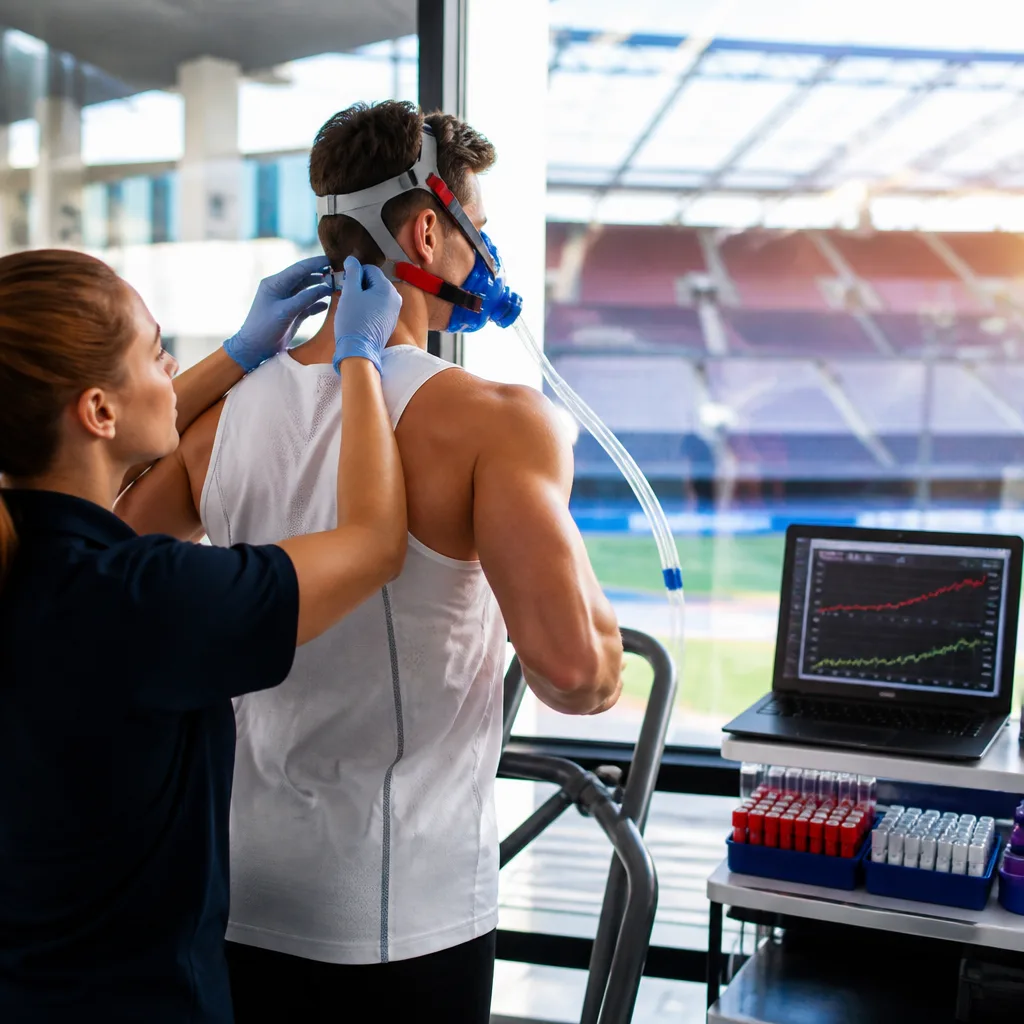
John Korir, ranked among the world’s leading marathon runners, has enlisted university-based exercise scientists to seek marginal gains that could deliver a major competitive advantage. At Wake Forest University’s Kentner Stadium researchers from the Department of Health and Exercise Science carried out bespoke testing to define how Korir’s heart, lungs and muscles respond under race-like stress.
Targeting the biochemical limit
The immediate aim of the assessment was to identify Korir’s lactate threshold — the intensity of effort at which lactic acid begins to accumulate in the blood faster than the body can clear it, triggering progressive muscular fatigue. Staying at or just below that physiological boundary can allow endurance athletes to sustain a faster pace for longer; crossing it often precipitates rapid performance decline.
Professor Peter Brubaker, who led the academic team, described the work as translating laboratory measures into actionable coaching cues. The researchers provided Korir and his coach with precise data on training and racing paces, so that sessions can be programmed with a clearer understanding of the intensity that the athlete can maintain without provoking excessive lactate accumulation.
"He's obviously got so much God-given talent already, but his talent can be tweaked with the science,"
Korir said the testing represents his first full scientific evaluation after moving from Kenya, where access to specialised lactate analysis was limited. He told researchers the collaboration was an attempt to bring empirical rigour to his preparation: to convert long-held sensations and intuition into measured, repeatable thresholds.
From lab outputs to training inputs
Exercise physiologists use a suite of measurements to construct an athlete’s metabolic profile. Typical outputs include the speed or power at which lactate begins to rise, heart-rate zones correlated with those intensities and the athlete’s ventilatory response to incremental work. Those numbers can then be translated into concrete targets for interval sessions, tempo runs and recovery efforts.
In practical terms, the team at Wake Forest will advise on how to pace long runs and tune workouts so Korir spends the maximum possible time training at intensities that stimulate adaptation without causing the excessive fatigue that results from repeatedly overshooting the threshold.
The approach illustrates a broader shift in elite endurance sport: marginal gains are increasingly chased with laboratory tools that quantify physiology rather than relying solely on subjective feedback. For athletes with world-class capacity, a fractional improvement — often described as just 1 per cent — can be the difference between winning and finishing outside the medals.
- What was measured: physiological responses tied to endurance effort, with a focus on lactate dynamics.
- Why it matters: identifying the intensity an athlete can sustain without rapid fatigue helps optimise training and race pacing.
- Immediate use: data will guide Korir’s coach when programming sessions and deciding race tactics.
| Concept | Practical effect |
|---|---|
| Lactate threshold | Defines upper sustainable intensity; informs race pace and tempo training |
| Ventilatory response | Helps link breathing patterns and heart rate to metabolic stress |
There are limits to what laboratory assessment can achieve. Physiological markers fluctuate with training status, nutrition, hydration, illness and environmental conditions such as heat and altitude. Translating a test conducted on a humid summer afternoon into performance on a cool, windy race day therefore requires judgement and continual monitoring.
Nevertheless, bringing sport science into the training fold can sharpen decision-making. For Korir, who aims to set a new personal or national standard this year, the testing represents a pragmatic attempt to edge closer to his peak: not by overhauling talent, but by fine-tuning the interplay of biochemistry and pacing so that the body spends more time operating in its most efficient zone.
As elite endurance sport becomes ever more competitive, such collaborations between researchers and athletes are likely to become increasingly routine. The Wake Forest project is a reminder that in the margins of performance, precision matters: a small, measured adjustment to intensity can reverberate into substantial improvements over 26.2 miles.









