Community day programme provides structured alternative to residential rehab
A Wolverhampton recovery programme designed as a community‑based alternative to residential rehabilitation has completed eight‑week courses for five groups since it launched in October 2025, City of Wolverhampton Council has said.
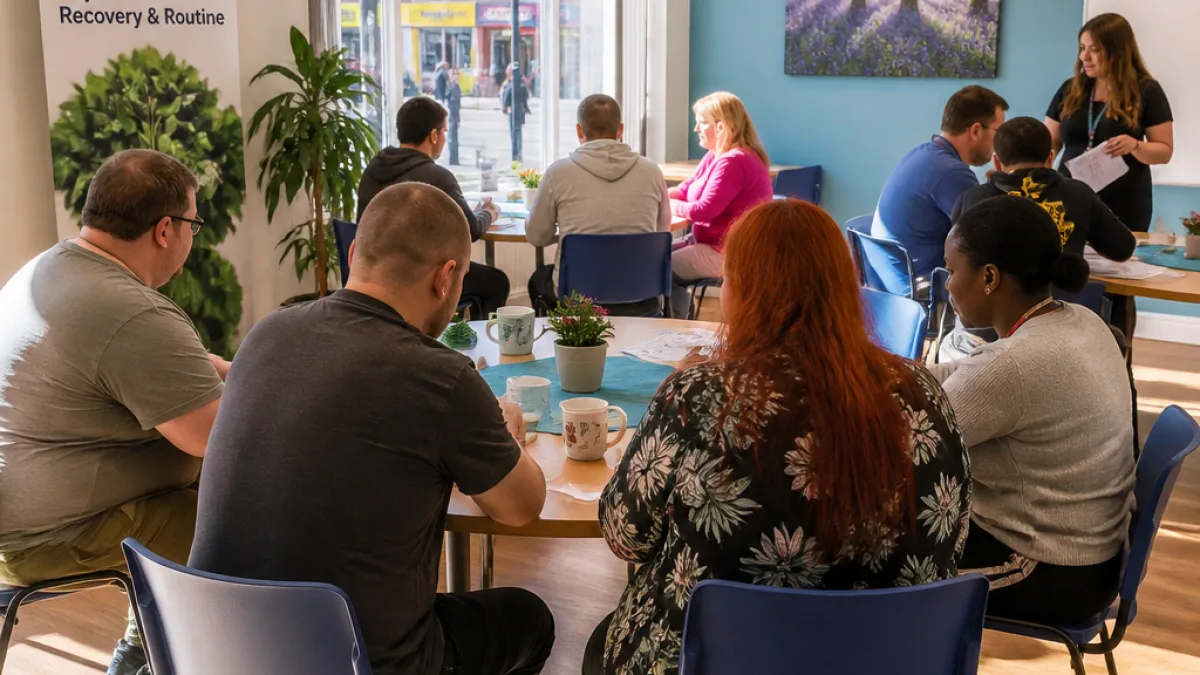
The RISE Day Hab offers a non‑residential route to recovery for people who struggle with drug and alcohol dependence by combining professional support with guidance from those with lived experience. Participants attend sessions four days a week, helping to rebuild routines and remain connected to family, friends and everyday life while receiving targeted support.
"Recovery does not end when treatment finishes, and programmes like RISE play a vital role in helping people rebuild their lives," said councillor Obaida Ahmed.
Sessions cover a range of subjects intended to support long‑term recovery and reintegration. According to the council, groups work through topics such as addiction and recovery, guilt and shame, responsibility, relationships and boundaries, and aftercare. Practical elements include developing life skills, building confidence and fostering supportive social networks.
- Launch: October 2025
- Format: Eight‑week programme
- Attendance: Four days per week
- Completion: Five groups have finished the course
Why the council backed a day‑based approach
The City of Wolverhampton Council commissioned RISE as a community‑based option intended to sit alongside, rather than replace, existing treatment pathways. By keeping participants based in their communities, the scheme aims to preserve family ties and day‑to‑day responsibilities while providing structured support and opportunities to practise new skills in a familiar environment.
Councillor Obaida Ahmed emphasised the continuing nature of recovery, saying that programmes such as RISE provide the structure, support and community connections people need to build resilience and confidence.
| Aspect | Detail |
|---|---|
| Commissioned by | City of Wolverhampton Council |
| Programme length | Eight weeks |
| Frequency | Four days per week |
| Completed cohorts | Five groups |
Supporters of day‑based rehabilitation argue that it can reduce the disruption that residential treatment sometimes brings, particularly for people with dependent family roles or employment commitments. The RISE model intends to combine clinical and peer expertise so that practical recovery skills are established alongside emotional and social support.
Participants reported working on themes commonly associated with sustained recovery: addressing feelings of guilt and shame, clarifying responsibilities, improving relationships and setting healthy boundaries, while planning for aftercare once the eight‑week programme concludes.
Local impact and next steps
Having now seen five groups complete the programme, the council will monitor outcomes to assess its effectiveness in achieving long‑term recovery within participants' communities. The multi‑disciplinary approach—pairing professional services with peer support—reflects a broader trend in community recovery provision aimed at reducing barriers to ongoing engagement with treatment.
For many in Wolverhampton the availability of a structured, local alternative to residential rehab means help can be accessed without losing the anchors of daily life. That continuity may prove especially valuable for those whose recovery depends on maintaining family and community ties while they rebuild routines and confidence.
Further details on RISE and its outcomes were provided by the City of Wolverhampton Council.