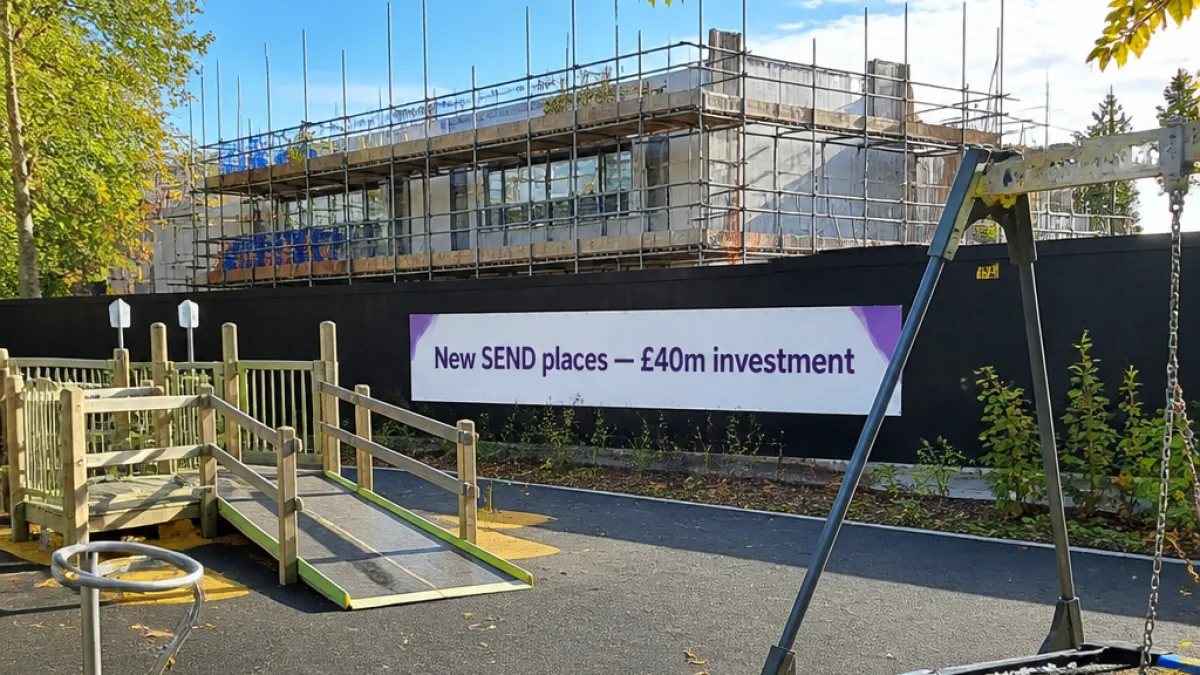
Wokingham Borough Council has set out an ambitious plan to expand local provision for children and young people with special educational needs and disabilities (SEND), committing more than £40 million to create in excess of 600 new places across the borough between 2026 and 2029.
What is being delivered
The programme comprises a mix of new and expanded specialist schools, extra inclusive places within existing mainstream schools and dedicated hubs for young people aged over 16. Council documents say the work is being driven by forecasts of pupil numbers with education, health and care plans (EHCPs), and aims to meet a continuing growth in demand.
- More than 600 additional SEND spaces across all age groups (2026–2029).
- New and expanded specialist schools and additional mainstream inclusive provision.
- Three post-16 training and support hubs, with the first opening in the 2026 autumn term.
- Initial mainstream facilities also scheduled to open throughout the 2026 autumn term.
The council says the first wave of mainstream facilities will be operational during the 2026 autumn term, alongside the first of three post-16 hubs. By the end of 2029 the aim is that, where appropriate, every child will have their SEND requirements met within the borough.
Why the change matters locally
Currently a number of pupils from Wokingham with EHCPs have had to take up places outside the borough — sometimes more than 20 miles away. Council leaders describe this situation as disruptive for families because of travel time, and as financially unsustainable for the authority because of the high costs associated with transport and independent placements.
Independent placements can be considerably more expensive than local options; the council notes such placements can cost up to five times as much as in-borough provision, and the authority is also liable for transport costs where families meet the eligibility criteria. The new programme is presented as both a way to improve stability for pupils and a measure to use limited council resources more effectively.
“Funding more in-borough SEND places is a cost-effective investment that will allow more pupils to be educated in familiar surroundings and alongside their peers,” said Cllr Prue Bray, executive member for children’s services.
In addition to cost savings, officials say increasing inclusive provision in mainstream settings responds to parental preference for more local, mainstream options that still support pupils with a wide range of needs. The council also highlights the educational benefits for all pupils, arguing mainstream inclusion helps neurotypical pupils to understand neurodivergence and other conditions.
Programme timeline and numbers
| Period | Planned delivery |
|---|---|
| Autumn 2026 | First wave of mainstream facilities and first post-16 hub open |
| 2026–2029 | Phased delivery of >600 new SEND places across borough |
| By end of 2029 | Aim that where appropriate every child’s SEND needs can be met locally |
Leaders stress the expansion is planned on the basis of projected EHCP numbers, so the new places are intended to match anticipated demand rather than a static snapshot of need. The council believes building capacity locally will unlock significant savings over time by reducing reliance on costly independent providers and long-distance transport arrangements.
What this means for families and schools
For families, the council says the programme should cut travel times and disruption that come with placements far from home. For mainstream schools, the extra inclusive places will broaden the range of pupils taught within local settings and may require staff development and facility adjustments to meet a wider spectrum of needs.
Wokingham’s plan joins a growing national focus on expanding local SEND provision to reduce out-of-area placements and the financial pressures those create for councils. Details on specific school sites, numbers of places at each setting and precise timelines for individual projects were not included in the council summary published with the announcement.
The council will need to balance capital investment with ongoing revenue costs and expected savings. As the programme progresses residents, families and school leaders will be watching for clarity on the phasing of individual projects, transport policies and how mainstream and specialist settings will be supported to deliver the expanded offer.