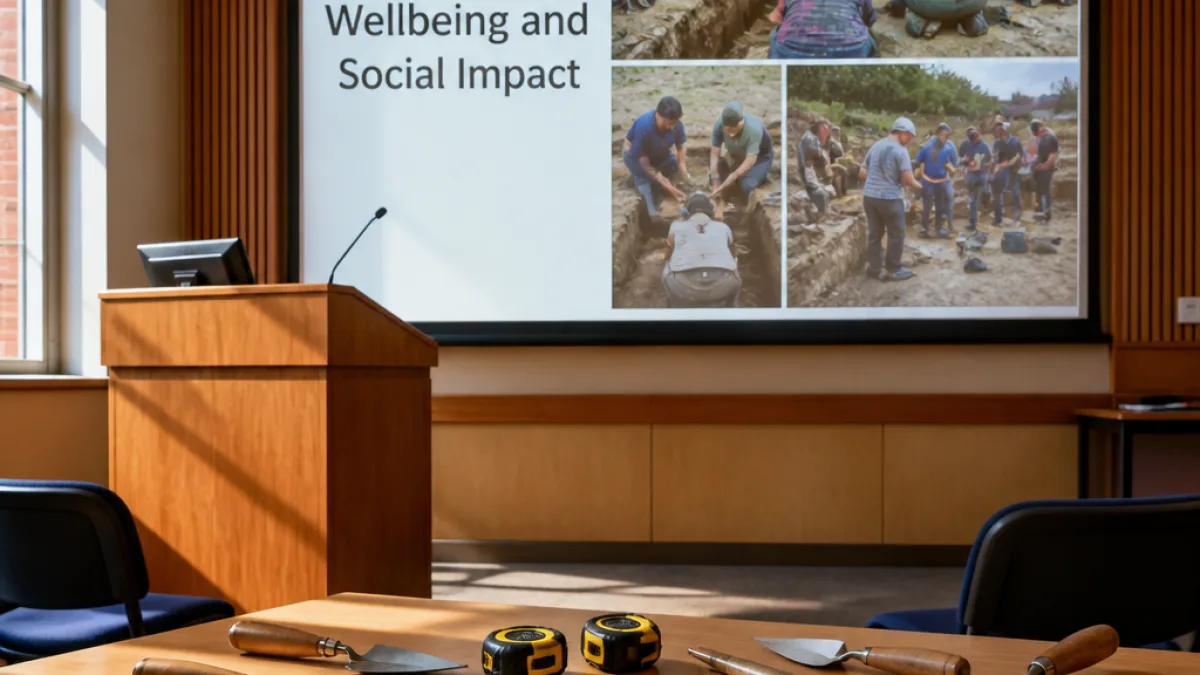
A University of Winchester academic has been appointed visiting professor at the University of Milan and will this autumn lead a 10‑lecture series examining the links between archaeology, wellbeing and social impact.
From trenches to therapy
The lectures will be delivered by Dr Paul Everill, reader in archaeology and deputy head of the School of Humanities at the University of Winchester. The series, titled "Archaeology, wellbeing and social impact", will present the idea that archaeology is not only a field of academic enquiry but also a potential therapeutic tool for public participants.
Dr Everill said his recent work has concentrated on what he calls "Wellbeing Archaeology", and that the common thread across his research is an interest in the social impact of the discipline. He told colleagues the Milan seminars will explore that aspect from multiple perspectives.
"Most recently, my work has focused on 'Wellbeing Archaeology', and the capacity the discipline has to positively impact the mental health of public participants... I have come to the realisation that the common thread in my research... is an interest in the social impact of archaeology and this seminar series will explore that aspect from a variety of perspectives."
Practical tools and veteran programmes
Dr Everill, in collaboration with Dr Karen Burnell, associate professor of applied psychology at Solent University, co‑developed the AMPHORA toolkit—short for Authentic and Meaningful Participation in Heritage or Related Activities. Launched in 2022, AMPHORA is designed to help ensure heritage projects deliver mental health benefits safely and effectively.
The idea of archaeology as a therapeutic intervention is not new in the UK. The Ministry of Defence’s Operation Nightingale, launched in 2011, has been cited as an example of archaeological activity used to support veterans. Research involving Dr Everill and Dr Burnell has examined the psychological effects of participation in archaeological digs targeted at former service personnel.
Participants in such studies have reported a range of positive outcomes, including reduced depression and anxiety, less isolation, and improved self‑worth and overall wellbeing—findings that underpin the case for more structured, supportive approaches to public engagement in heritage projects.
Local consequences and wider questions
The appointment and lecture series underline the University of Winchester’s role in developing applied approaches to heritage. For Winchester residents and organisations, the work raises practical questions about how local archaeological projects are run and the safeguards needed when encouraging public participation for therapeutic ends.
AMPHORA and similar guidance are intended to provide frameworks so that community groups, museums and volunteer dig teams can offer meaningful experiences without unintentionally causing harm. The adoption of those guidelines beyond the UK—for example, elements being used in Ukraine’s Spiritual Recovery Through Culture programme—also points to the international interest in heritage as a route to recovery after trauma.
- Lectures: 10 in total; hosted by the University of Milan under Dr Everill’s visiting professorship.
- Toolkit: AMPHORA (launched 2022) — Authentic and Meaningful Participation in Heritage or Related Activities.
- Context: Past veteran programmes such as Operation Nightingale (2011) provide precedent for therapeutic archaeology.
| Item | Detail |
|---|---|
| Visiting role | University of Milan – visiting professor |
| Lecture theme | Archaeology, wellbeing and social impact |
| Number of lectures | 10 |
| Toolkit | AMPHORA (launched 2022) |
For Winchester the research highlights a growing emphasis on the applied value of local heritage. Archaeological projects here and across Hampshire attract volunteers and school groups; as interest in the potential wellbeing benefits grows, so too does the need for clear best practice, training and partnerships between archaeologists, mental health professionals and community bodies.
The University of Winchester has in recent years positioned itself as engaged with community impact, and this international appointment will bring fresh attention to its work—while also posing practical choices for local partners on how to make heritage participation both meaningful and safe.