The United Kingdom has returned to the global top tier in the Organisation for Economic Co-operation and Development’s (OECD) latest Programme for International Student Assessment (Pisa), yet the same survey raises sharp concerns about teenagers’ ability to evaluate and think critically about texts.
Stronger test scores, but a mixed picture
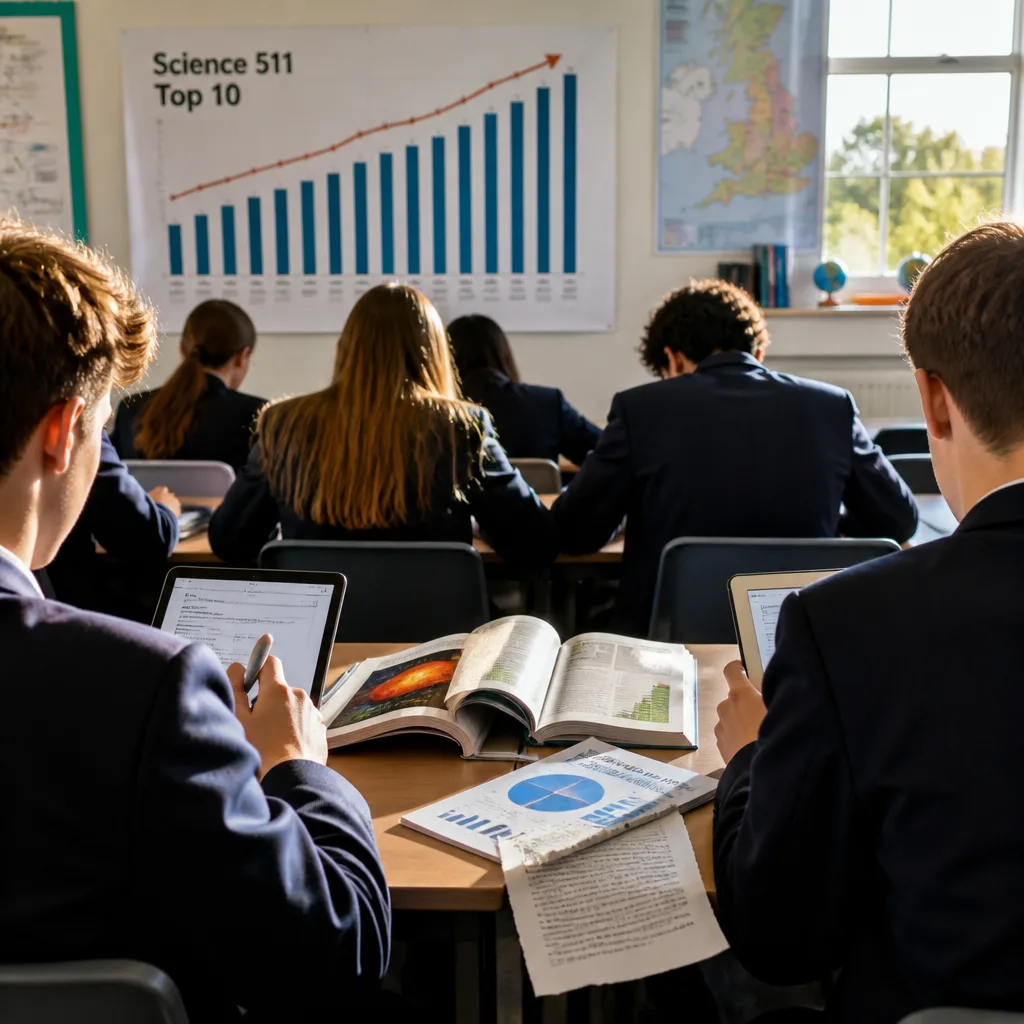
Across 91 countries and economies, more than 760,000 15-year-olds were assessed. The UK recorded an above-average performance in the three core domains: 511 points in science, compared with an OECD average of 482, a rise of 12 points since the previous Pisa assessment in 2022. The UK also scored 494 in reading and 488 in maths. England’s breakdown was even stronger in science at 516, with 497 in reading and 492 in maths.
These figures place the UK among a small group of education systems within the top 10 in all three subjects — a notable achievement that suggests recent policy and classroom changes may be yielding measurable gains in attainment.
But reading comprehension and critical evaluation are faltering
The OECD report, however, paints a more troubling long-term trend in literacy. Since 2015, average reading scores across OECD countries have dropped by 28 points — roughly equivalent to more than a year of learning. The organisation also estimates that about one in five 15-year-olds fail to reach the basic level of proficiency across science, reading and mathematics.
Crucially, the Pisa survey signals that the nature of reading itself is shifting. Students are increasingly less able to integrate information from different sources, assess the credibility of material, and apply critical judgement — skills now considered central to reading in a digitally saturated environment. The report highlights a rise in so-called “hasty readers”, pupils who rush through texts and supply quick but incorrect answers; the proportion of such students has almost doubled since 2018.
- UK Pisa science score: 511 (OECD average 482).
- UK reading: 494; maths: 488.
- England: science 516; reading 497; maths 492.
- OECD-wide reading drop since 2015: 28 points.
Technology, distraction and the classroom
The Pisa analysis also examines classroom conditions and the influence of digital devices. More than one in four students reported that classmates were distracted by devices in most or every science lesson. The OECD notes that moderate use of technology for learning can be associated with stronger performance, while suggesting excessive or unmanaged use may be problematic — though the final sentence in the source material is incomplete and does not specify the full evidence on the harms of heavier use.
Policy-makers and educators face a nuanced challenge: technology can support learning, but the rise of quick, skim-based reading habits appears to be eroding deeper comprehension and evaluative skills that Pisa now measures.
Context and consequences
The decline in reading proficiency appears to predate the COVID-19 pandemic, the OECD says, with falling levels of reading for enjoyment and greater reliance on digital content likely contributors. That suggests recovery will not be achieved simply by restoring pre-pandemic classroom routines; instead, targeted efforts are needed to rebuild habits of sustained, critical reading and to teach students how to navigate and judge a proliferating information environment.
For policy-makers the findings present both good and bad news. The stronger science numbers imply successful interventions or curriculum emphasis in that subject, while the reading trends demand a strategic rethink about literacy teaching, classroom device policies and how schools cultivate deeper cognitive skills such as synthesis and source evaluation.
| Measure | UK | OECD average |
|---|---|---|
| Science | 511 | 482 |
| Reading | 494 | — |
| Maths | 488 | — |
As governments and school leaders digest the Pisa results, the dual message is clear: celebrate the recovery in attainment, particularly in science, but urgently address the deeper and longer-term erosion in reading skills that underpin success across the curriculum and into adult life.