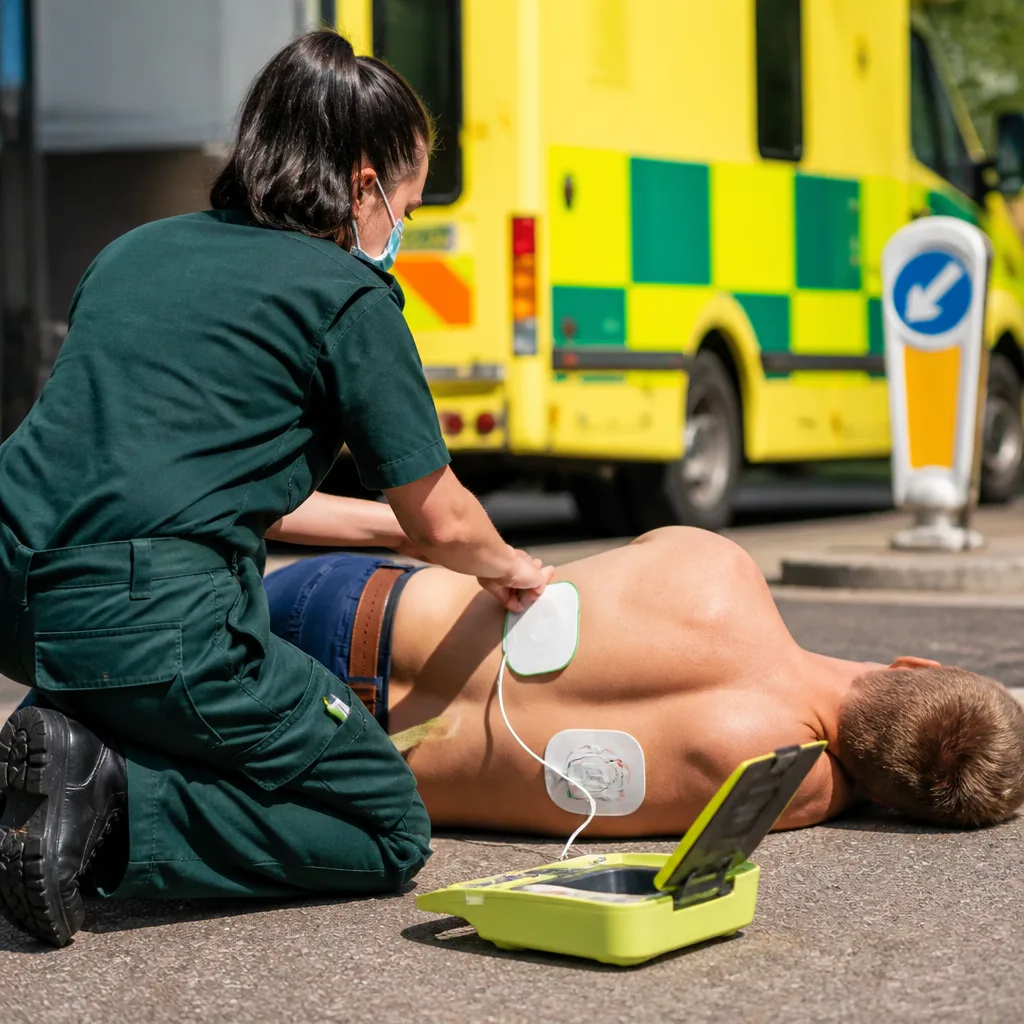
Placing automated external defibrillator (AED) pads in an anterior–posterior (front–back) configuration was linked to a markedly higher chance of return of spontaneous circulation (ROSC) in a new observational study, according to researchers at Oregon Health & Science University.
Study finding and its scale
The paper, published in JAMA Network Open, compared outcomes for patients receiving defibrillation with pads positioned in the conventional anterior–lateral (front–left side) arrangement and those treated with an anterior–posterior (front–back) layout. The investigators report an adjusted odds ratio of 2.64 for ROSC when pads were placed front–to‑back versus the standard anterior–lateral position.
The result indicates that, in this dataset, patients whose pads were positioned front–to‑back were more than two and a half times as likely to regain a sustainable heartbeat in the immediate aftermath of a cardiac arrest than those treated with the usual pad placement.
What the finding means — and what it does not
The study is observational, not randomised, so it can identify associations but cannot prove that pad placement alone caused the better outcomes. Factors such as patient anatomy, the circumstances of the arrest, timing of CPR and defibrillation, and operator experience may all influence results and could confound the association.
Authors of the paper emphasise the need for further research — ideally prospective, controlled trials — before international resuscitation guidelines are amended. Current guidance continues to recommend anterior–lateral pad placement as the default approach.
Practical implications for clinicians and bystanders
If the finding is borne out by subsequent studies, the implication is straightforward: a simple alteration in pad position could become a low‑cost intervention to improve survival in out‑of‑hospital and in‑hospital cardiac arrest. Changing practice would require retraining of clinical staff, updating AED labelling and public education materials used by first‑aid courses and public access defibrillator networks.
- Reported effect size: adjusted odds ratio of 2.64 for ROSC with anterior–posterior pads.
- Study type: observational analysis published in JAMA Network Open.
- Current guidance: remains anterior–lateral; authors call for more research.
| Pad placement | Reported association with ROSC |
|---|---|
| Anterior–posterior (front–back) | 2.64× odds of ROSC versus anterior–lateral |
| Anterior–lateral (front–side) | Current guideline standard |
Context and next steps
Defibrillation pad placement influences the path that electrical current takes through the chest and heart. The anterior–posterior configuration places one pad on the chest and the other on the back, which may better traverse the cardiac silhouette in some patients — a plausible mechanistic explanation for an observed difference in shock efficacy. However, plausibility is not proof: the observational nature of the evidence leaves room for alternate explanations.
Researchers and resuscitation bodies will need to weigh the magnitude of the reported association, potential confounders, feasibility of retraining, and safety considerations. Randomised controlled trials or carefully designed pragmatic studies that record timing, chest size, pad position confirmed by photo or device telemetry, and longer‑term outcomes such as survival to hospital discharge and neurological function would strengthen the evidence base.
For the public and for first responders, the immediate message is cautious. The new study is promising and suggests a readily implementable modification could yield clinically meaningful gains, but it does not yet justify overturning current recommendations. Those administering defibrillation should continue to follow established guidance while researchers pursue confirmatory studies.
Public awareness campaigns and AED manufacturers will be watching developments closely: if later trials confirm benefit, the shift to anterior–posterior pad placement would be one of the simplest yet most effective changes to emergency care practice in decades.