The Australian Antarctic Division (AAD) will mount four strategic science campaigns over the next three years and contribute to the international programme Antarctica InSync as part of a strengthening long‑term monitoring effort, conference delegates were told in Hobart.
Ships and long records: the backbone of Southern Ocean science
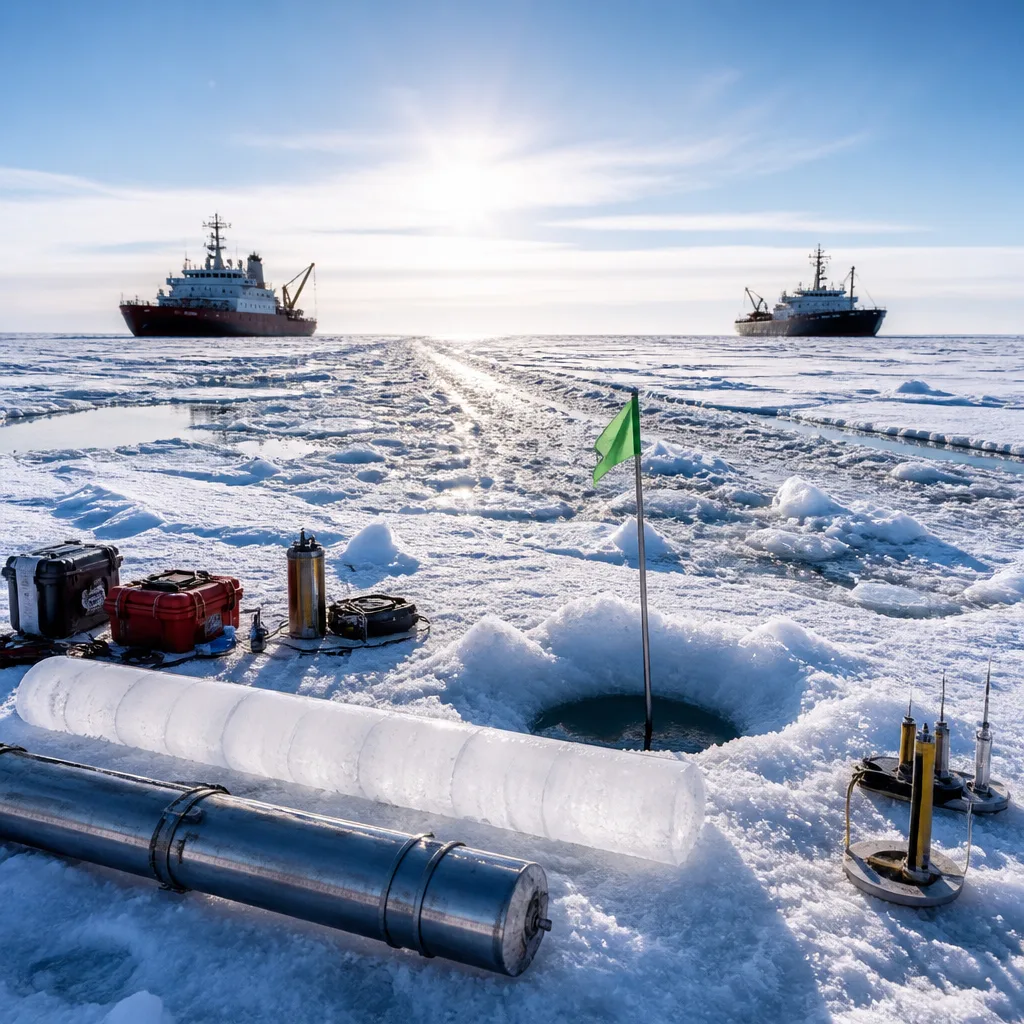
Presenting at the biennial Australian Antarctic Research Conference at the University of Tasmania, the head of the AAD’s Antarctic Monitoring Program set out the scale of shipborne observation that underpins understanding of the region.
Between 1990 and 2026, voyages by the Australian icebreaker Aurora Australis, the resupply vessel RSV Nuyina, France’s l’Astrolabe and CSIRO’s RV Investigator amounted to 379 voyages and almost 2.5 million kilometres travelled, producing some 137 million measurements. Those measurements span physical oceanography, meteorology and biological sampling — a sustained observational effort that is increasingly valuable as a climate baseline.
| Metric | Value |
|---|---|
| Voyages (1990–2026) | 379 |
| Distance travelled | ~2.5 million km |
| Measurements collected | 137 million |
Ship-based time series remain essential because they combine repeated physical sampling with biological surveys that cannot yet be replaced by remote sensing. The Continuous Plankton Recorder (CPR) — a silk ribbon trawl towed behind ships — exemplifies that longevity: the global CPR Survey began in 1931 and the AAD has operated it in the Southern Ocean since 1991.
Detectable warming and a lag in the ocean signal
Analyses of data gathered by the Aurora Australis from 1991 to 2020 show a close agreement with global records held by the UN’s World Meteorological Organization and reveal a pattern of increasing warm anomalies.
“With the Aurora’s data alone, we can tell the story we all know by now, which is that both the ocean and the air are getting warmer.”
The regional detail matters. For the transects covered by the vessel, atmospheric temperatures rose on both sides of the latitude 50°S — a critical divide between Antarctic and mid‑latitude climates. Sea surface temperatures, however, rose significantly only north of that line, underscoring the slower appearance of anthropogenic warming in the Southern Ocean compared with the atmosphere.
Biological change recorded by long‑term sampling
Biological indicators from the CPR and other surveys point to ecosystem shifts. The AAD’s long‑term plankton sampling detects a shift towards smaller zooplankton, a poleward movement of some species and a decline in pteropods — shelled planktonic molluscs that are important prey for higher trophic levels and sensitive to ocean acidification and warming.
- Long time series (decades) allow separation of natural variability from sustained trends.
- Shipborne programmes combine physical and biological sampling not accessible by satellites.
- Regional differences (north/south of 50°S) reveal how atmosphere and ocean warm on different timescales.
Conference delegates were also told the AAD will coordinate four strategic field campaigns over the coming three years to fill observational gaps and contribute to the global Antarctica InSync initiative — a collaborative effort to better integrate and interpret Antarctic observations across nations.
Those planned campaigns, together with continuing vessel programmes and long‑running sensors such as the CPR, strengthen Australia’s role in documenting change in one of Earth’s fastest‑changing climate systems. The combination of shipborne measurements, long time series and international collaboration offers the best prospect for resolving subtle ecosystem shifts and informing policy decisions on fisheries, conservation and climate mitigation.
As the Southern Ocean continues to respond to a warming world, the value of decades‑long, ship‑based observing lines becomes ever clearer: they are the reference against which future change will be measured.