
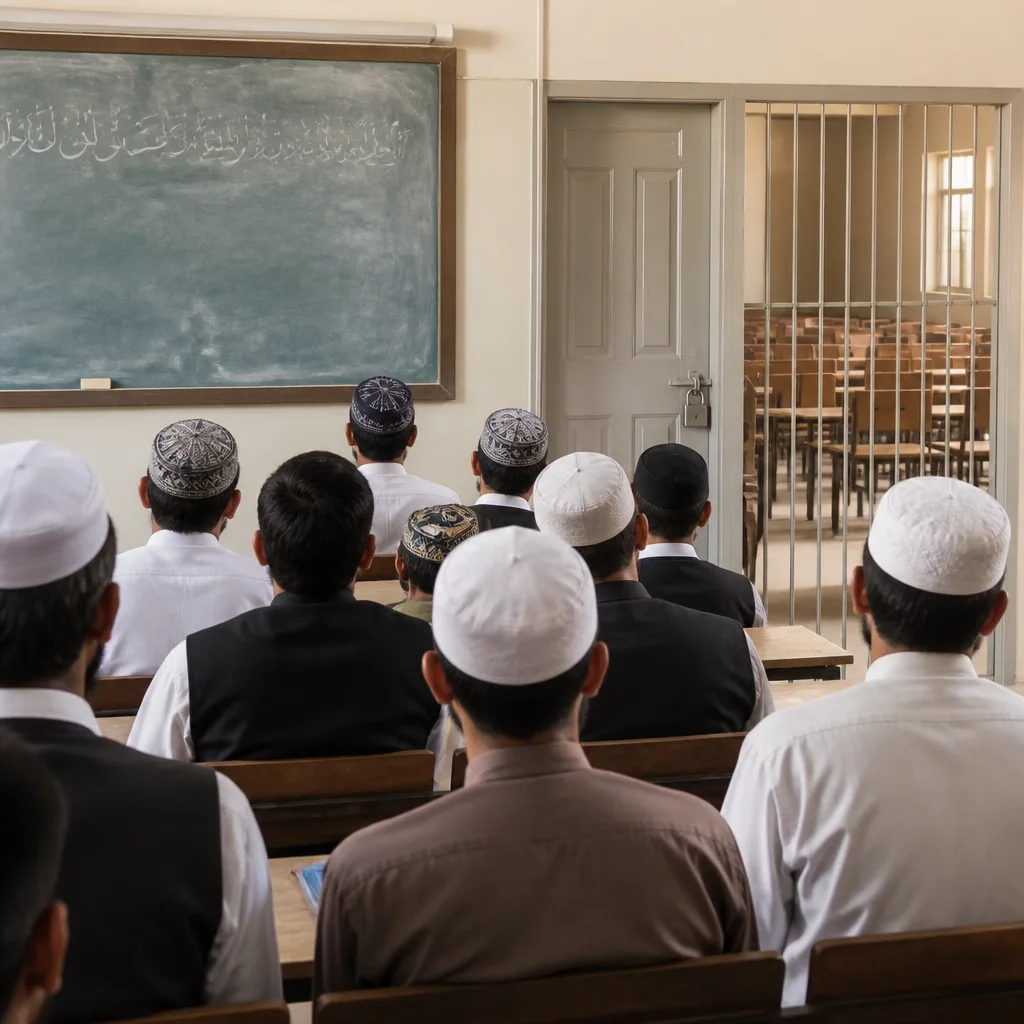
Five years on from the Taliban's seizure of power in Afghanistan, former university students and current undergraduates describe a higher education system that has been fundamentally altered: women are barred from attending, academic debate has been curtailed and male students are subject to disciplinary measures for trivial breaches of prescribed appearance and behaviour.
From universities to religious lecture halls
Accounts gathered from students paint a picture of institutions that increasingly prioritise religious instruction and conformity over conventional university study. Lectures on faith, conduct and obedience are reportedly compulsory and can occupy time that would previously have been used for subject-specific teaching.
One student studying journalism says his course is being overshadowed by mandatory religious sessions, leaving him to miss substantive classes on digital reporting, verification and ethics. He also expressed concern about the competence of some teachers assigned to technical subjects, noting that instructors sometimes lack practical familiarity with the material they are expected to deliver.
“Since the fall of Kabul, the university has lost its purpose. It feels more like a madrassa now — a place where curiosity is banned and remaining silent ordered.”
The removal of space for questioning and debate was a recurring theme in interviews; students described classrooms where listening is demanded and critical engagement discouraged. That shift, they say, undermines the core functions of higher education: enquiry, critical thinking and the acquisition of professional skills.
Discipline, appearance and punishments
Reports indicate that male students are subject to strict rules on dress and grooming. Facial hair and traditional clothing have been mandated in many settings, and failure to comply can lead to public shaming or physical punishment. One student described seeing a peer beaten for wearing trousers deemed inappropriate.
Students say that surveillance of appearance often precedes any academic interaction: being judged on dress can determine whether a student is treated with respect or punished, regardless of their participation or ability in class.
- Religious instruction placed ahead of subject teaching, sometimes for two hours per day
- Women excluded from universities, drastically reducing access to higher education for female students
- Punishments reported for minor breaches of dress and conduct codes among male students
- Decline in academic debate and questioning within classes
| Reported change | Effect on students |
|---|---|
| Compulsory religious lectures | Loss of time for core academic courses |
| Ban on women | Exclusion of half the population from higher education |
| Strict dress/grooming rules | Disciplinary action, fear and humiliation |
Consequences for academic standards and future prospects
Students and observers warn that the combination of fewer qualified lecturers, the sidelining of subject-based teaching and the suppression of critical discussion is eroding the quality and credibility of Afghan higher education. For disciplines that depend on practical skills and up-to-date technology, such as journalism, the absence of competent instruction risks producing graduates without the necessary competencies for professional practice.
Beyond immediate classroom impacts, the changes carry longer-term implications for Afghanistan's workforce and civic life. If universities become spaces primarily for doctrinal instruction rather than inquiry and skills development, employers, professional bodies and the international community may find the credentials awarded by these institutions less reliable.
The testimonies emphasise that public attention has largely focused on the ban on female students. Students stress, however, that the experiences of males who remain in the system — subject to a narrowing curriculum and punitive discipline — also warrant scrutiny and concern. The accounts underline how higher education in Afghanistan has been reshaped not only by exclusion but by a redefinition of what it means to be educated.
These reports do not come from an official audit; they represent the lived experiences of students navigating universities under new constraints. The full extent of the damage to academic standards and the prospects for reform remain uncertain, but those who spoke to reporters urged the wider education community and international partners not to overlook the altered reality inside Afghanistan's classrooms.











