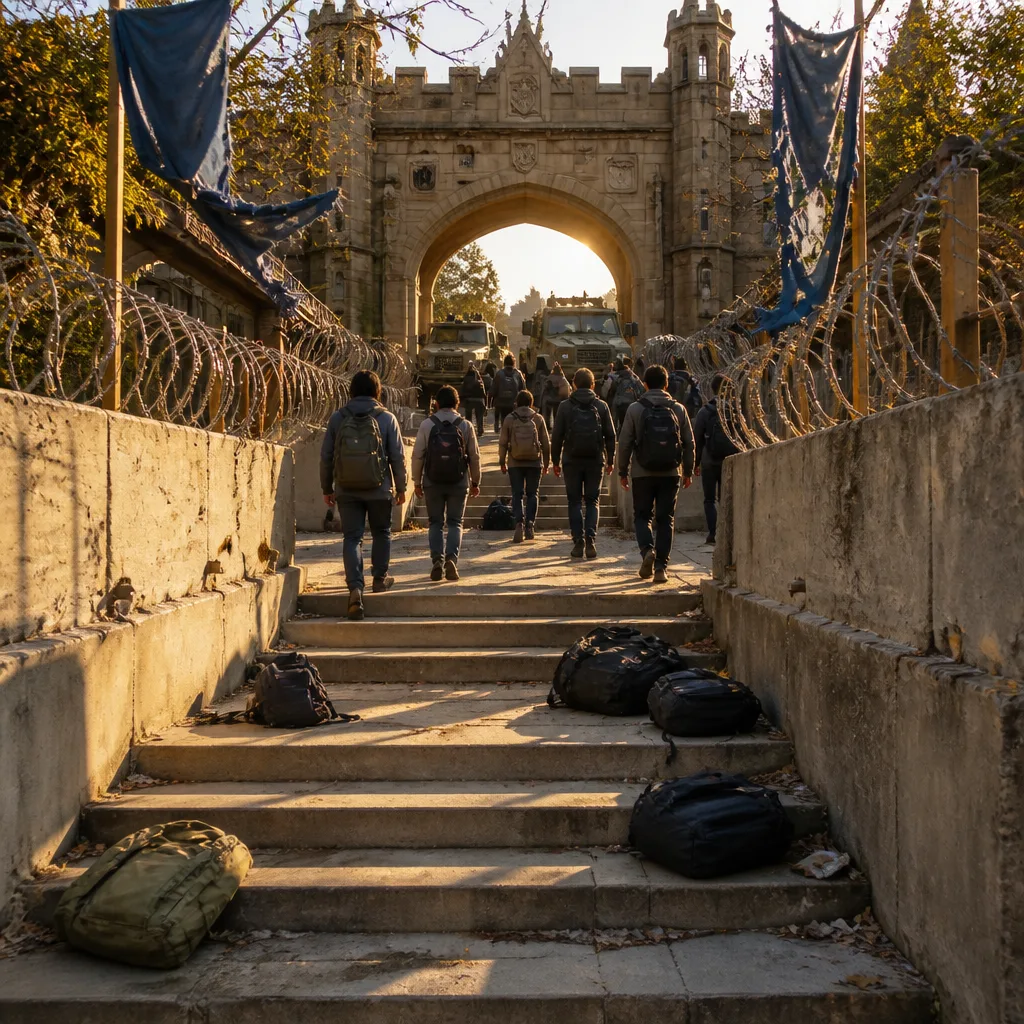
Students in the West Bank say their ability to learn is being steadily eroded by a pattern of military operations, settler violence and restrictions on movement that routinely close campuses, delay journeys and put lives at risk. The sustained pressure, they say, is not incidental but a systemic campaign that undermines the right to education.
Daily journeys to class interrupted by checkpoints and incursions
Those studying at Palestinian universities describe travel to campus as hazardous and unpredictable. Checkpoints and settler attacks frequently delay or prevent students from reaching lectures and seminars, while military raids on universities have become recurrent events. For many learners, education is framed as a vital lifeline amid occupation; attacks on academic life therefore strike at both personal futures and community resilience.
Birzeit University has been a particular focus of unrest. According to reported accounts, the campus has been targeted 22 times since 2022, with at least 10 incidents recorded since 2023. The single most severe episode cited occurred in January 2026, when more than 200 military personnel entered the campus during lectures, employing stun grenades, sound devices and tear gas. Those operations reportedly wounded 41 students, with several sustaining gunshot injuries. Witnesses also said ambulances were prevented from accessing the site.
"Whenever we leave our homes in the morning, we never know if we will return safely. Death is always close to us,"
The quote reflects a widespread sense of peril among young people, some of whom say they have become desensitised to checkpoints, intimidation and violence. Yet the emotional and educational toll remains profound: students report cancelled teaching, restricted access to resources and the sudden detention of peers and staff.
Recent detentions, historical context and repercussions for teachers
Detentions of students and academics are part of a longer history of disruption. During the first intifada in 1988, thousands of educational institutions were closed and nearly 800 teachers were reportedly imprisoned as part of measures that criminalised much teaching. Contemporary patterns echo that legacy: in June of this year, four female students were detained at a campus operation, and other universities across the West Bank have similarly reported raids that include property damage, confiscation of materials and assaults on guards.
The cumulative effect of these measures is not limited to short-term absence from classes. Students and lecturers describe interrupted programmes, damaged facilities and an atmosphere that discourages study and scholarly exchange. For Palestinians, education is frequently cast as a route to economic mobility and personal development; sustained attacks on universities therefore have wider social and economic consequences.
- Incidents at Birzeit University: 22 attacks since 2022; 10+ since 2023; January 2026 raid involved 200+ military and left 41 students injured.
- Historical comparison: 1988 closures and near-800 teacher imprisonments during the first intifada.
- Recent detentions: Four female students detained in June 2026, with similar actions reported at other institutions.
| Period | Reported incidents / figures |
|---|---|
| Since 2022 | 22 attacks on Birzeit University |
| Since 2023 | At least 10 attacks |
| January 2026 | 200+ military; 41 students injured |
| 1988 (first intifada) | Almost 800 teachers incarcerated |
For policy-makers and educational authorities, the evidence presents difficult questions about how to protect learning in zones of conflict. International law recognises the right to education even in contested settings, and human-rights groups often call for unfettered access to schooling and higher education as a basic protection. On the ground, however, students and staff confront repeated interruptions that threaten course completion, research projects and campus life.
Any lasting solution will require measures that ensure safe passage to campuses, protection of university property and guarantees that medical aid can reach those injured. Meanwhile, students continue to attend where they can, convinced that education remains one of the few durable routes to opportunity. Their accounts underline the human cost when education becomes a battleground.