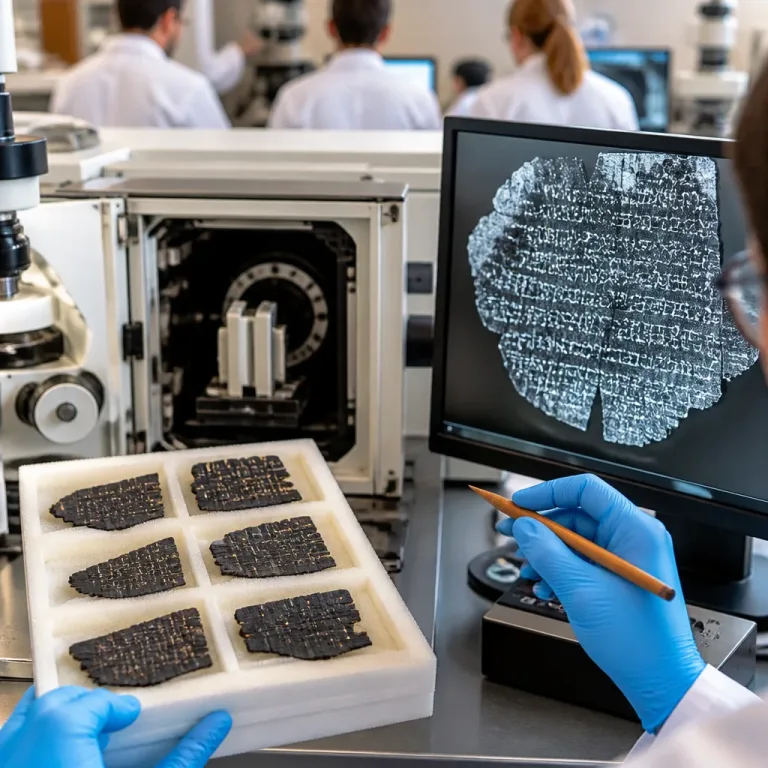
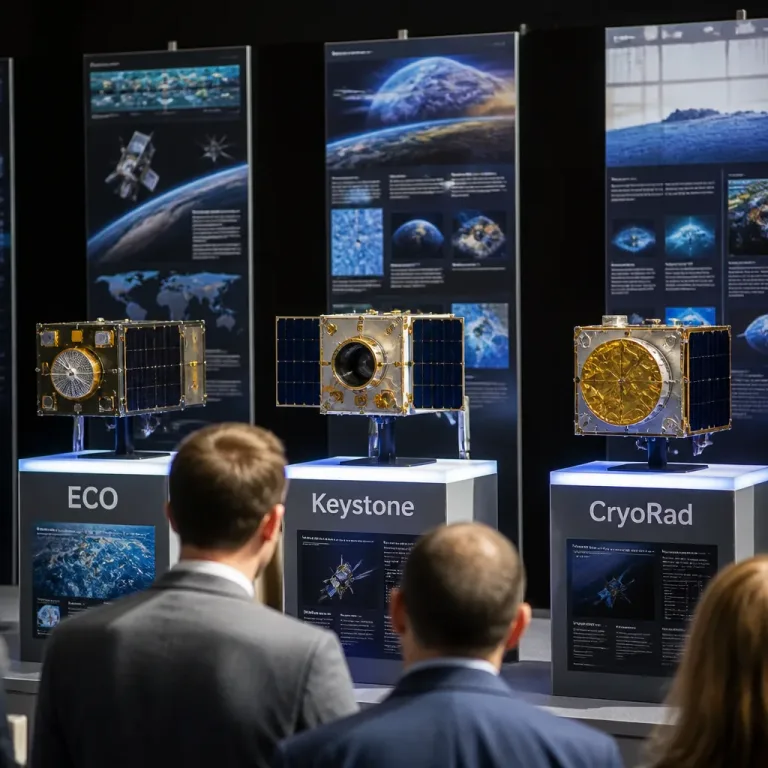
For a second consecutive summer, Lawrence Livermore National Laboratory’s Space Science Institute (SSI) hosted a 10-week research internship that placed undergraduate and graduate students at the heart of space‑science work — including the laboratory calibration of the Resolve detector, the core instrument on the international X‑ray Imaging and Spectroscopy Mission (XRISM).
Practical training across disciplines
The 2026 cohort undertook projects that reflect the diverse capabilities available at LLNL, from high‑performance astrophysical data analysis to laboratory characterisation and chemistry of meteoritic material. The programme is designed not just to give students discrete projects but to immerse them in adjacent fields through an SSI seminar series, broadening their horizons beyond a single specialism.
"Here at the Lab, there is a huge breadth of research that lives under space science - from performing astrophysical data analysis with LLNL's high-performance computers to characterizing an instrument in the laboratory to doing chemistry with meteorites,"
The quote, from one of the institute’s student research and engagement coordinators, underscores the programme’s aim: to expose trainees to a range of methods and instruments so they can better judge their next academic or professional steps.
Calibrating Resolve: measuring the tiniest temperature changes
Among the projects, a notable example was work on Resolve, a micro‑calorimeter-style X‑ray detector forming the focal instrument on XRISM, the international mission supported by JAXA, NASA and ESA. Resolve consists of a compact array of detector pixels whose response depends on minute temperature rises produced when individual X‑ray photons are absorbed.
When a photon strikes a pixel, it produces a small increase in temperature. The amplitude of that thermal pulse is proportional to the photon’s energy, so accurate measurement of the pulse is essential to determine the incoming X‑ray energy. Because the device is highly sensitive, even minute variations in pixel temperature or response can bias the energy measurement, making careful calibration crucial.
| Parameter | Detail |
|---|---|
| Detector type | Micro‑calorimeter array (Resolve) |
| Array size | 6-by-6 pixels |
| Mission | XRISM (JAXA, NASA, ESA) |
One internship participant, a recent graduate from the University of California, Berkeley, used the opportunity to delve into X‑ray astronomy — a field that is not always represented in undergraduate curricula — by working on energy calibration for Resolve. The work demands both experimental care and an understanding of how detector physics maps onto astrophysical measurements.
Why the calibration matters
Accurate energy calibration underpins much of X‑ray astronomy. Spectral features in X‑ray light reveal the temperatures, chemical composition and dynamics of extreme cosmic environments such as the hot gas in galaxy clusters, accreting black holes and supernova remnants. Calibration errors can shift or blur these features, leading to incorrect physical inferences.
The internship therefore functions as both workforce development — giving early‑career scientists hands‑on experience with instruments they might later design, build or analyse data from — and as practical support for an international mission whose science return depends on careful laboratory preparation.
- Skills gained: instrument characterisation, detector physics, astrophysical data analysis, cross‑disciplinary research exposure.
- Career impact: projects guide students’ next steps in graduate study or technical roles at laboratories and space agencies.
- Mission relevance: laboratory calibration feeds directly into the data quality for XRISM’s scientific programme.
By situating students at the interface of experiment and analysis, the SSI internship mirrors a broader trend in space science education: training must bridge theory, laboratory practice and large‑scale computing. For students unable to encounter X‑ray instrumentation in their home institutions, the LLNL programme offers a concentrated experience with both the tools and the team‑based processes that underpin modern space missions.
As XRISM prepares to deliver X‑ray spectra from astronomical sources, the precision work done in labs such as LLNL’s will determine how cleanly those celestial signatures can be read. For the students involved, the exercise is both technical training and a tangible contribution to an international endeavour to probe the high‑energy universe.