
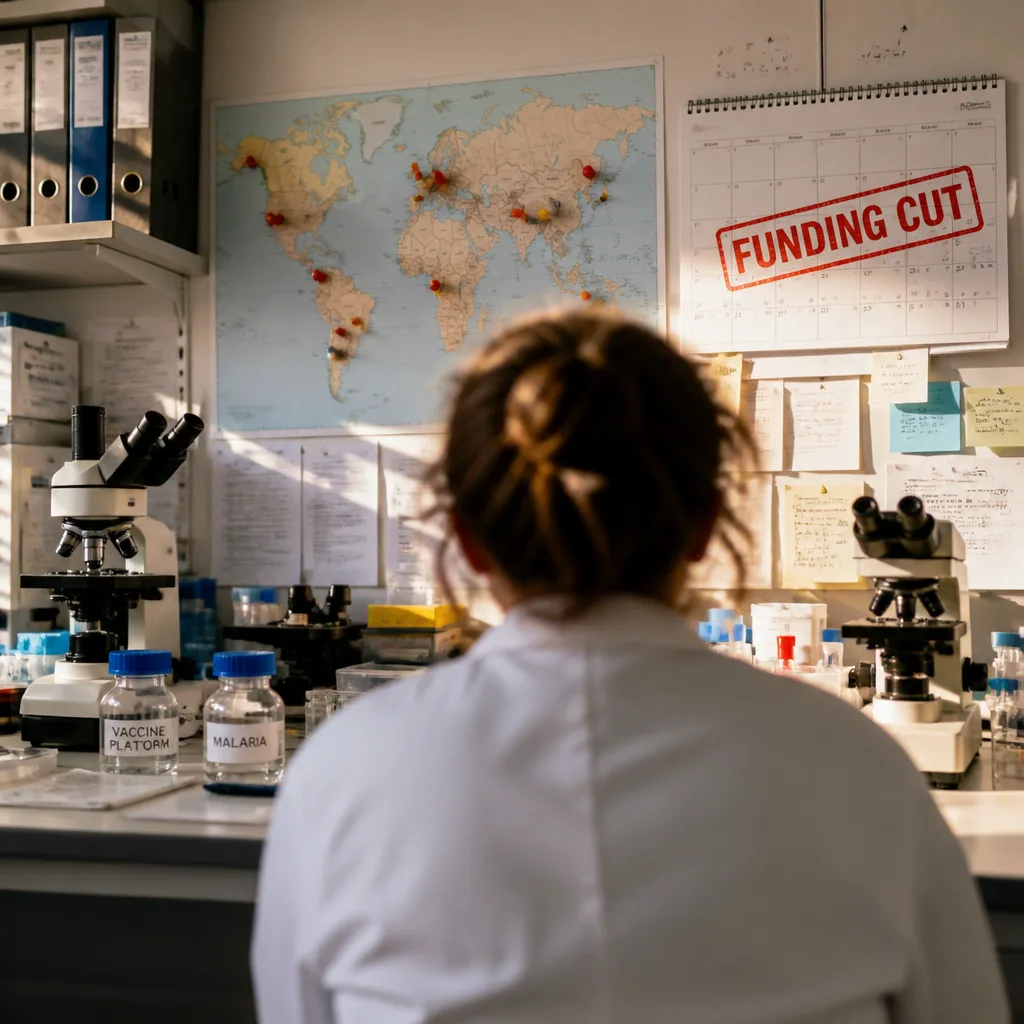
Leading UK malaria scientists have warned that steep reductions in funding for malaria research will weaken the country’s readiness for future pandemics and other emerging infectious threats. The warning accompanies the publication of the first Malaria Science Index, a survey of Britain’s top researchers in the field timed as world leaders gather in New York for a UN-linked meeting on pandemic preparedness.
Funding shortfalls imperil spillover benefits
Respondents to the index argued that work on malaria delivers a wide range of benefits that extend beyond the disease itself — from vaccine platforms to trained personnel — and that losing investment will damage those wider capabilities. Some 80% of scientists surveyed said malaria research provided health benefits to the UK public, and the same proportion said it made the UK safer.
“Environmental changes are bringing mosquito-borne diseases much closer to home, and our ability to respond to these risks in the UK is strengthened by the training British scientists have from working shoulder-to-shoulder with experts in endemic countries,” said Heather Ferguson, professor of infectious disease ecology at the University of Glasgow.
Professor Ferguson told the survey team that technologies and tools developed in partnership with researchers in endemic countries not only save lives in Africa, but also bolster the UK’s ability to respond to comparable risks at home. She argued that controlling and eliminating malaria from its heartland would yield global benefits.
Historical spillovers and present threats
The report highlights concrete examples of how malaria research has informed broader health advances. It notes the Oxford/AstraZeneca Covid-19 vaccine drew on earlier malaria vaccine research, and cites preliminary findings linking the antimalarial drug atovaquone to potential roles in treating some cancer types. The authors stress that such cross-cutting gains are at risk if development, testing and approval pipelines are starved of funds.
Malaria remains a major global burden: the index reiterates 2024 estimates of about 282 million cases and 610,000 deaths worldwide, most of those fatalities being children under five in Africa. Survey respondents said that funding gaps were the principal threat to both the development of new tools and the implementation and scale-up of existing interventions.
What the researchers said matters for policy
Although the survey is focused on opinions from the UK research community, its conclusions speak to policy choices. The timing of publication — concurrent with high-level talks on pandemic preparedness at the UN General Assembly — frames malaria funding as not only a development issue, but as a national security and health-systems priority for the UK.
- 80% of surveyed researchers see direct UK health and safety benefits from malaria science.
- Malaria research has contributed platforms and knowledge used in Covid-19 vaccine development.
- Funding shortfalls were identified as the top threat to developing and scaling malaria tools.
| Metric | 2024 estimate |
|---|---|
| Malaria cases | 282 million |
| Malaria deaths | 610,000 |
Experts emphasised that the network of skills built through malaria programmes — field teams, laboratory capacity, regulatory experience and long-standing partnerships in endemic countries — functions as a surge capability when new pathogens arise. Cutting that capability, they said, would reduce the UK’s margin for rapid detection, evaluation and response.
The Malaria Science Index offers a UK-centred perspective on a global issue. It underlines that support for particular disease programmes can have wider returns on investment for national health security. As delegations in New York debate how to bolster preparation for the next pandemic, the authors of the index urge policymakers to factor in those indirect but measurable benefits when setting research and aid budgets.
Without renewed or sustained funding, the report’s respondents fear delays in bringing novel tools to market and in expanding proven interventions — outcomes that would affect both endemic regions and the UK’s own ability to confront emerging vector-borne threats as environmental change alters disease distribution.
For policymakers weighing priorities amid fiscal pressures, the index frames malaria research as more than a single-disease endeavour: it is a repository of technology, training and partnerships that underpins preparedness for a range of public-health emergencies.









