
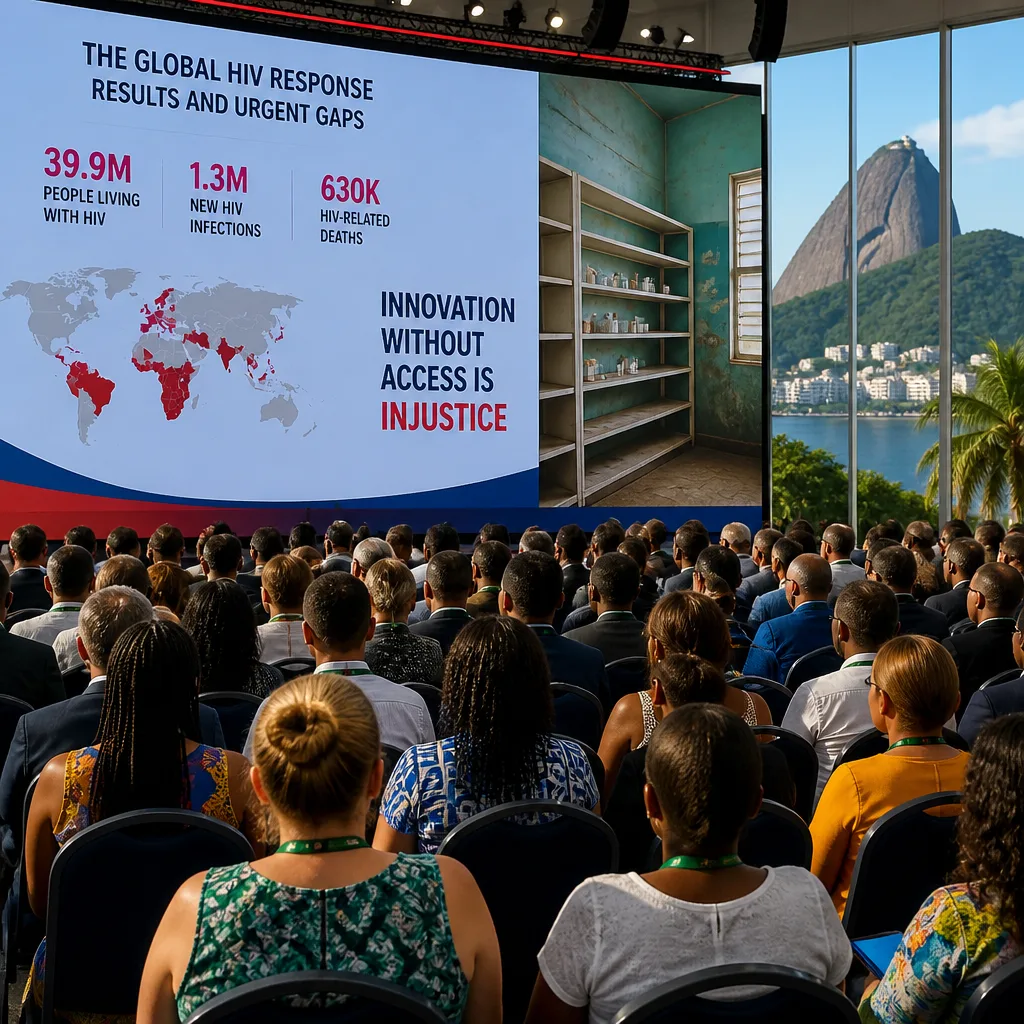
The 26th International AIDS Conference, held in Rio de Janeiro from 26–31 July, showcased scientific advances in HIV prevention and care but was dominated by a stark warning: medical innovation alone will not end the epidemic if access and funding continue to falter.
Innovation versus access
Speakers, researchers and community leaders repeatedly returned to a single, blunt formulation delivered by Brazil's health minister and echoed throughout the week: “Innovation without access is injustice.” The line framed the conference’s central dilemma — breakthroughs in drugs and preventive tools exist, yet millions remain unserved.
“Innovation needs to go hand in hand with access,” said Dr Alexandre Padilha, Brazil’s Minister of Health, at the opening general assembly.
Delegates described the sentiment as both a moral and a public-health imperative. The latest global figures presented at the meeting underlined the scale of the challenge: in 2025 roughly 570,000 people died from AIDS-related illnesses, while about 1.2 million people newly acquired HIV. More than 40 million people are living with the virus and approximately 78% of them are currently receiving antiretroviral therapy (ART). Conference speakers also warned that new infections rose in 21 countries, and that AIDS-related deaths continue at an alarming pace — about one each minute.
Science outpacing systems
Across more than 150 sessions, scientists, clinicians and advocates presented data on prevention tools such as pre-exposure prophylaxis (PrEP), as well as improved treatment regimens that can restore health and prevent onward transmission. Yet presentations repeatedly returned to the mismatch between efficacy in trials and reach in the real world. Simply put: where the health systems, supply chains and financing mechanisms are weak, patients cannot benefit from the latest medicines and technologies.
Speakers highlighted multiple drivers of that gap including declining political support and collapsing funding, which conference organisers and attendees described as jeopardising both established programmes and the roll-out of new interventions. The rhetoric at the convention centre made clear that the problem is not only technical but deeply political and ethical.
- Treatment coverage: about 78% of people living with HIV on ART.
- Mortality in 2025: roughly 570,000 AIDS-related deaths.
- New infections in 2025: approximately 1.2 million.
| Metric | 2025 figure |
|---|---|
| People living with HIV | 40 million+ |
| On antiretroviral therapy | 78% |
| AIDS-related deaths | 570,000 |
| New HIV infections | 1.2 million |
| Countries with rising new infections | 21 |
Consequences and the road ahead
Delegates argued the immediate consequence of a funding shortfall is predictable: fewer tests, weaker prevention campaigns, interruptions to drug supplies and slower roll-out of innovations such as new long-acting formulations. That, in turn, risks reversing years of hard-won gains. The conference framed access as a multi-layered problem requiring coordinated responses — from international donors and domestic health ministries to procurement agencies and community groups.
While scientific progress remains central to any long-term solution, the message from Rio was unambiguous: without renewed financial commitment and concrete plans to get medicines and preventive tools into the hands of those who need them, breakthroughs will remain unevenly distributed. Delegates left with a renewed call for policy action designed to turn pharmaceutical and technological advances into equitable health outcomes.
The conference highlighted an uncomfortable truth for policymakers: in the fight against HIV, scientific success is necessary but not sufficient. Ensuring that those successes reach people everywhere requires systems, money and political will — elements that, according to many at Rio, are in increasingly short supply.









