
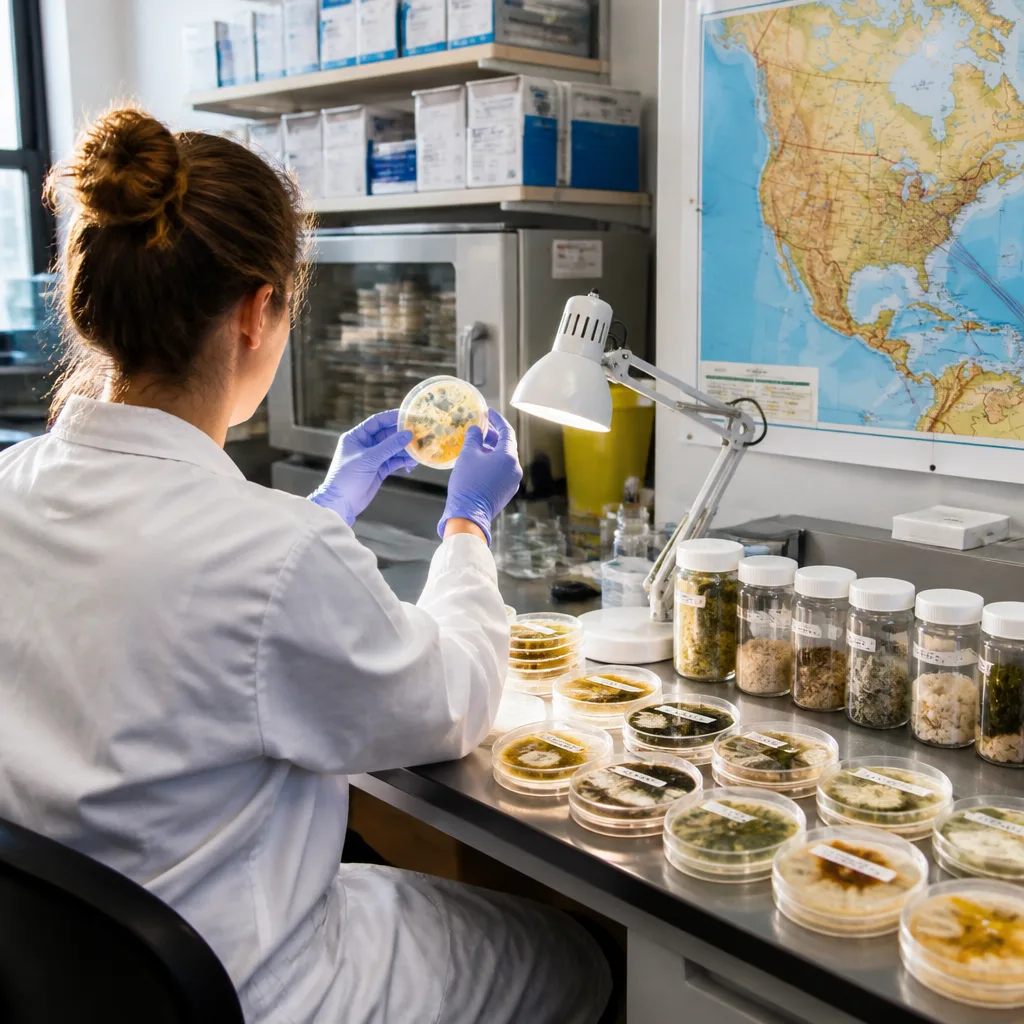
The Fungus Testing Laboratory at UT Health San Antonio has become an increasingly vital resource for clinicians confronting unfamiliar or drug‑resistant fungal infections, identifying more than 60 new fungal species since 2013 and serving as a national referral centre for difficult cases.
Reference lab sees the rare and the emergent
Physicians across North America send unidentified specimens to the laboratory because its remit is not routine diagnosis but reference work — the careful characterisation of unusual organisms that local laboratories may not have encountered. The laboratory’s director, Nathan Wiederhold, said that role exposes the team to “unique things that a lot of people have not experienced or seen before.”
The lab’s work extends beyond morphology under the microscope: for each organism the team sequences DNA and correlates that genetic information with the disease it produces in patients. That combination of phenotypic and genotypic analysis has underpinned the description of the dozens of novel species the laboratory has helped bring to light since 2013.
Drug resistance is narrowing clinical options
Over the past two decades fungal pathogens have grown in prominence as a clinical threat, in part because of rising resistance to the limited classes of antifungal drugs available. Wiederhold warns this trend has left clinicians “in a bind” for some patients where therapeutic options have been exhausted.
Among the better‑known resistant fungi is Candida auris, a pathogen that can be lethal in people with compromised immune systems. The San Antonio lab has also identified other worrying developments: a dermatophyte it flagged as showing antimicrobial resistance in 2022, and a reportedly new sexually transmitted form of ringworm.
- 60+ previously undescribed fungal species identified by the laboratory since 2013
- 2022 — laboratory noted emerging resistance in a dermatophyte
- Ongoing work on drug testing and support for antifungal development
From diagnosis to drug development
The laboratory’s remit includes more than identifying organisms: it supplies a large, curated sample library that pharmaceutical researchers use to assess new antifungal compounds. Wiederhold said researchers screen candidate drugs against isolates in the collection to establish activity and resistance profiles before regulatory submission.
He indicated there is promising progress, noting that one candidate compound under evaluation is “close to FDA approval.” The laboratory’s participation in these pre‑market tests modestly accelerates the translation of laboratory findings into clinical tools — a crucial function at a time when resistance is creating therapeutic gaps.
“As a reference lab, we really see the unique things that a lot of people have not experienced or seen before,”
The dual role — surveillance and product testing — places the laboratory at the intersection of clinical practice, epidemiology and drug development. By documenting novel pathogens and their genetic signatures the team contributes to surveillance systems that track emergence and spread; by furnishing clinical isolates for drug testing it helps determine whether candidate medicines will have meaningful activity where they are most needed.
Implications for clinicians and public health
The laboratory’s findings underscore a widening challenge. Fungal infections, once a more specialised concern, are now part of mainstream clinical risk because of demographic and medical trends that increase patient vulnerability, coupled with the slow development of new antifungal classes. The discovery of new species and novel resistance patterns complicates empiric treatment and heightens the need for accurate identification and susceptibility testing.
For clinicians the message is twofold: refer puzzling or refractory fungal cases to specialist centres to obtain precise identification and susceptibility data; and be aware that empirical regimens may fail against emerging resistant organisms. For regulators and industry, the San Antonio lab’s role in pre‑clinical testing spotlights the practical dependency of new drug approval on access to well‑characterised clinical isolates.
As fungal pathogens adapt and new species enter the clinical lexicon, reference laboratories such as the one in San Antonio will remain critical — not just in naming what is found under the microscope, but in establishing whether existing medicines will work, and which novel compounds might restore effective treatment options.









