
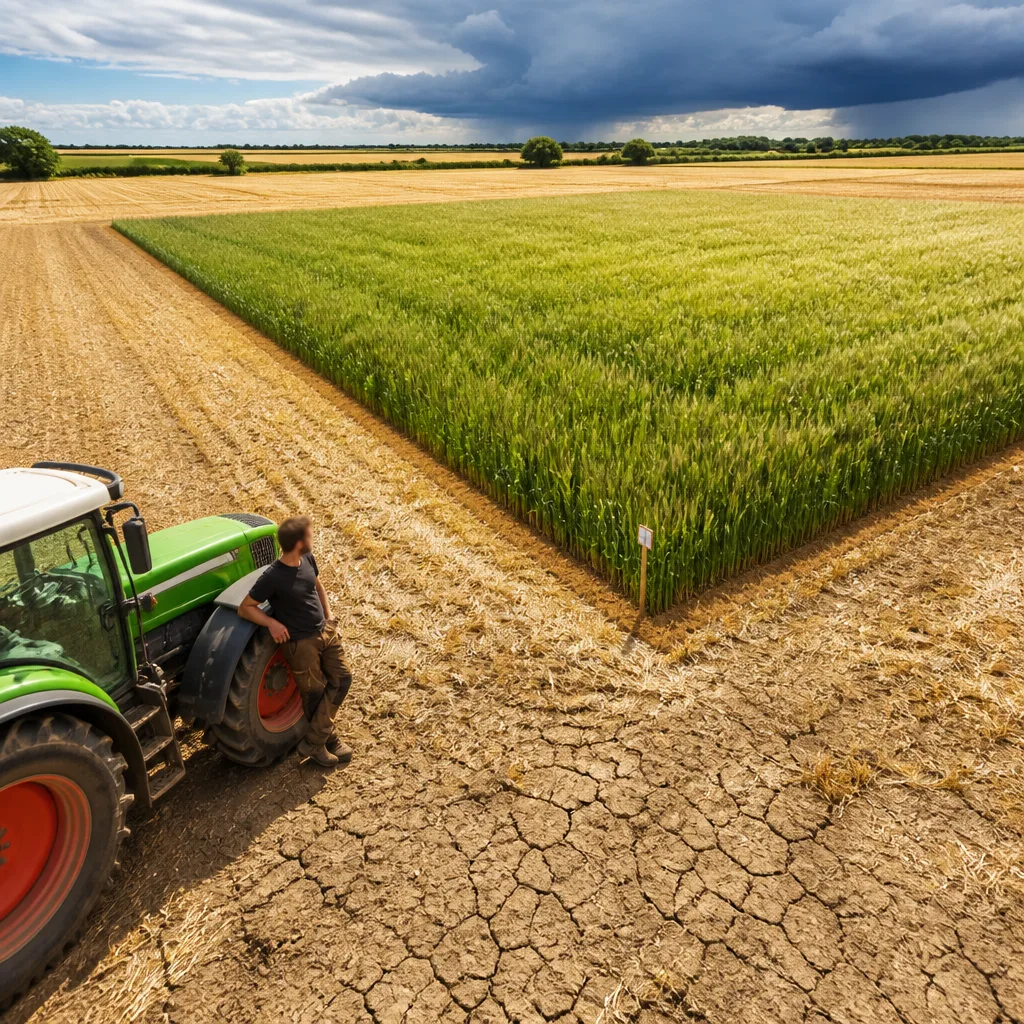
Across large arable holdings already stressed by a run of poor seasons, a small but growing number of farmers are experimenting with perennial grains as a way to blunt the impact of extreme weather events. The move responds to repeated droughts and erratic rainfall that have hit yields and increased costs for many growers.
Why some farmers are switching part of their rotation
One grower, who had high hopes after late autumn rain, saw those expectations undone by a dry winter and spring. He planted around 1,800 acres of winter wheat but was only able to harvest about 1,500 acres, reporting his lowest return since taking over the family farm in 2017. The loss and the uncertainty it brings have convinced him to look at alternatives.
“I’m in survival mode,” he said. “If you can plant something and then you don’t have to go back for four or five years … that would save so much money, so much labour, everything. That’s what makes it enticing.”
Perennial grains are sown and left in the ground for several years, rather than replanted annually. Their root systems grow substantially deeper than those of annual cereals, allowing plants to tap moisture further down the soil profile during short-term dry spells. Those same roots also hold soil in place and can take up excess water during heavy rainfall, reducing surface run-off and erosion.
What researchers and growers are trialling
Research teams are working to develop perennial versions of widely grown annuals, including wheat, sorghum and rice. The process is slow, and the crops are not yet widely deployed. Some growers, however, have already carried out small-scale trials. One example is a 12-acre planting of Kernza — a perennial grain related to native grasses in parts of Europe and western Asia — sown five years ago by a farmer taking part in trials.
| Farm | Area mentioned | Context |
|---|---|---|
| Family arable farm | 4,500 acres | Total farm size |
| Winter wheat planted | 1,800 acres | Area planted before drought |
| Winter wheat harvested | 1,500 acres | Area harvested after poor season |
| Kernza field | 12 acres | Five-year trial |
Benefits and practical hurdles
Proponents point to several potential advantages of perennials:
- Water resilience — deeper roots can access moisture when surface soils dry out.
- Soil protection — extensive root systems reduce runoff and erosion during heavy rain.
- Lower repeat costs — planting every few years can cut expenditure and labour associated with seedbed preparation and sowing.
But the approach is not without significant drawbacks. Perennial grain varieties currently yield less than established annual crops. Harvesting systems and machinery may need adaptation, and supply chains remain nascent, making it harder for farmers to sell the grain at commercial scale. Those factors, alongside the slow pace of breeding and development, mean widespread uptake faces practical and economic limits.
Where things stand and what to expect
The evidence from field trials is encouraging in certain respects, particularly for environmental services and resilience in marginal conditions, but it does not yet offer a full, ready-made alternative to established cereal systems. For growers contending with immediate production and financial pressures, perennial grains are currently an option to trial rather than a large-scale solution.
Farmers considering trials should weigh both the on-farm benefits and the market context, keep records to judge long-term performance, and look to research networks and co-operatives for technical support. Given the uncertain nature of future weather patterns, experimental approaches such as these are likely to continue gaining attention, even if mainstream adoption remains some way off.
In short: perennial grains show promise for improving resilience to extreme weather, but questions over yield, harvestability and market maturity mean they remain a cautious step for most growers rather than an immediate replacement for annual cereals.









