
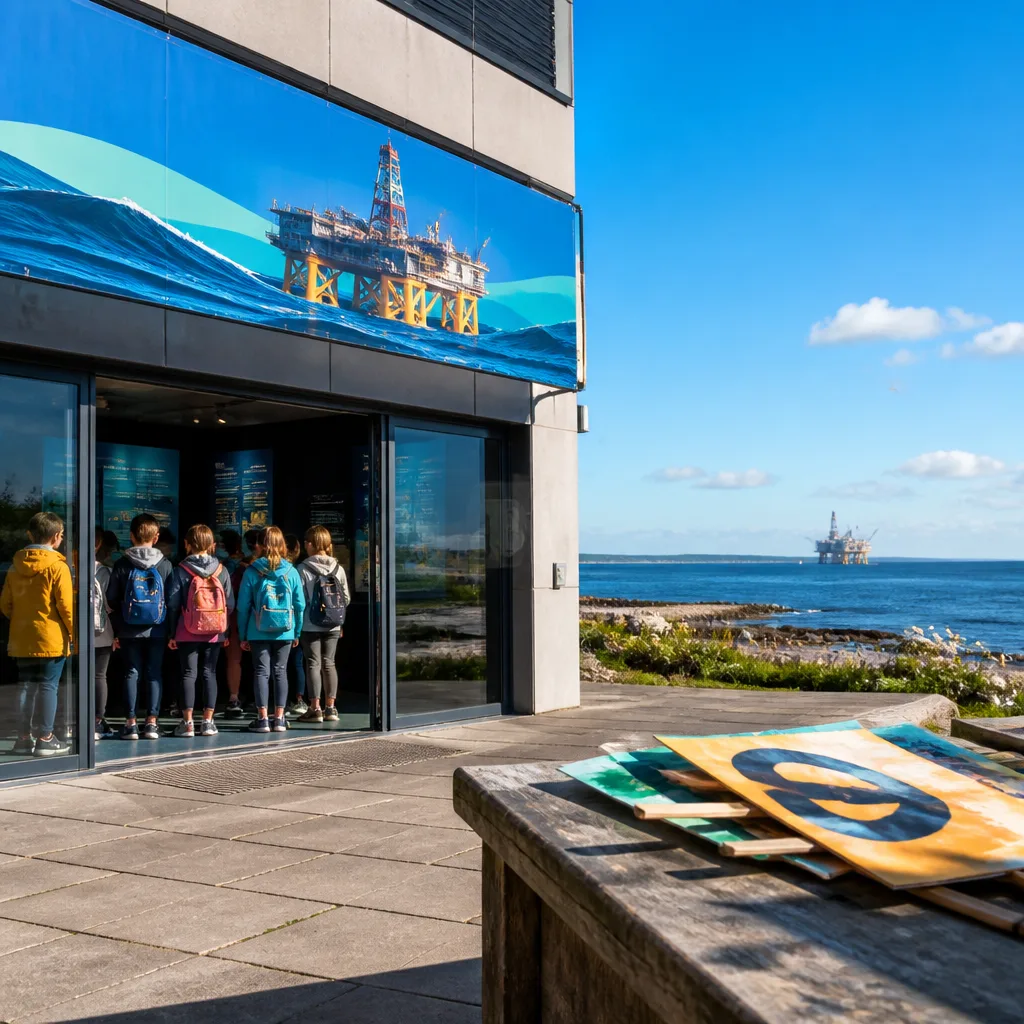
Aberdeen Science Centre has extended its sponsorship with Norwegian oil company Equinor for a further year, a move that has rekindled debate over fossil fuel industry involvement in children’s science education as the UK considers approval of major North Sea developments.
Funding and controversy
The museum said the renewed agreement continues a seven-year partnership intended to support its educational programming. The announcement comes amid a summer of extreme weather across the UK — including record heatwaves, drought and extensive wildfires — events that scientists link to climate change.
Critics argue the timing is sensitive. The sponsorship coincides with Equinor’s plans to develop two substantial North Sea projects, Jackdaw and Rosebank, which have become focal points in the national discussion about future oil and gas extraction.
"This partnership shows how fossil fuel giants seek to buy social credibility while continuing to fuel the climate crisis,"
The remark came from Scottish Greens MSP for North East Scotland, Maggie Chapman, who acknowledged the value of the science centre’s work but urged scrutiny of the sponsor’s wider operations and climate impacts.
Local impacts and national implications
Jackdaw is described as a gas field located roughly 150 miles off Aberdeen’s east coast, while Rosebank lies about 80 miles north-west of Shetland. Equinor and Shell are reported to be partnering under the name Adura on those projects. Supporters say the developments would strengthen UK energy resilience by increasing domestic production.
Yet environmental organisations and some politicians warn that approving new fields would run counter to scientific advice on limiting greenhouse gas emissions. An analysis cited by campaigners, undertaken by Oxfam, estimated that the emissions anticipated from Jackdaw and Rosebank could be associated with the equivalent of over 65,000 heat-related deaths — compared by the analysis to the population of the city of Inverness.
Questions for institutions and educators
Concerns are not limited to headline climate impacts. Green politicians have in the past expressed unease about other Equinor-backed education initiatives, such as a reported £200,000 investment in pop-up science classrooms in Shetland communities near Rosebank. They say such contributions risk lending public legitimacy to companies whose extraction plans may deepen the climate emergency.
For educators and parents, the situation provokes a practical dilemma. Science centres and museums routinely rely on corporate sponsorship to deliver exhibits and outreach that otherwise could not be financed. But when the sponsor’s core business is at odds with the goals of climate education, institutions must weigh the benefits of funded programmes against concerns about reputational compromise and the message sent to children.
- Duration of partnership: Seven years of collaboration between Aberdeen Science Centre and Equinor, now extended by a further year.
- Nearby projects: Jackdaw (c.150 miles east of Aberdeen) and Rosebank (c.80 miles NW of Shetland) are under development by the Adura partnership.
- Health risk estimate: Oxfam analysis linked projected emissions from the projects to over 65,000 heat deaths.
| Project | Approx. distance from UK coast |
|---|---|
| Jackdaw (gas) | ~150 miles off Aberdeen |
| Rosebank (oil) | ~80 miles north-west of Shetland |
Political scrutiny has reached the highest levels. The source material notes that the Prime Minister, named in reporting as Andy Burnham, has not ruled out granting approval for the two projects despite warnings from climate scientists that such moves would conflict with their advice.
What this means for public trust
The core issue for schools and science-focused institutions is whether pupils can trust that learning resources and public-facing exhibits are free from undue corporate influence. For campaigners, continued sponsorship from companies pursuing fossil fuel extraction risks normalising activities that contribute to the very environmental harms pupils are being taught to understand.
For the science centre, the immediate benefit is financial support for educational programming. For the public, the broader question is how to reconcile the need for resource investment in informal education with a transparent stance on the climate credentials of sponsors. With two major North Sea developments pending, that debate looks set to intensify.
Officials at Aberdeen Science Centre and Equinor were reported to have described the partnership as supporting children’s science education; local politicians and environmental groups say this relationship merits close public examination given the wider context of the climate crisis and national energy decisions.











