
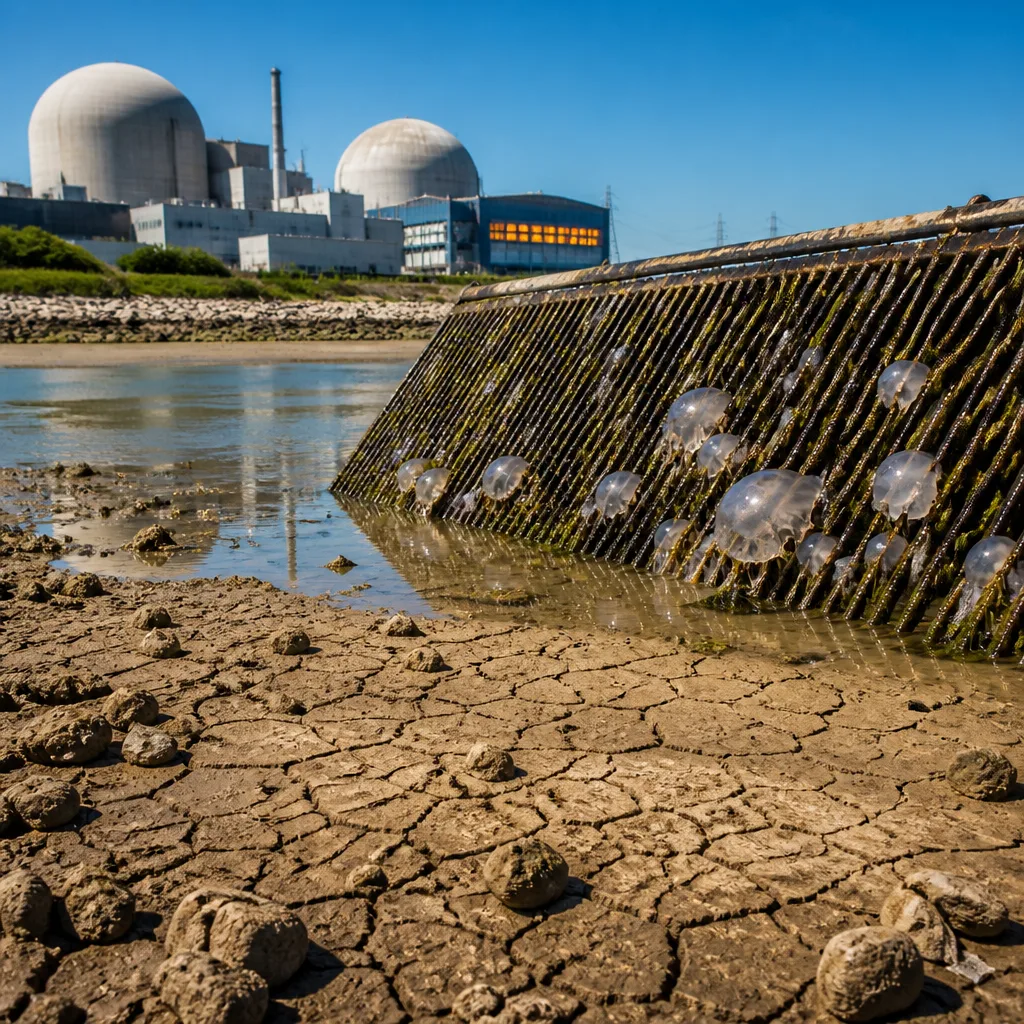
France faced a record deficit in nuclear generating capacity on Wednesday when environmental factors — from prolonged drought and extreme heat to a swarm of jellyfish — forced operators to take reactors offline or reduce output. Data compiled from EDF’s fleet showed a new peak in outages attributed to “external environmental causes”, affecting 13 of the country’s 57 reactors and leaving more than 20% of capacity unavailable.
What happened and why it matters
The shortfall was driven by two linked vulnerabilities: thermal power plants that depend on river water for cooling, and coastal units vulnerable to marine life. Low river flows and high river temperatures during heatwaves and droughts can prevent plants from taking in cooling water or from discharging warmer water without harming local ecosystems. Separately, the Gravelines site, Europe’s largest nuclear power plant, suffered substantial disruption after a large number of jellyfish clogged cooling intake pumps.
On the day in question: 13 reactors were affected — 8 were fully shut down and 5 were operating at reduced power. At Gravelines, 5 of the 6 reactors experienced partial or full shutdowns as a direct result of the jellyfish incursion. The overall loss of capacity was calculated at 20.4% when compared with EDF’s available fleet.
| Metric | Figure |
|---|---|
| Total reactors in EDF fleet | 57 |
| Reactors affected by environmental constraints | 13 |
| Fully shut down | 8 |
| Operating at reduced power | 5 |
| Percentage of capacity unavailable | 20.4% |
Causes and connections to climate and environment
Experts point to a combination of factors that have increased the vulnerability of thermal and nuclear power systems. Warmer seas and altered marine ecosystems — linked to overfishing, plastic pollution and long-term warming — create conditions in which jellyfish blooms can flourish. In rivers, prolonged low flows and elevated temperatures make cooling water less effective and risk raising downstream river temperatures to levels that would damage wildlife, leaving operators with little choice but to reduce or stop power generation.
"But there is enough leeway that this does not pose any supply problems in the short term,"
The comment above, from an energy consultant cited in reporting of EDF data, underlines the immediate picture: while the scale of the outages is unprecedented in recent years, available margins and grid management mean there is not an immediate supply emergency. However, the event highlights risks to electricity systems in a warming climate and the potential for cascading effects during prolonged or repeated extreme-weather events.
Practical implications and what to expect
- Short term: Grid operators have tools to manage reduced supply and can call on reserves, imports and demand-management measures. The immediate risk to supplies was judged limited on the day of the outages.
- Medium term: Repeated or simultaneous environmental impacts — heatwaves, droughts and marine life events — raise the prospect of more frequent curtailments, especially during summer peaks in demand.
- Policy and planning: The episode underscores the need to factor climate-driven environmental constraints into energy planning, cooling water management and coastal site protection.
For readers, the practical takeaway is that extreme weather and environmental change are directly affecting energy infrastructure. National and cross-border electricity systems will increasingly need to adapt operationally and through investment in resilient cooling systems, diversified generation and grid flexibility to maintain secure supplies as climate risks grow.
As ever with weather-related impacts, there is uncertainty about how often events of this scale will recur. What is clear is that the interaction between heat, drought and changing marine ecosystems can produce surprising effects — even bringing jellyfish into the centre of energy security conversations.









