Researchers at the Institute of Science Tokyo have introduced BBCube, a semiconductor integration platform designed to tackle three of the toughest problems in building next-generation artificial intelligence accelerators: precise chip placement, high-speed interconnects and thermal management. The team says the approach will help produce more powerful, energy-efficient AI and high-performance computing (HPC) systems by enabling closer chip integration without the usual trade-offs.
What BBCube promises
BBCube is the result of work by a research group led by Specially Appointed Project Professor Norio Chujo of the WOW Alliance Heterogeneous and Functional Integration Research Unit at the Institute of Integrated Research, Institute of Science Tokyo, together with Researcher Hideki Kitada and Specially Appointed Project Professor Takayuki Oba, in collaboration with the WOW Alliance.
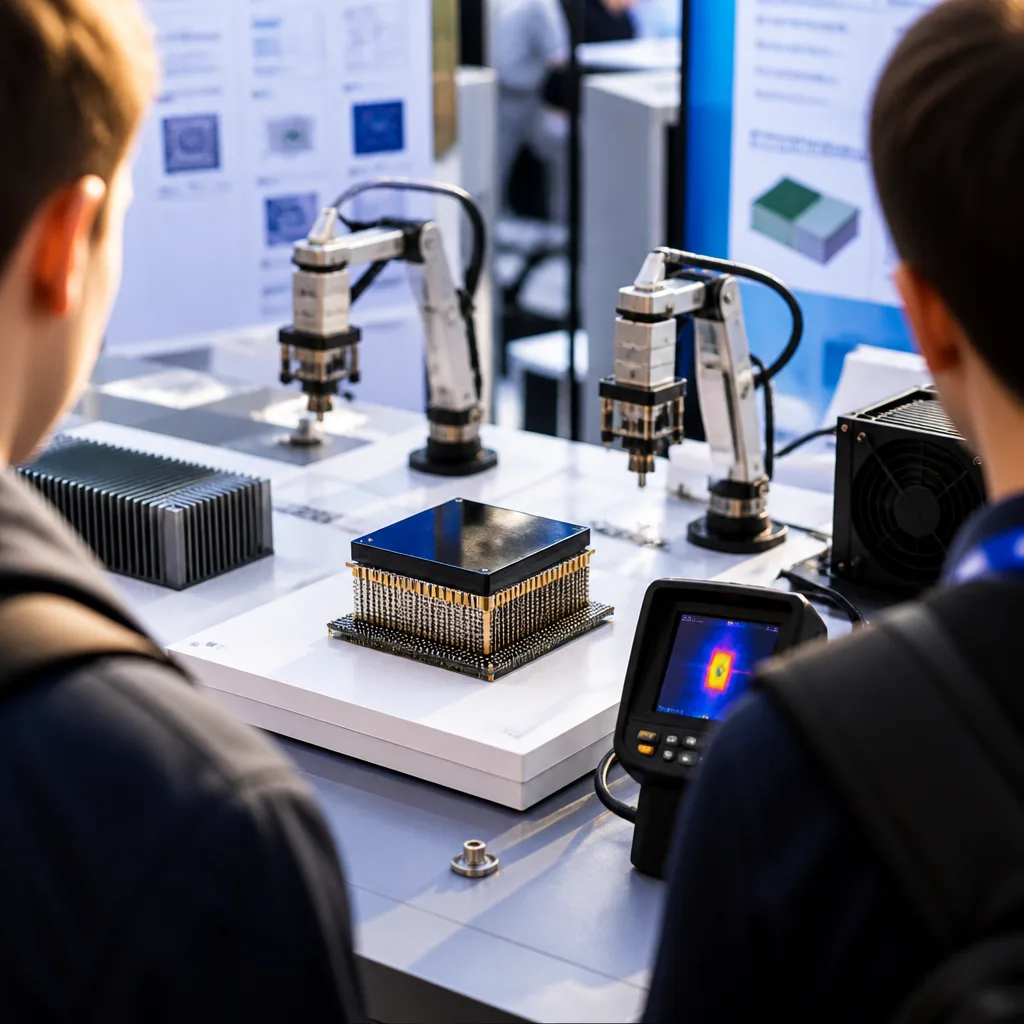
The team has combined three complementary technologies — advanced chip packaging, high-density interconnects and improved thermal management — to create a platform intended for both 2.5D and 3D integration. The researchers presented their work at two major IEEE gatherings in 2026: the IEEE 76th Electronic Components and Technology Conference (ECTC) in Florida and the IEEE/JSAP Symposium on VLSI Technology and Circuits in Hawaii.
“We developed three key technologies required for advanced 2.5D and 3D integration: our prop
That truncated quotation appears in the team’s announcement materials; the fuller technical description supplied elsewhere by the institute sets out that the three strategies together address the twin challenges of communication speed and heat dissipation when chips are placed more densely.
Why it matters
The AI wave has shifted the industry from single-chip performance gains to system-level approaches that put multiple dice into a single package. That movement — often described as heterogeneous integration — promises gains in processing density and energy efficiency, but these benefits only materialise if inter-chip signalling and cooling can keep pace with proximity.
- Closer chip placement reduces signal latency and footprint but raises thermal and routing challenges.
- High-density interconnects are needed to sustain bandwidth between compute tiles without excessive power or wiring complexity.
- Improved thermal management prevents hotspots and preserves performance under heavy AI workloads.
By addressing these three elements together, BBCube is pitched as a route to compact accelerators that do not compromise on communication speed or cooling — two attributes that define practical AI hardware today.
What was demonstrated and where
The group presented the new platform at two conferences in mid-2026. The appearances are listed in the institute’s release and establish early technical visibility among component and packaging specialists:
| Conference | Location | Dates |
|---|---|---|
| IEEE 76th Electronic Components and Technology Conference (ECTC) | Florida, USA | 26–29 May 2026 |
| IEEE/JSAP Symposium on VLSI Technology and Circuits | Hawaii, USA | 14–18 June 2026 |
Presentations at those venues indicate the work is still at the research and demonstration stage rather than mass production. Both conferences are established forums for component, packaging and circuit technology where engineers and industry partners look for scalable solutions to integration challenges.
Context and next steps
Semiconductor manufacturers have pursued multiple strategies to improve AI performance: larger monolithic chips, chiplets interconnected on a substrate (2.5D), and stacked dies (3D). Each approach has trade-offs in cost, yield and thermal limits. BBCube’s proposition is to combine packaging advances with denser interconnects and deliberate thermal design so integrators can select a path that suits their application.
What the institute has not disclosed in the material available is a full technical specification or a roadmap to commercialisation. Critical questions remain about materials, manufacturing compatibility with existing fabs and substrates, and how the platform performs under sustained AI workloads compared with current commercial accelerators.
For British and international technology teams watching the AI hardware supply chain, BBCube is a development to note. If the platform can be translated into scalable manufacturing processes, it could influence where and how next-generation accelerators are designed — with direct implications for energy use and the physical footprint of AI infrastructure.
Until those practical details are proven in production environments, BBCube should be treated as a credible research advance rather than a ready-made replacement for existing integration approaches.