The Malaysian government has confirmed it will repeal the Universities and University Colleges Act (UUCA) 1971, but only as part of a wider, systematic review of the country’s higher education legal framework before drafting a replacement.
Move beyond student issues to a single Act for higher education
Speaking after the launch of the Graduate Marketability Strategic Plan (PSKG) 2026–2030 and the Ministry’s Graduate Marketability Conference, Higher Education Minister Datuk Seri Dr Zambry Abdul Kadir said the review must be holistic because the UUCA is the principal statute governing a broad range of university affairs.
The Minister underlined that the UUCA contains 44 sections covering institutional establishment, governance, academic standards, staff and administration, while only seven of those sections relate specifically to students. He said the government’s brief is wider than addressing constraints affecting students alone and will encompass the rights and freedoms of academic staff, the operational needs of administrators and the broader needs of institutional governance.
“The current UUCA has 44 sections covering aspects of university establishment, university governance, academic standing, academic staff, administrators and others, with seven of those 44 sections relating to students.”
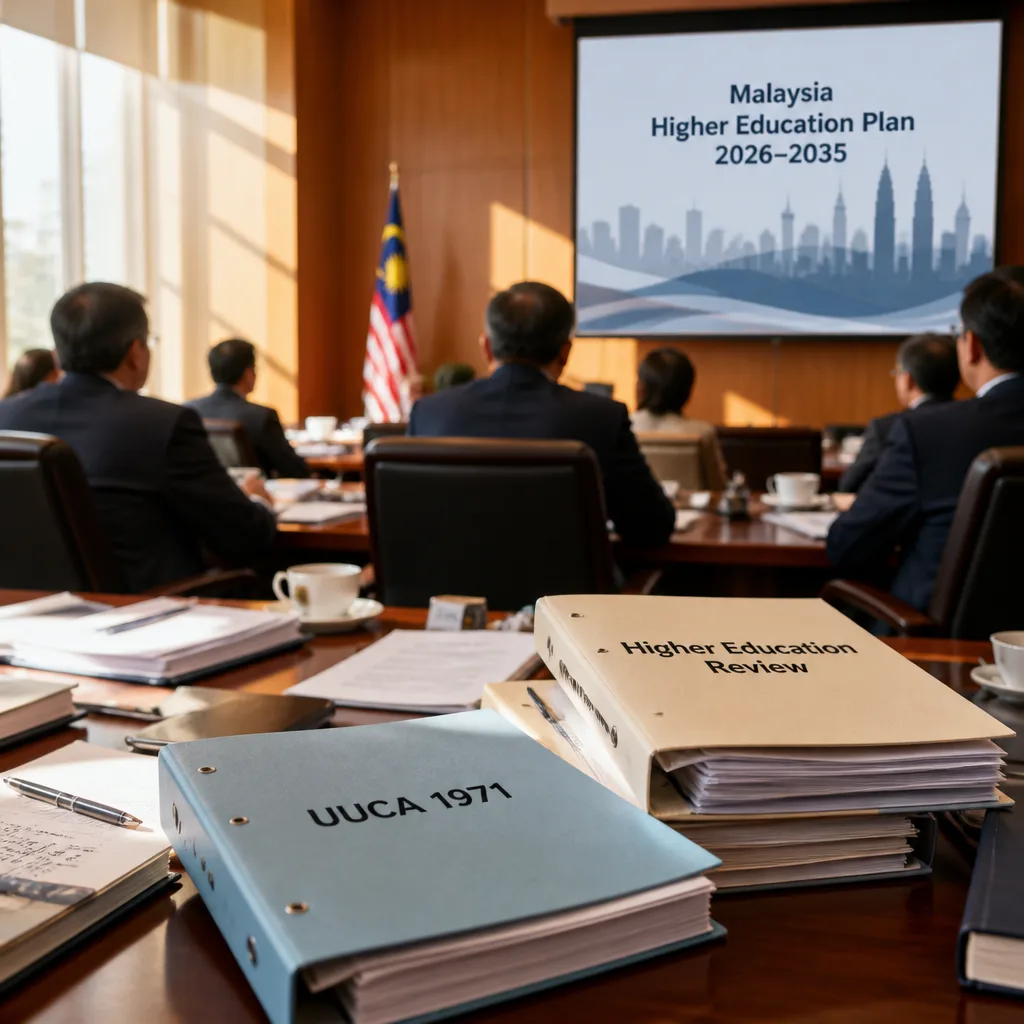
The repeal is being pursued as part of the Malaysia Higher Education Plan (RPTM) 2026–2035, which sets out a transition towards a “One Higher Education Act”. That initiative, launched in January, aims to produce a single, definitive legal framework for the higher education ecosystem designed to meet both present demands and future challenges.
Independent committee and multi‑stakeholder dialogue
To ensure balance and buy‑in, the government will establish an independent committee to facilitate multi‑stakeholder dialogue. The Minister said this platform will allow diverse perspectives to help shape the new framework before it is finalised. Details on the committee’s membership, remit and timelines were not provided in the statement reported by Bernama.
- Scope: Review will cover institutional establishment, governance, academic standards, staff rights and student provisions.
- Objective: Create a single higher education Act to replace the UUCA and provide a definitive statutory framework.
- Process: Utilise an independent committee to lead multi‑stakeholder consultations under the RPTM 2026–2035.
The Minister also noted Prime Minister Datuk Seri Anwar Ibrahim has emphasised removing constraints faced by students, but reiterated the government’s broader ambition for the sector. The approach signals an effort to align legal structures with contemporary expectations around academic autonomy, governance transparency and institutional effectiveness.
| UUCA 1971 | Content |
|---|---|
| Sections | 44 |
| Sections relating to students | 7 |
For educators, administrators and students this announcement raises immediate questions about what specific provisions will be retained, reformed or discarded and how transitions will be managed. Legal consolidation into one Act could simplify compliance and provide clearer statutory duties for university leadership, but the process of translating broad policy aims into statute will be complex and contested.
Internationally, observers will look to the scope of protections for academic freedom, due process for staff and students, and the mechanisms for institutional accountability that the new Act proposes. The plan to involve varied stakeholders through an independent committee suggests the government seeks to produce a law with broad legitimacy, but stakeholders will be watching closely for detail on representation, timelines and transparency of the review process.
At this stage the Ministry has set the ambition and the framework for consultation; the next steps will be crucial. Interested parties will expect publication of the committee’s terms of reference, a timetable for consultations and drafts, and clarity on how transitional arrangements will protect the rights and responsibilities of universities, academics and students while legislative change proceeds.