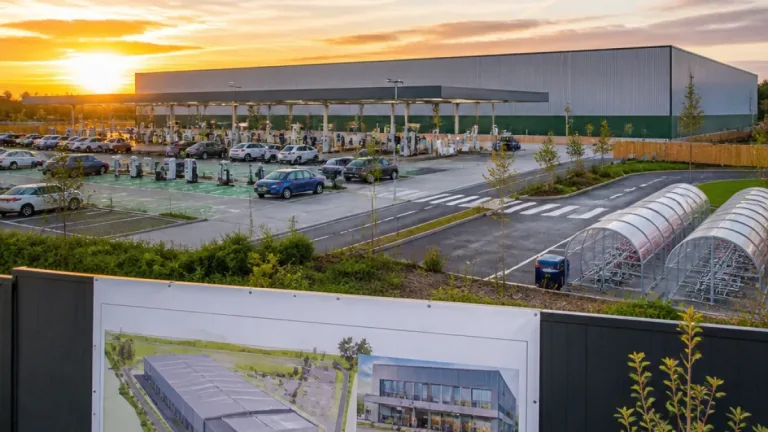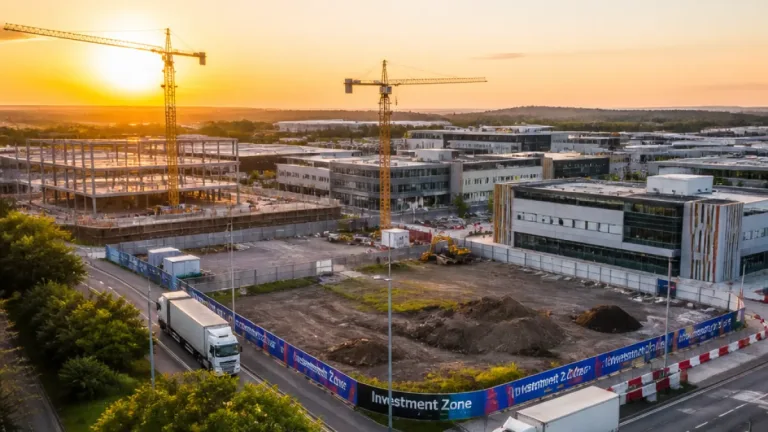
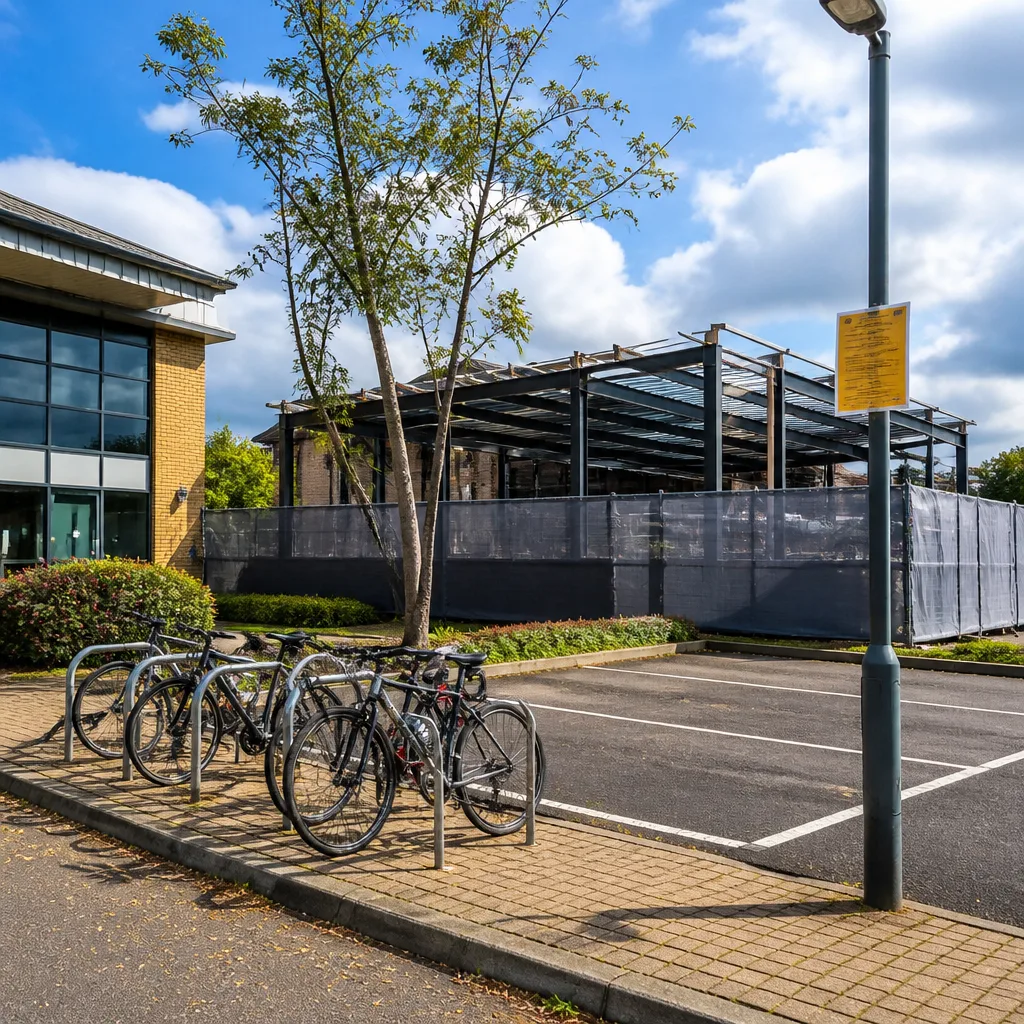
The British arm of electronics manufacturer TDK has been granted planning permission to reconfigure part of its Bracknell site, replacing a cycle store with a new warehouse and storage facility at 1 Bridge House, Brants Bridge.
Small expansion, practical implications
Bracknell Forest Council has allowed the company to demolish an existing cycle shelter to make way for the additional storage, a change that planners say suits the largely commercial character of the Brants Bridge area opposite the Royal Berkshire Bracknell Healthspace.
The approved plan does not deliver the full number of car parking spaces the council asked for: planning officers requested seven new spaces, but the submitted scheme provides five. Cycle provision, meanwhile, is retained in a revised form with a 13-space store for bicycles.
What this means for jobs, logistics and local costs
The permission is modest in scale but instructive about how firms are rebalancing space in response to operational needs. Replacing cycle storage with warehousing suggests TDK is prioritising on-site storage and handling capacity over staff bike parking. For workers, that could mean improved access to materials or faster fulfilment of local distribution tasks; for local supply chains it may signal slightly more activity in logistics at the site.
On wages and prices, the decision is unlikely to move the dial materially. The scheme is an internal reconfiguration rather than a major expansion of employment space, so any impact on local labour demand or rental values should be limited. However, it is part of a broader picture in which small adjustments at business parks can cumulatively affect local commercial property dynamics and the costs of operating for other firms nearby.
Broader planning picture in Bracknell and Wokingham
The TDK decision forms one item among a cluster of recent local planning outcomes. Bracknell Forest planners also refused a proposal for a new detached home in Winkfield on the grounds it would be inappropriate development in the Green Belt and risk harming protected trees and existing landscape assets.
Planning officers warned of potential loss of "green infrastructure" and judged the site unsuitable for the self‑build house and garage scheme.
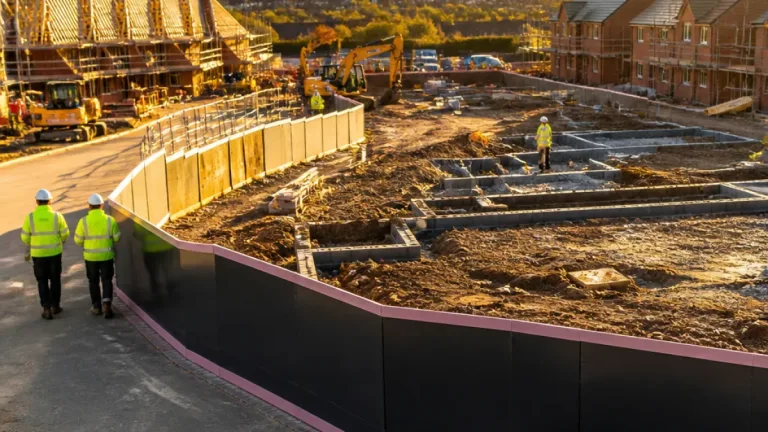
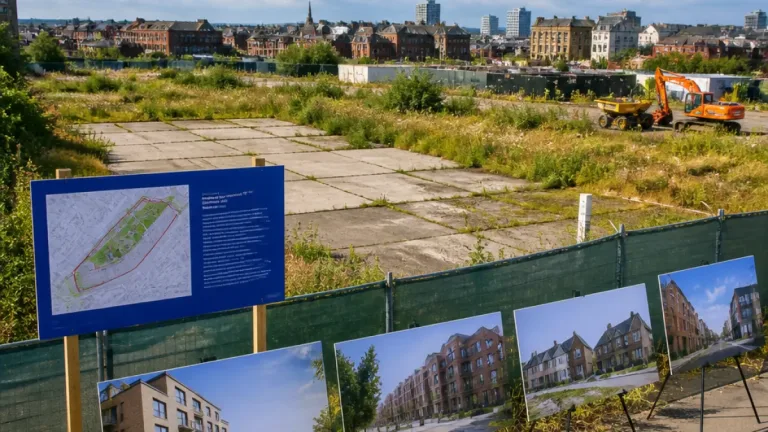
Separately, Wokingham Borough Council approved the detailed choice of materials for a development of 200 homes between Charvil and Twyford, moving the project a step closer to construction.
- TDK UK: permission to replace cycle store with warehouse and storage at Brants Bridge; 5 new car spaces provided (7 requested); 13-space cycle store retained.
- Winkfield: single new house refused on Green Belt and tree‑protection grounds.
- Charvil–Twyford: details approved for materials for 200 new homes.
The juxtaposition of these outcomes highlights competing local priorities. Councils face pressure to support business efficiency and housing delivery while protecting countryside and tree cover. Approving technical details for a 200‑unit scheme is a notable procedural milestone: it does not by itself authorise building to start, but it clears a planning hurdle that often precedes contracting and groundworks.
| Application | Decision | Key detail |
|---|---|---|
| TDK UK office (Brants Bridge) | Approved | Cycle store replaced by warehouse; 5 car spaces; 13-cycle store |
| New house, Woodside Road, Winkfield | Refused | Inappropriate on Green Belt; harm to protected trees |
| 200 homes, Charvil–Twyford | Details approved | Materials specification signed off |
Why the details matter
Planning minutiae such as parking numbers and material palettes may read as technical, but they affect costs, contractor choices and the pace at which projects move from consent to completion. For residents and businesses, the balance struck by councils between freeing up sites for commercial use and safeguarding environmental assets determines local amenity and long‑term value.
For businesses monitoring operating costs and logistics, even modest additional on‑site storage can reduce off‑site warehousing spend or improve turnaround times. For housebuilders, approval of materials speeds procurement decisions but does not remove the need for further consents and on‑site investment.
Taken together, these decisions show a local planning authority managing trade‑offs between growth and protection — a set of choices that will be mirrored across the country as councils weigh industrial, commercial and housing pressures on limited land.