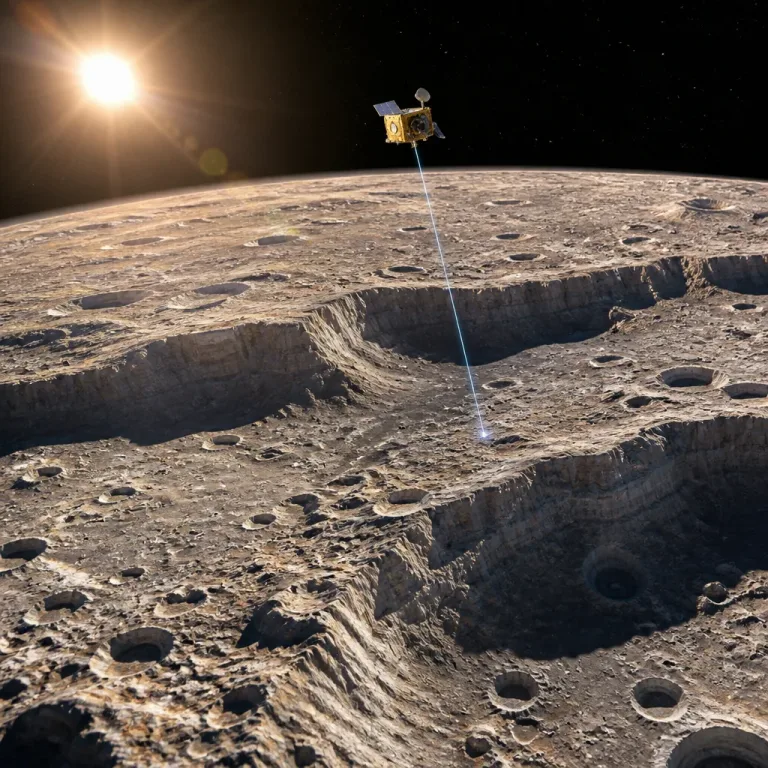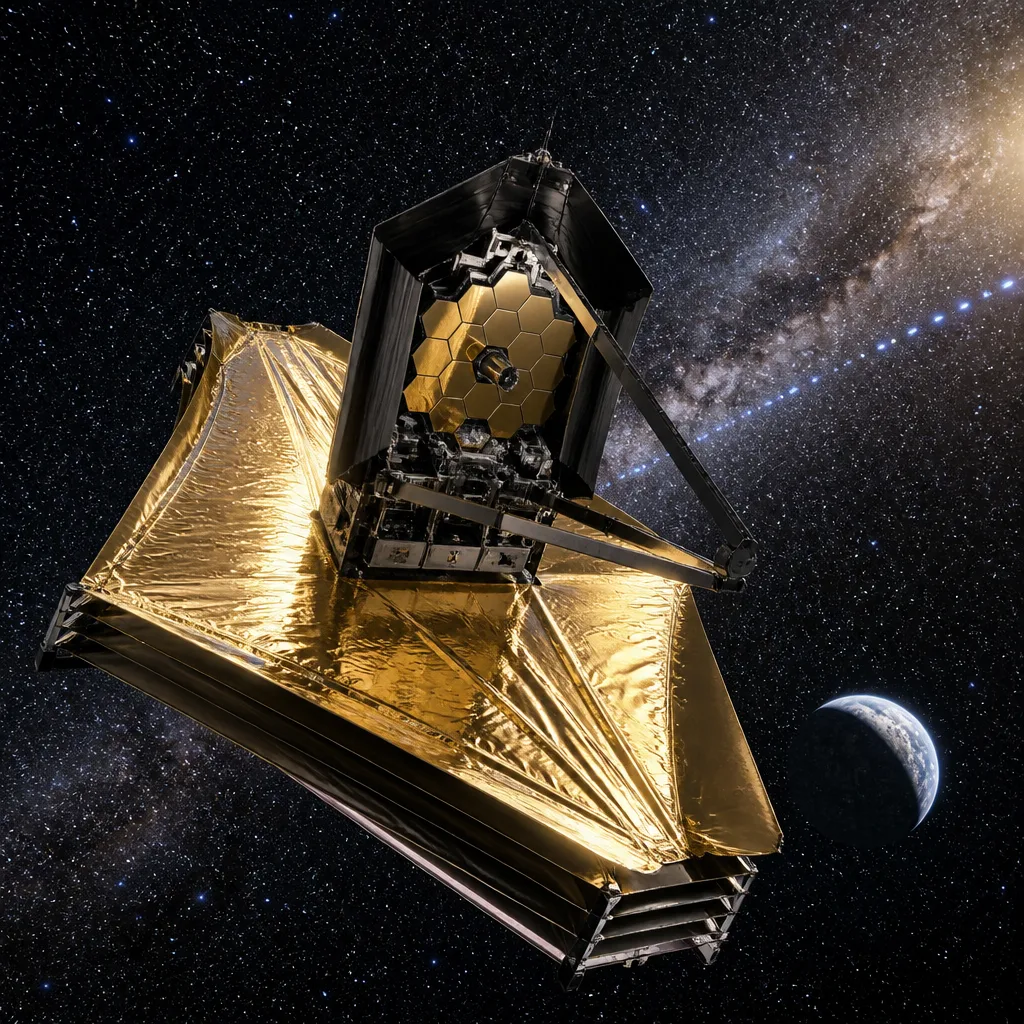
NASA has taken the first major operational steps in preparing the Nancy Grace Roman Space Telescope for science, activating its principal imager — a 300‑megapixel infrared camera known as the Wide Field Instrument (WFI) — and running initial tests of the mission’s Coronagraph Instrument, a technological demonstrator designed to image planets beyond our Solar System.
What the instruments will do
The WFI will deliver very large, high‑resolution views of the cosmos: each frame will cover an area of sky larger than the apparent diameter of a full moon while maintaining the sharpness expected from flagship space telescopes. Those sweeping surveys are intended to address some of the field’s biggest questions, including the distribution of matter in the Universe and the nature of dark energy, and to expand the census of exoplanets and distant galaxies.
The Coronagraph Instrument is a separate, experimental system. While not a primary science instrument for the mission, it will demonstrate technologies for directly imaging faint planets close to bright stars — a capability that, if matured, could transform future searches for Earth‑like worlds.
Early steps and careful cooling
The Roman team’s tasks began with a period of controlled cooldown and decontamination for the detectors. The WFI was allowed to rest for 10 days while operating at a relatively warm detector temperature of −85°F (−65°C) to let residual moisture be removed. On 11 September the heaters were switched off and the instrument was cooled further to −225°F (−143°C), the point at which the detectors were brought into their intended low‑temperature operating regime for initial activation.
| Parameter | Value |
|---|---|
| Wide Field Instrument resolution | 300 megapixels |
| Warm detector temperature during dry‑out | −85°F / −65°C |
| Initial operational detector temperature | −225°F / −143°C |
Teams and timeline
Activation and checkout are the first stages of a months‑long programme of calibrations and tests while the observatory continues its roughly million‑mile transit to the Sun–Earth L2 Lagrange point. Instruments must be verified in the space environment and gradually tuned: the combination of electronics, cryogenics and precision optics requires systematic steps to ensure stable performance before any scientific observing begins.
“After years of effort to build and test the instrument on the ground, we now have confirmation that it is operational in space. This is a huge milestone for the team at Goddard, our industry teams at BAE Systems, Inc. and Teledyne, and our science centres,”
The comment came from Josh Schlieder, the Wide Field Instrument scientist at NASA’s Goddard Space Flight Center in Greenbelt, Maryland. He stressed that, despite the milestone, substantial work remains before Roman can deliver science to the community.
Why this matters
- Survey speed and area: The WFI’s combination of field of view and resolution will allow rapid, deep mapping of large sky areas that are currently impractical with narrower but sharper facilities.
- Dark energy and cosmic structure: Roman’s surveys will provide statistical samples and weak gravitational lensing measurements that constrain how matter clumps and how the Universe’s expansion has accelerated over time.
- Exoplanet science: The mission’s wide surveys and the Coronagraph demonstrator together aim to expand knowledge of planets beyond our Solar System, both statistically and through direct imaging techniques.
These early activations mark a transitional phase from engineering to science. As instruments are progressively calibrated, engineers and scientists will characterise detector noise, optical alignment, and stray light performance — the sorts of technical details that determine how reliably faint astrophysical signals can be extracted from raw data.
For the wider astronomy community, Roman’s arrival at L2 and subsequent commissioning will open a new resource: very wide, sensitive infrared images that complement the deep, narrower fields obtained by other observatories. The next months of checks are therefore as important as the launch itself: they turn hardware into a scientific tool.
The Roman Space Telescope’s successful instrument activation is an important early victory on a path that, if completed without significant setbacks, promises to reshape large‑scale surveys and to demonstrate technologies crucial to future missions seeking to image worlds beyond our own.