
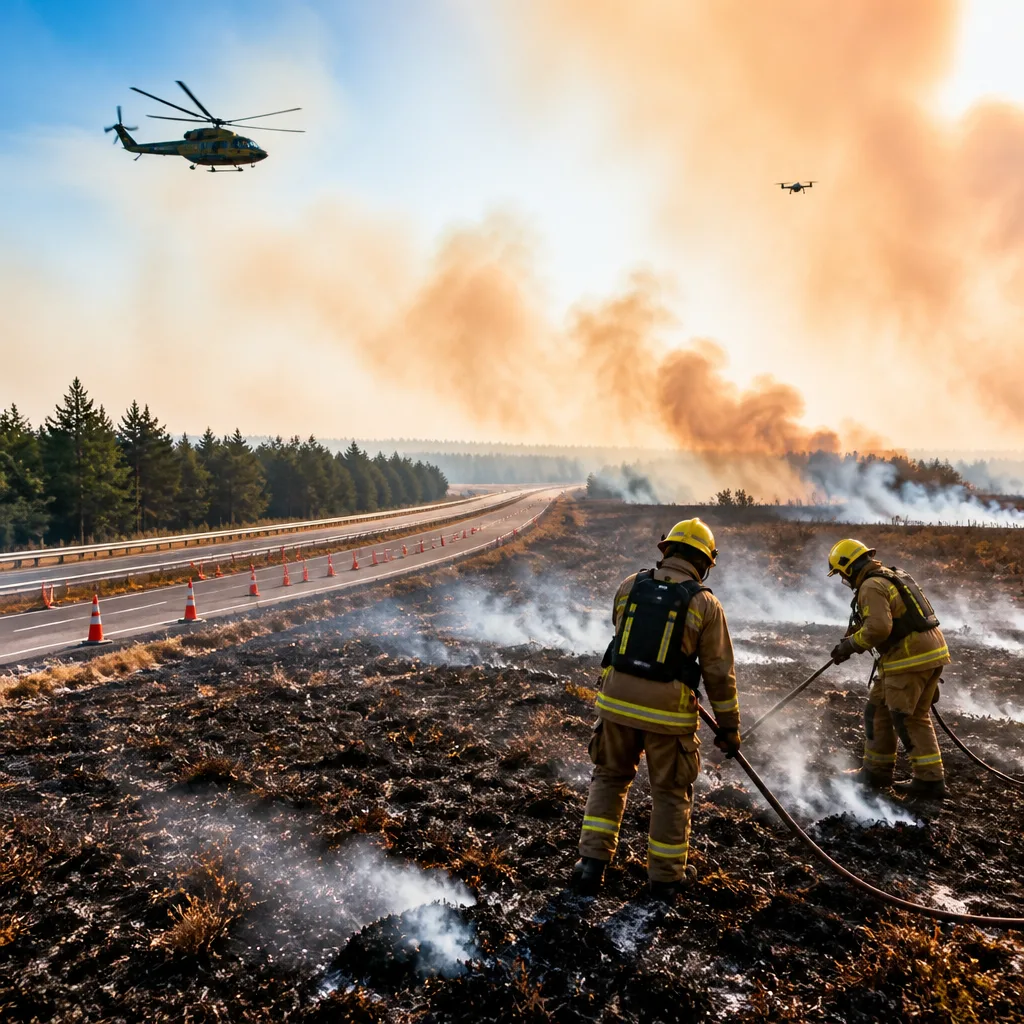
Firefighters are continuing a sustained operation to contain a large wildfire in the New Forest that has already affected more than 100 hectares of dried heathland and prompted closures of the A31 and other roads. Authorities warned the battle could take several days as shifting winds and deep, smouldering peat make suppression difficult.
What is happening now
Crews remain at the scene working to control multiple hotspots across the burning area. Aerial observation, including helicopter patrols and a police drone, is being used to monitor the fire’s progress while ground teams focus on damping down edges and preventing further spread. The A31 dual carriageway, a key route into the national park, has been shut and is expected to remain closed until at least Thursday while repairs are made to road surfaces, barriers and fencing.
Why containment is challenging
The combination of a desiccated landscape, abundant dry vegetation and changing wind patterns is making the incident hard to control. Fire crews report that surface flames can be brought under control only for peat below to continue smouldering and reignite areas above. The terrain is uneven and, in places, difficult to access, complicating efforts to maintain a steady water supply and to apply direct suppression on all hotspots.
“They are really worried that as they dampen down the top, the peat underneath is still alight and spreading the fire. It is too dry, too windy, and it is a real struggle.”
That assessment from an on‑scene source underscores a wider operational problem: Britain does not possess dedicated water‑bombing aircraft of the type regularly used by fire services in other parts of Europe, so crews rely on a mix of ground appliances and off‑road vehicles to reach and cool fire edges.
Context: an intense fire season and record heat
July was the busiest month on record for wildfires in the UK, according to the National Fire Chiefs Council, which said fire services had responded to 966 wildfires this year, including 458 in July alone. The fire in the New Forest comes amid an exceptionally hot, dry period: the Met Office has indicated the UK is on course for its warmest summer on average temperature.
Meanwhile, nearly three‑quarters of England has been placed under an official drought declaration. Those drought conditions not only increase the likelihood of wildfires but also complicate firefighting by reducing available water for suppression in rural areas.
| Metric | Figure (from incident reporting) |
|---|---|
| Area affected in New Forest | more than 100 hectares |
| Wildfire responses so far this year (national) | 966 incidents |
| Wildfires in July alone | 458 incidents |
Public impact and safety advice
- Road users should expect continued disruption on routes such as the A31 while closures and repairs are in place; plan journeys and follow police and Highways England updates.
- People in or near the New Forest should follow evacuation orders and stay clear of fire crews and cordoned areas to avoid hampering operations.
- Visitors and residents should be vigilant with any sources of ignition: open fires and disposable barbecues are particularly hazardous in tinder‑dry conditions.
Hampshire Fire and Rescue Service said it was attempting a larger‑scale attack on the blaze where terrain permitted, but noted the logistical challenges of supplying water and reaching hotspots. The service described efforts to use a mix of engines and off‑road vehicles to cool and contain the edges of the burn area so it does not escalate.
With more hot weather forecast for parts of England, the risk of further wildfire incidents remains elevated. Emergency services and land managers will be monitoring conditions closely and prioritising resources where the threat to people, property and critical infrastructure is greatest.
Forecast confidence: crews expect the incident to require several more days of work to achieve full containment. The combination of strong winds and deep‑seated peat fires reduces short‑term confidence in rapid extinguishment, so residents and visitors should prepare for ongoing disruption and follow official safety guidance.
Authorities will issue further updates as the situation develops and as roads are assessed for safe reopening.









