
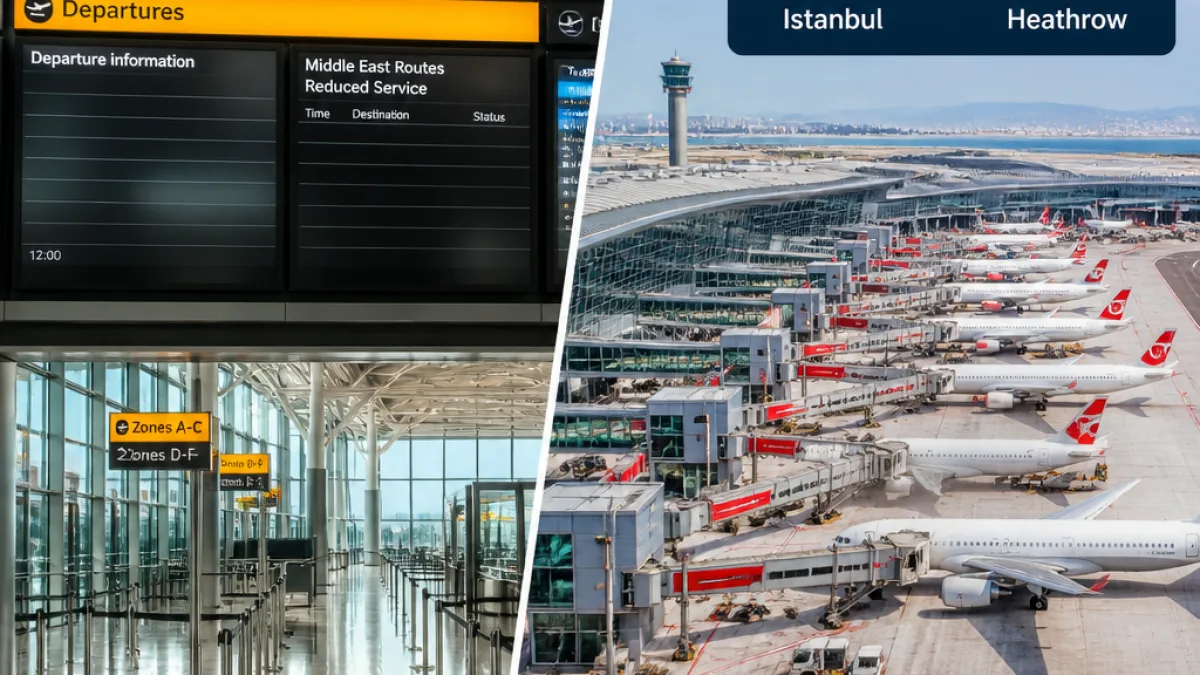
Heathrow has been overtaken by Istanbul as Europe’s busiest airport in July, figures from industry bodies show, dealing a symbolic blow to the west London hub that has dominated the continent’s air traffic for decades.
Numbers that matter
Industry statistics indicate 8.15 million passengers passed through Istanbul’s airport in July, compared with 7.86 million at Heathrow. The shift follows a sustained run at the top for Heathrow from 1996 until the pandemic, when the ranking briefly changed, and its subsequent recovery to lead again from 2023.
Heathrow said the figures reflected broader market pressures. Passenger numbers through the airport for 2025 totalled 84.46 million, and 19 July was its busiest day of the year with 267,000 travellers.
Why the change matters for London
The loss of the title is more than a headline — it has practical and political consequences. Heathrow operates at near-full capacity on its two runways and is actively pursuing permission to build a third runway. The airport’s owners argue expansion is essential to "stay competitive" and to support economic growth.
"The case for expansion has never been clearer," the airport said in a statement, adding its plans would "ensure the country gets the infrastructure it needs to stay competitive and will deliver all-important economic growth."
But the rise of Istanbul — which has invested heavily in new airport infrastructure and routes — highlights how capacity and connectivity elsewhere can shift travel patterns and airline strategies. For London residents and businesses that depend on global links, the change raises questions about future investment and whether the capital will retain its edge as a transport hub.
Regional route impact
Heathrow’s statement also pointed to a specific traffic decline: routes to and from the Middle East were down 20.2% year‑on‑year in July. Airports are sensitive to geopolitical events, and the recent US‑Israel conflict involving Iran has had a demonstrable effect on passenger flows on those corridors.
- July passengers: Istanbul 8.15m; Heathrow 7.86m
- Heathrow 2025 total: 84.46m passengers
- Middle East routes: Heathrow down 20.2% year‑on‑year in July
Local reaction and the expansion debate
In west London, where Heathrow looms both physically and economically, reactions are mixed. Businesses that rely on international connectivity fear any reduction in status could deter investment and add friction for trade and tourism. Local campaigners who oppose expansion, on the other hand, stress environmental and noise concerns and say capacity can be managed without building a third runway.
Heathrow’s owners say new airlines started serving the airport last month, pointing to continued demand for access. Critics will note that headline passenger numbers paint only part of the picture: route mix, transfer passengers, cargo volumes and bilateral traffic rights also shape an airport’s strategic importance.
How this affects travellers
For passengers, shifting rankings are largely invisible day-to-day, but practical consequences may follow. If airlines reallocate capacity away from London towards better-connected or less constrained hubs, travellers could face fewer direct services or higher fares on certain routes. Conversely, pressure on Heathrow could strengthen the airport's case for expansion and more government engagement on air transport policy.
| Metric | Istanbul (July) | Heathrow (July) |
|---|---|---|
| Passengers (millions) | 8.15 | 7.86 |
| Busiest day 2025 (passengers) | — | 267,000 |
| 2025 annual total | — | 84.46 million |
What comes next
Heathrow is pursuing expansion plans that its owners say would lift capacity to handle 150 million passengers a year. That proposal will need government approval and is certain to face scrutiny on environmental grounds and from local communities. Meanwhile, airports across Europe continue to compete through route development, airline partnerships and infrastructure investment.
For Londoners, the immediate takeaway is a reminder that global connectivity is not guaranteed by history alone. Policy decisions, geopolitical shocks and rival airports’ investments all shape whether the capital keeps its place at the frontline of international travel.
As debates about runways, rail links and climate commitments continue, Heathrow’s owners will use the new figures to press their case; opponents will use them to argue for alternative approaches. What is clear on the tarmac and in boardrooms is that the contest for Europe's busiest airport is also a contest over London's future role in the global economy.















