
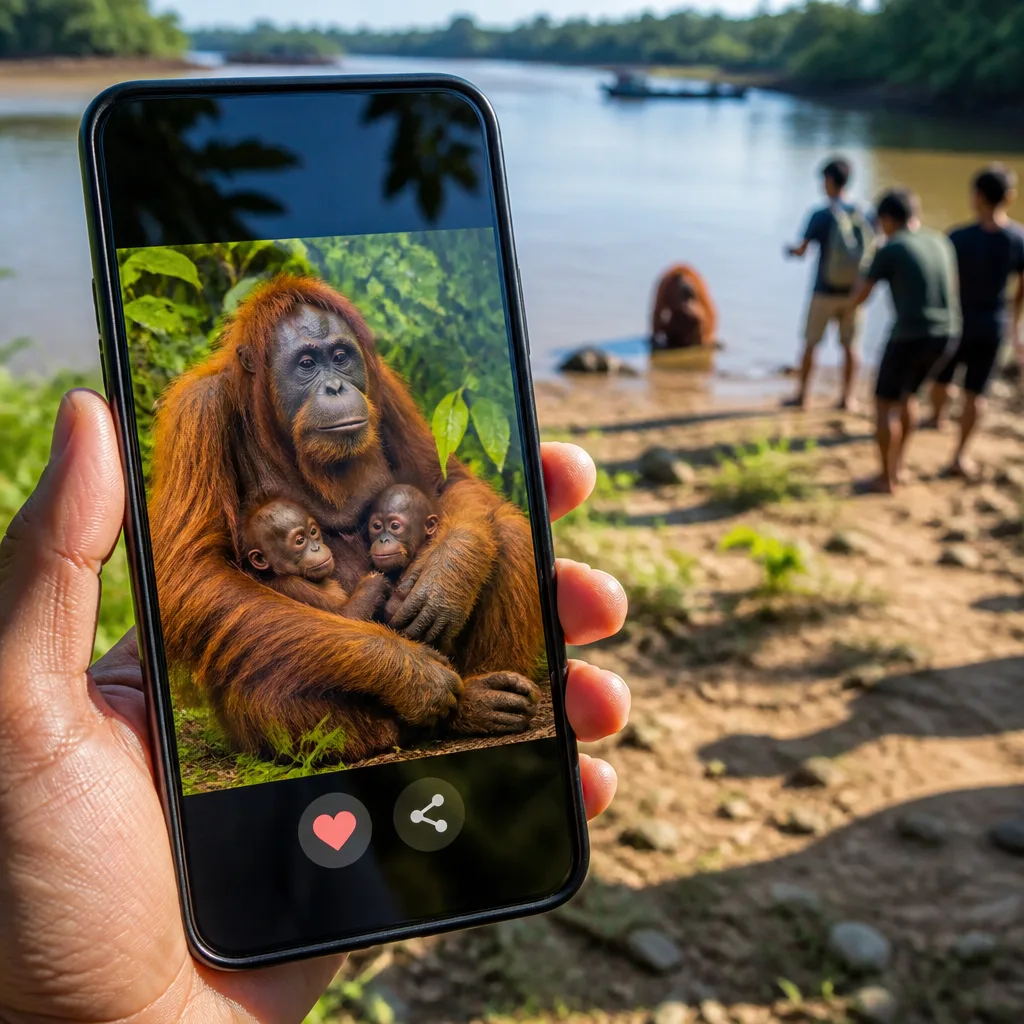
Hyper‑realistic images of wild animals, created by artificial intelligence and widely shared on social platforms, are increasingly misleading the public and carrying potential risks to both people and conservation efforts, experts have warned.
False images, real harms
Fact‑checkers have exposed a string of convincing fabrications: a black‑and‑white photograph circulating online that purportedly showed an orangutan cradling leopard cubs in Malaysia’s Sabah state has been identified as fake. Similar fabrications include an image of an elephant climbing a tree to escape flooding in Myanmar and a pink dolphin apparently leaping from the water in the Philippines. These visuals spread rapidly across platforms including Facebook, TikTok and X, often accompanied by sentimental captions and translations into multiple languages.
Conservationists say the effects are not merely aesthetic. Synthetic portrayals that present wild species as domesticated, benign or entertaining can shift public expectations about animal behaviour, encouraging people to approach or attempt to handle wild animals in unsafe ways.
“This misunderstanding can lead people to approach animals too closely or interact with them in unsafe ways,” Jose Guerrero‑Casado, a zoology professor at Spain’s University of Cordoba, said.
Consequences for people and wildlife
Experts cite real incidents that illustrate the danger. In January, a woman in China’s Xinjiang region was attacked by a rare snow leopard after approaching it for a photograph; local forestry authorities reported stepping up patrols and warned residents to keep their distance. Such episodes demonstrate how fabricated imagery that normalises close contact with wild species can translate into hazardous behaviour.
- Public safety: Misleading images may encourage people to get dangerously close to wild animals.
- Conservation harm: Depicting wild animals as tame can fuel demand for them in tourism, as props for social‑media content, or even as pets.
- Fundraising and trust: Fake content can make the public sceptical of extraordinary but genuine wildlife footage, complicating charities’ appeals and scientific communication.
Experts at international conservation organisations warn that the negatives outweigh any incidental benefits — while synthetic images might sometimes raise sympathy for animals, they are more likely to distort understanding and facilitate exploitation.
“They increase demand for certain species ‘to be used in the tourism industry as photo props, exploited to make social media content or to be kept as pets,’” said Chris Lewis, a researcher at the Born Free charity. Jenny Roberts of WWF added that fabricated content risks undermining trust in genuine documentary evidence and the charities that rely on it for fundraising.
Examples of widely circulated synthetic images
| Claimed image | Purported behaviour | Location cited |
|---|---|---|
| Black‑and‑white orangutan photo | Cradling leopard cubs | Sabah, Malaysia |
| Elephant in a tree image | Climbing to escape flood | Myanmar |
| Pink dolphin photo | Leaping from water | Philippines |
What the experts recommend
Conservationists and researchers urge stronger public education about the ease with which synthetic images can be produced, alongside better verification practices by platforms and news media. They say clearer labelling, rapid fact‑checking and media literacy campaigns are needed to prevent false visuals from reshaping behaviour and policy.
There is also a plea for cautious use of imagery in conservation fundraising. As one experienced charity representative put it:
“People could get hurt,” she said.The comment underlines the intersection of ethics, safety and communications: content that seems harmless online can have physical consequences in the real world.
As generative AI tools become more powerful and accessible, scientists and charities say they must work with technology companies and regulators to reduce harms — by slowing the spread of fabricated wildlife content, protecting vulnerable species from exploitation, and maintaining public trust in authentic scientific and photographic evidence.









