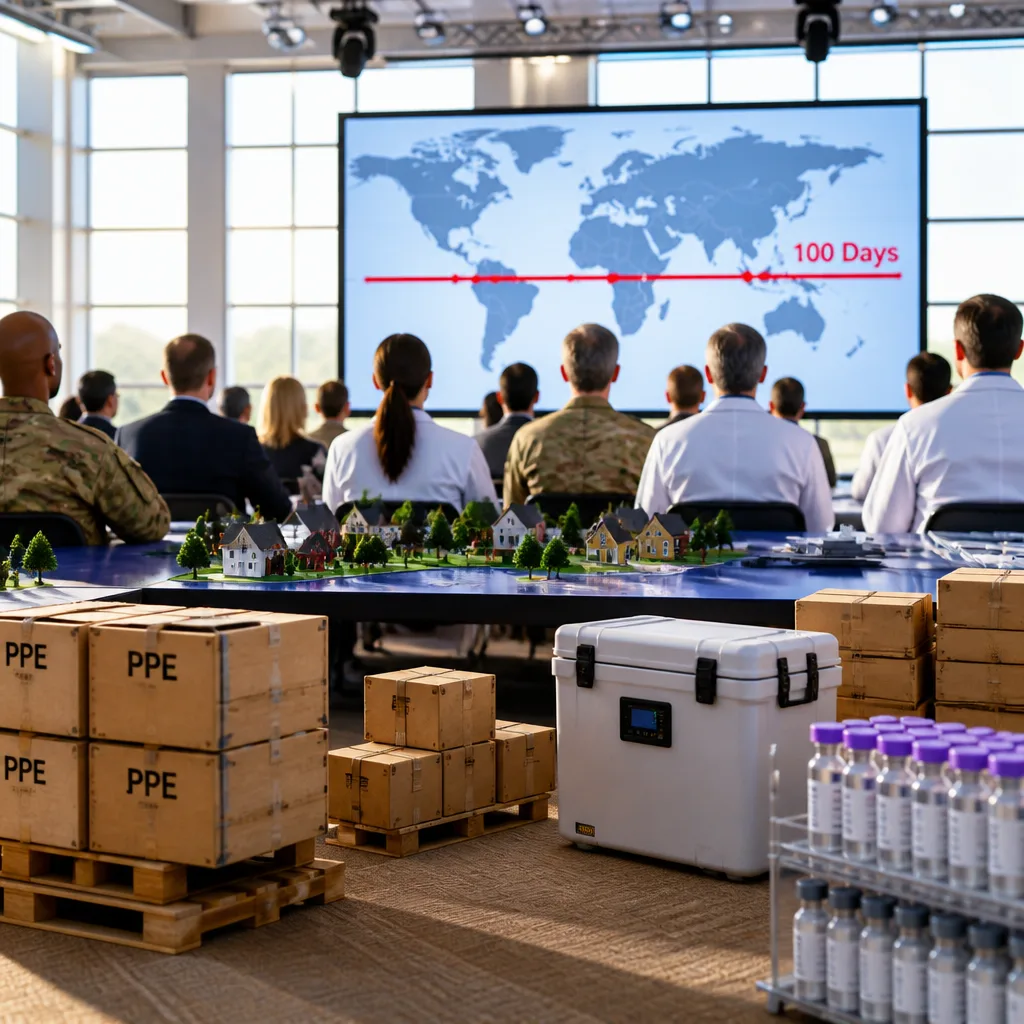
Senior figures from defence and health sectors were urged to deepen collaboration after recent outbreaks highlighted the speed with which biological threats can escalate and affect national stability. A RAND analysis presented alongside a tabletop exercise at the Global Health Security Conference in June 2026 argues that military and civilian health communities must align capabilities to meet the 100 Days Mission—the ambition to detect and deploy countermeasures within about 100 days of a new pathogen being identified.
Why defence matters for epidemic response
The report notes that the world is entering an era of heightened biological risk from multiple sources: natural emergence, accidental laboratory incidents and the deliberate misuse of biology. Recent events in central Africa—where the Democratic Republic of the Congo and Uganda were coping with what the source describes as the third-largest Ebola outbreak recorded—were cited as a case in point. The affected areas have seen fragile security conditions that complicated the humanitarian and public-health response, underlining how infectious threats can imperil both civilian populations and military readiness.
"Epidemic and pandemic threats are a matter of national, regional, and international security."
The authors argue that irrespective of origin, outbreaks strain the same systems and so benefit from coordinated use of unique defence capabilities—logistics, field deployment, medical surveillance and population protection—alongside public-health expertise.
What the RAND-convened exercise found
At the Global Health Security Conference in Malaysia, a tabletop exercise called The 100 Days Mission Under Pressure, convened by CEPI, RAND and the Brown Pandemic Center, brought senior defence and health leaders from Asia, Europe, Africa and North America together to identify shared capabilities and bottlenecks. The exercise emphasised that accelerating detection, development and delivery of countermeasures will require pre-established mechanisms for cooperation and clarified roles.
- Defence contributions: logistics, transport, security for responders, surge medical capacity and infrastructure support.
- Health contributions: epidemiology, laboratory science, clinical trials, regulatory pathways and community engagement.
- Cross-cutting needs: interoperable command-and-control, biosecurity oversight, rapid data-sharing and trained multi-sector teams.
The report frames these priorities as necessary whether an event is natural, accidental or deliberate; each scenario poses asymmetric risks for military operations and civilian governance.
Policy implications and limits of the evidence
The analysis calls for institutionalised planning between defence and public-health agencies, including exercises, joint doctrines and legal frameworks that govern when and how military assets support civilian responses. It also highlights the need to expand laboratory biosafety and biosecurity oversight as laboratories proliferate globally—an acknowledged risk factor for accidental releases.
However, the source material is descriptive rather than evaluative: it identifies strategic priorities and capability areas but does not provide quantitative estimates of the degree to which defence–health collaboration would shorten response timelines in specific scenarios. Nor does it offer costed proposals for implementation. Existing evidence from peer-reviewed studies on past epidemics suggests that faster logistics and coordinated command structures can reduce delays in vaccine and therapeutic delivery, but translating that into reliable time savings for novel pathogens remains uncertain.
| Actor | Typical contribution |
|---|---|
| Defence | Rapid transport, security, field hospitals, logistics, operational planning |
| Health | Surveillance, diagnostics, clinical research, regulatory approvals, community engagement |
| Partners | CEPI, research centres, international organisations and funders |
For the United Kingdom, the report’s conclusions carry practical questions. Will ministries adopt standing arrangements for rapid interoperability? Can civilian regulators and armed forces reconcile legal and ethical constraints on military involvement in public-health operations? Responses will need to balance the urgency of faster countermeasure deployment with democratic oversight, human-rights safeguards and civil–military boundaries.
In short, the RAND-backed exercise reinforces a growing consensus among international planners: meeting the 100 Days ambition is unlikely to be achieved by health systems alone. Defence organisations can bring critical enabling functions, but harnessing those strengths requires planning, legal clarity and transparent public engagement. The precise impact of such collaboration on lives saved and outbreak containment will depend on how these systems are set up and exercised before the next major threat emerges.