A microscopic signal preserved in the fossilised remains of a Triassic cynodont implies that at least one direct ancestor of mammals was giving birth to live offspring around 236 million years ago, researchers report. The finding, published in Frontiers in Mammal Science, would move the origin of viviparity in the mammalian lineage back by roughly 95–90 million years.
Evidence from a tiny growth ring
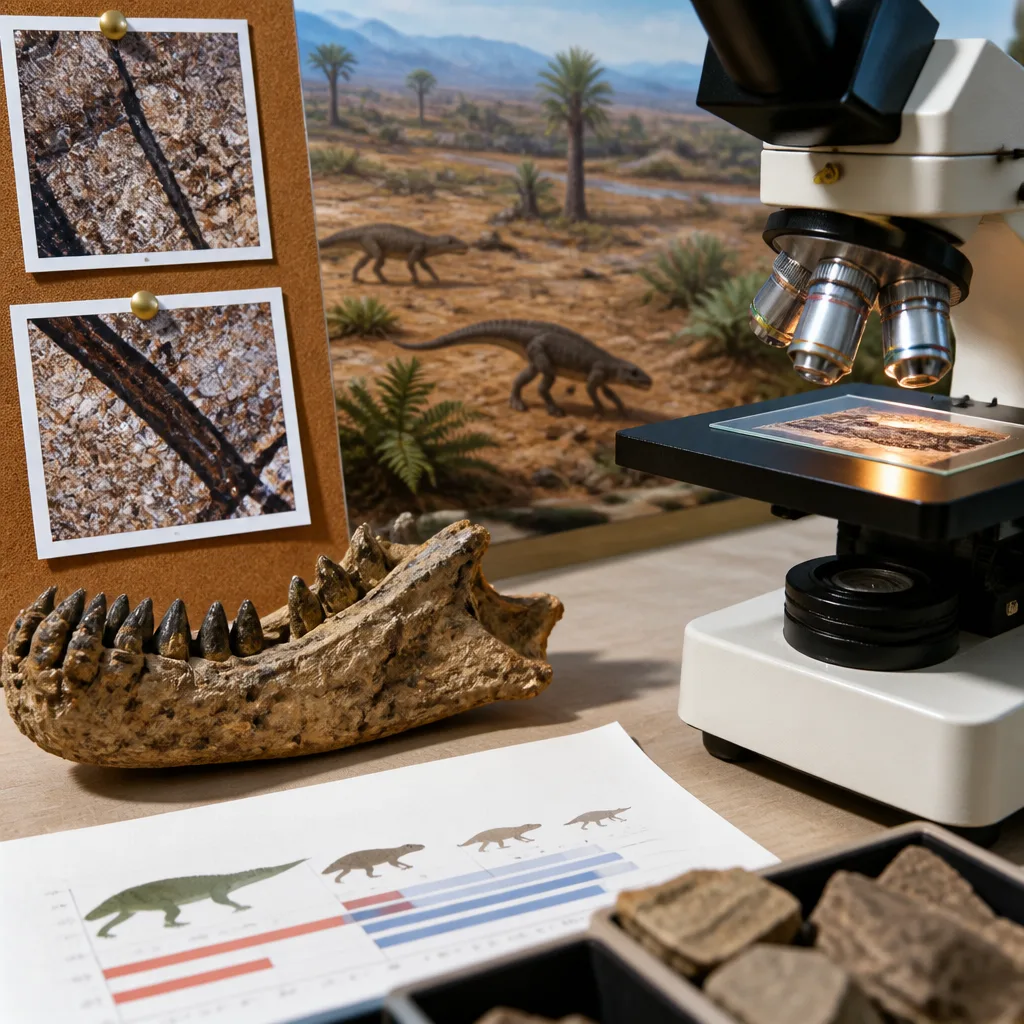
The study focused on Chiniquodon theotonicus, a carnivorous cynodont whose remains were found in north‑western Argentina. While examining microscopic structure, the team identified a discrete growth feature they interpret as a neonatal line — a narrow, distinct ring that in living animals commonly marks the growth acceleration shortly after birth.
To test the interpretation, the authors combined osteohistology with comparative life‑history data. They estimated the body mass of the fossil as a neonate and compared that estimate with the adult mass, then placed these ratios alongside data from thousands of living mammals, birds and non‑avian reptiles. The pattern matched those of mammals undergoing live birth rather than egg‑laying species.
"We show for the first time that live birth was present in at least one mammalian ancestor, Chiniquodon theotonicus, which lived approximately 236 million years ago," said lead author Dr Leandro Gaetano.
Method and its limits
The approach links a histological marker (the neonatal line) with quantitative body‑mass inference and comparative life‑history trends. In essence, the researchers asked whether the fossil’s growth signature and relative newborn size more closely resembled modern mammals or egg‑laying reptiles. Their statistical comparison of life‑history ratios produced a result consistent with viviparity.
That said, the authors are cautious. A neonatal line can be produced by perinatal physiological changes, and recognising it in fossil material requires exceptional preservation. The team’s inference rests on an interpretation of microstructure and on mass estimates derived from skeletal metrics — each step introduces uncertainty. The paper quantifies these uncertainties by using extensive comparative datasets rather than relying on a single proxy.
Why it matters
If confirmed, the result would push back by nearly a hundred million years the advent of live birth within the mammal stem lineage. Current thinking had placed the emergence of viviparity later in synapsid evolution; this study suggests the trait was present among at least some cynodonts in the Triassic.
- Specimen: Chiniquodon theotonicus (Triassic cynodont)
- Age: ~236 million years ago
- Key evidence: neonatal growth line and newborn:adult mass comparisons
| Feature | Value |
|---|---|
| Fossil age | 236 million years |
| Inferred shift in origin of viviparity | 95–90 million years earlier |
The broader evolutionary argument is plausible: during the Triassic, ecosystems were reorganising after a mass extinction, with high predation and climatic stresses. The authors propose that retaining embryos rather than laying eggs could have offered protection in such challenging environments — an adaptive explanation that fits ecological context but remains speculative until more specimens show the same signature.
Next steps and implications
Further validation will depend on similar histological markers in other cynodonts and on independent lines of evidence, such as pelvic morphology or direct fossilised associations. If additional fossils corroborate live birth in this part of the synapsid tree, palaeobiologists will need to re‑examine models for the tempo and drivers of reproductive evolution in early mammal relatives.
For now, the paper provides a carefully argued case that invites scrutiny rather than a definitive rewriting of mammalian origins. It is a reminder that, in deep time, tiny structural features preserved at the cellular level can illuminate life‑history traits with major evolutionary consequences.