The Ebola outbreak in the Democratic Republic of Congo (DRC) has reached almost 5,000 confirmed cases and more than 2,000 deaths, making it the deadliest recorded in the country’s history and raising concern among global health agencies that it could become the largest outbreak worldwide.
Numbers and gaps in the response
Official figures reported to 15 August show 4,945 confirmed cases, with 730 people currently in treatment centres, 1,040 recorded survivors and 2,325 deaths. That accounting leaves around 850 people who tested positive but are not reflected in the tally of patients, survivors or deaths.
| Metric | Number (to 15 Aug) |
|---|---|
| Confirmed cases | 4,945 |
| People in treatment centres | 730 |
| Recorded survivors | 1,040 |
| Deaths | 2,325 |
| Tested positive but unaccounted for | 850 |
Health officials and international agencies say the outbreak had likely been spreading undetected for months before it was declared on 15 May. That early, hidden transmission has left responders trying to catch up.
“The outbreak had a big head start, it is still way ahead of us and we are playing catch-up,”
The comment, made by the World Health Organization’s director general, summarises the scale of the operational challenge. The causative agent in this outbreak is the Bundibugyo strain of Ebola virus, a less common variant for which there is currently no licensed vaccine or specific antiviral treatment, according to the latest briefings.
Why containment has been difficult
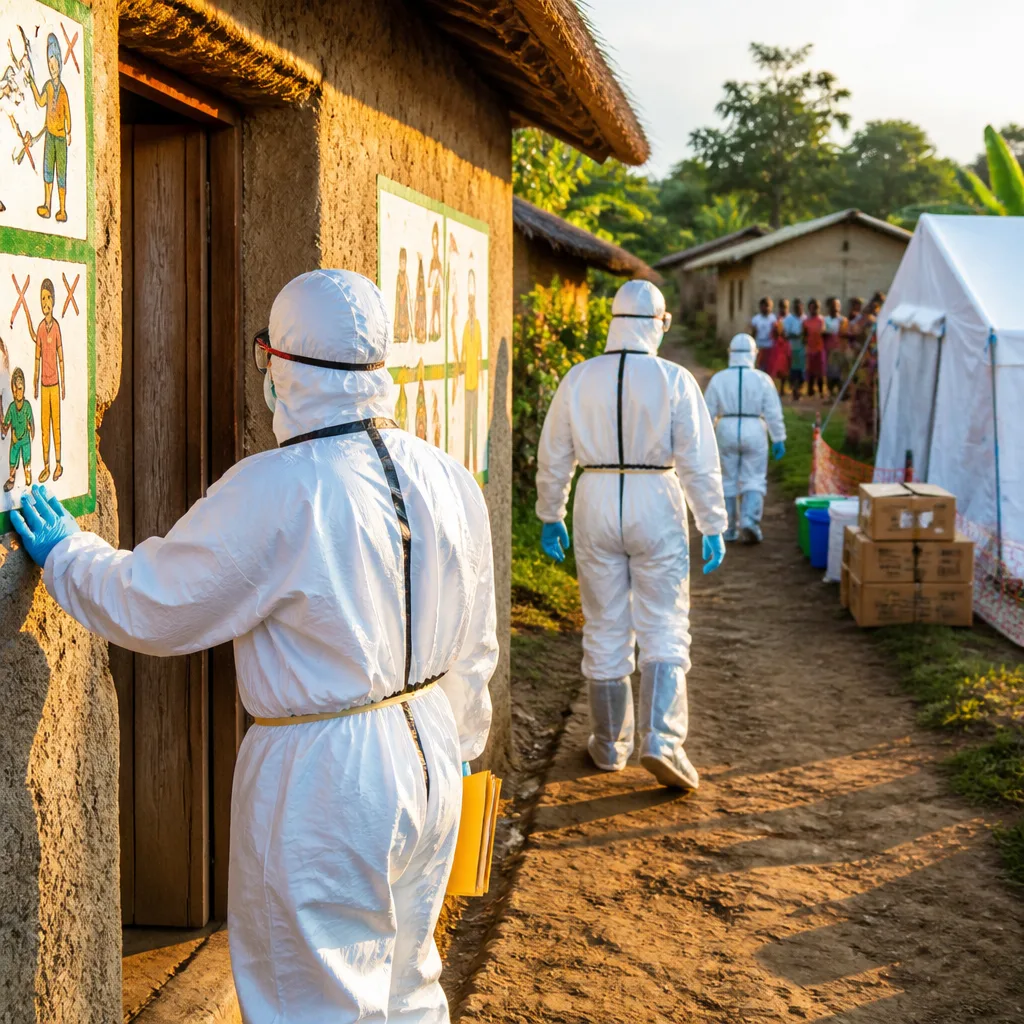
Control measures for Ebola typically rely on early case identification, isolation in treatment centres and rapid tracing and monitoring of contacts. In the DRC, those measures have been undermined by insecurity and population displacement in the most affected provinces, notably Ituri and North Kivu, complicating access for health teams and limiting community engagement.
One concrete shortfall has been contact tracing. Africa Centres for Disease Control and Prevention (Africa CDC) estimated that response teams were reaching only about 12% of contacts, far below the internationally recommended target of 95%. In contrast, neighbouring Uganda recently contained a traveller-linked cluster after testing and rapid response limited transmission to 20 cases and two deaths, illustrating how rigorous contact work can curb spread.
Shifting tactics: active case finding and community mobilisation
Faced with these obstacles, authorities are introducing new approaches. Teams will now conduct door-to-door searches to identify symptomatic individuals earlier, and local leaders are being appointed in villages to take part directly in surveillance and reporting. The intention is to expand detection beyond the capacities of conventional contact tracing, particularly where community movement and conflict hinder follow-up.
- Door-to-door symptom screening to find cases earlier
- Appointment of village-level responders to improve surveillance
- Ongoing isolation and supportive care for confirmed cases
Implications and limits of current information
Public-health experts caution that reported figures likely understate total transmission because of delayed detection, the difficulties of surveillance in conflict-affected areas and the number of people who test positive but are not logged into treatment or outcome categories. The absence of an approved vaccine or specific antiviral for the Bundibugyo strain further complicates control, meaning that classic public-health measures remain central to limiting spread.
As the situation evolves, precise outcomes will depend on whether the intensified community-level approaches can close the gap in contact identification and how security conditions affect access for responders. International agencies continue to support national authorities, but the scale and speed of the outbreak mean sustained, coordinated effort will be required to bend transmission curves downward.