Recent reductions in science funding administered by UK Research and Innovation (UKRI) have placed two nationally significant facilities under threat: the celebrated Jodrell Bank observatory and the Rutherford Appleton Laboratory’s world‑leading pulsed muon source. Commentators have focused on the fate of the Lovell telescope; less visible but no less consequential is the potential loss of a unique tool used across condensed‑matter and materials science.
Iconic telescope and an intense source of muons
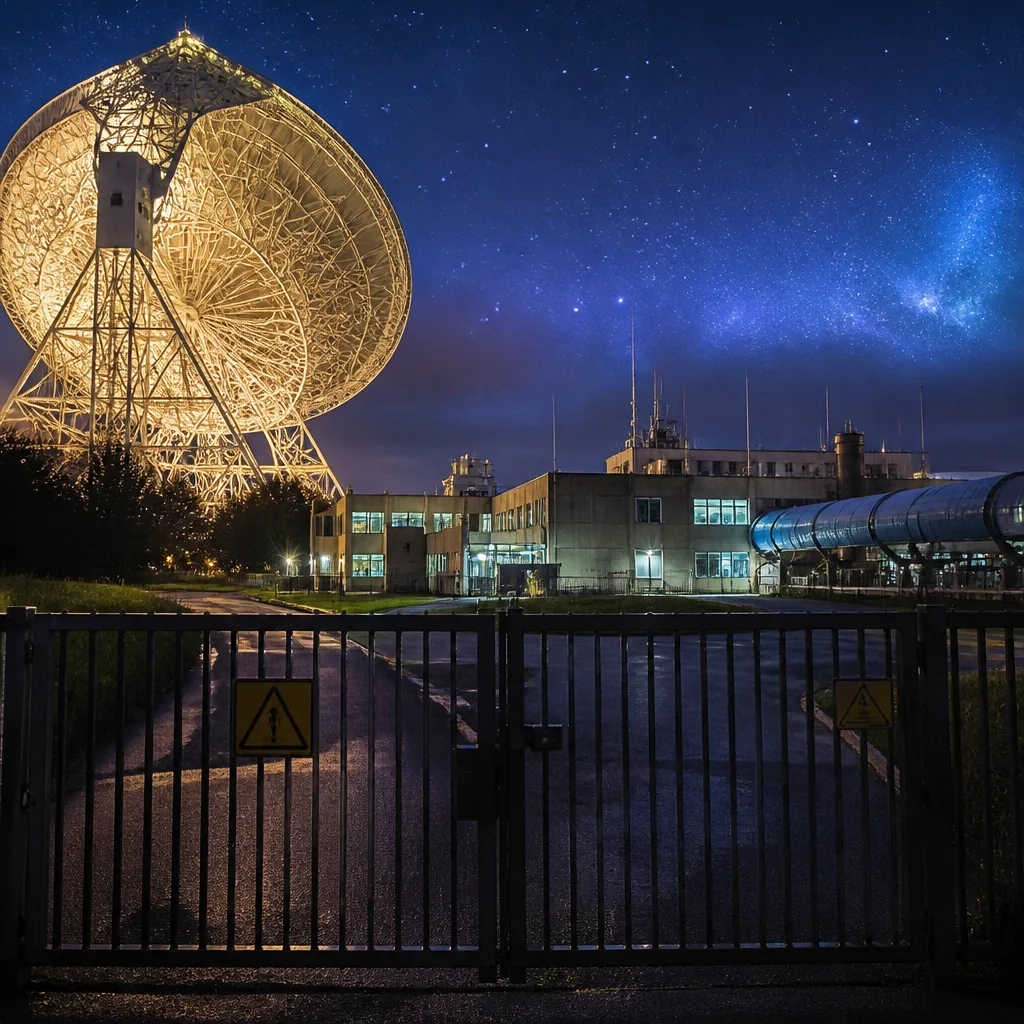
The Lovell telescope at Jodrell Bank has been widely described as a “source of wonder and pride” — language that captured public attention when the closure prospect arose. But a letter from Prof Stephen Blundell of Oxford, published in a national newspaper, drew attention to a facility that operates out of public sight yet underpins research into foundational and applied problems: the world’s most intense source of pulsed muons housed at Rutherford Appleton Laboratory.
“a ‘source of wonder and pride’”
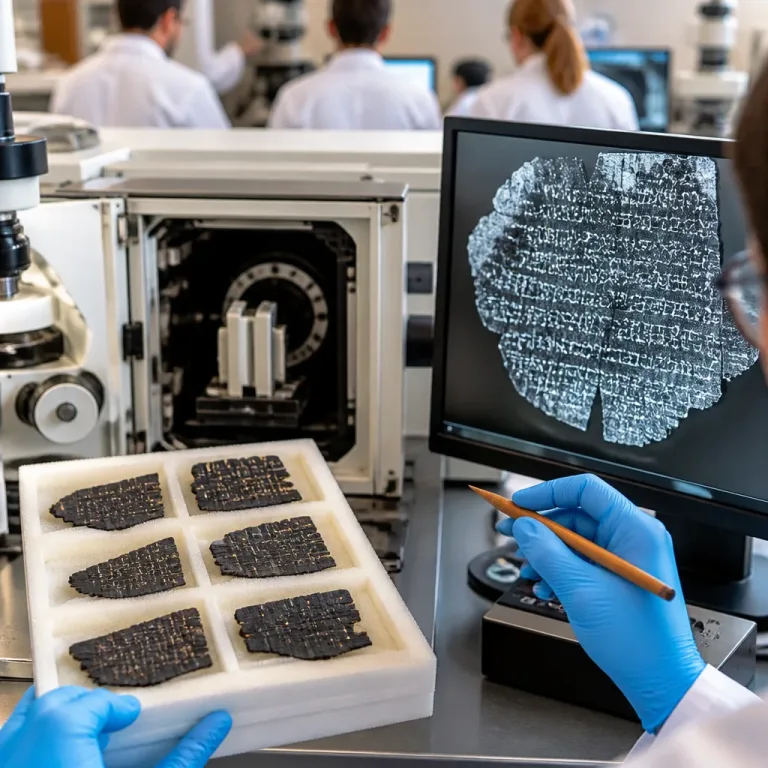
Muons are subatomic particles used as probes to investigate the internal magnetic and electronic behaviour of materials. Techniques based on muons help scientists address questions in areas such as magnetism, superconductivity and the development of battery materials. According to the correspondence, UK teams have been at the forefront of advancing these methods; the facility’s loss would therefore represent more than the shutdown of a machine — it would be the removal of an experimental capability that supports a broad slate of research of both scientific and societal interest.
Why the muon source matters
Muon spectroscopy is a specialist technique: muons implanted into a material reveal how magnetic fields and electronic environments evolve on microscopic scales. That sensitivity makes the method particularly valuable for:
- studying novel magnetic phases and transitions;
- investigating mechanisms of superconductivity;
- characterising processes relevant to battery degradation and performance.
Those applications span fundamental physics and technologies directly relevant to industry and energy systems. The letter asserts that the Rutherford Appleton facility is uniquely intense in its pulsed muon output, a distinguishing attribute for experiments requiring high time resolution or weak signals.
Funding decisions and wider consequences
Decisions by funders such as UKRI inevitably involve hard priorities, but the correspondence underlines a risk: concentrating public and media attention on a single, symbolic closure may obscure the quieter erosion of less visible infrastructures that underpin wide swathes of research. If a facility central to experimental capabilities is closed or downsized, UK scientists may lose not only instruments but also the sustained expertise and leadership that accrue around long‑running facilities.
Loss of domestic capacity can have several downstream effects: collaborators may need to seek access abroad, training opportunities for early‑career researchers can be diminished, and the ability to pursue long‑term, high‑risk lines of enquiry at scale may be weakened. The letter stresses that these consequences would be felt across disciplines that rely on muon techniques.
Scientific promise amid public scepticism
In a second contribution, a correspondent commented on media coverage of another scientific topic: engineering bacteriophages — viruses that prey on bacteria — and the role artificial intelligence might play. The letter noted that bacteriophages have been used in medicine for over a century and are already applied against antibiotic‑resistant bacteria, and argued that developing engineered phages for wider clinical use has been an active pursuit in laboratories for decades. The writer suggested AI could be a valuable tool in that work, lamenting a tendency for coverage to default to fear‑based framings.
| Facility | Role |
|---|---|
| Jodrell Bank (Lovell telescope) | Iconic radio astronomy instrument; public and scientific landmark |
| Rutherford Appleton Laboratory (pulsed muon source) | World’s most intense pulsed muon source; used for magnetism, superconductivity, battery materials research |
The twin points made in these letters — the tangible threat to specific facilities and the broader debate about how science is presented to the public — highlight two recurring tensions in national research policy: how to balance symbolic value and strategic capability, and how to ensure that discussion of new scientific tools and promises proceeds with nuance rather than panic. For policymakers and research institutions, the challenge is to weigh immediate fiscal pressures against the long‑term value of sustaining unique, capability‑building infrastructure.
As the national conversation about science funding continues, the question remains whether the full range of UK research capabilities — visible and behind the scenes — will be preserved or diminished.