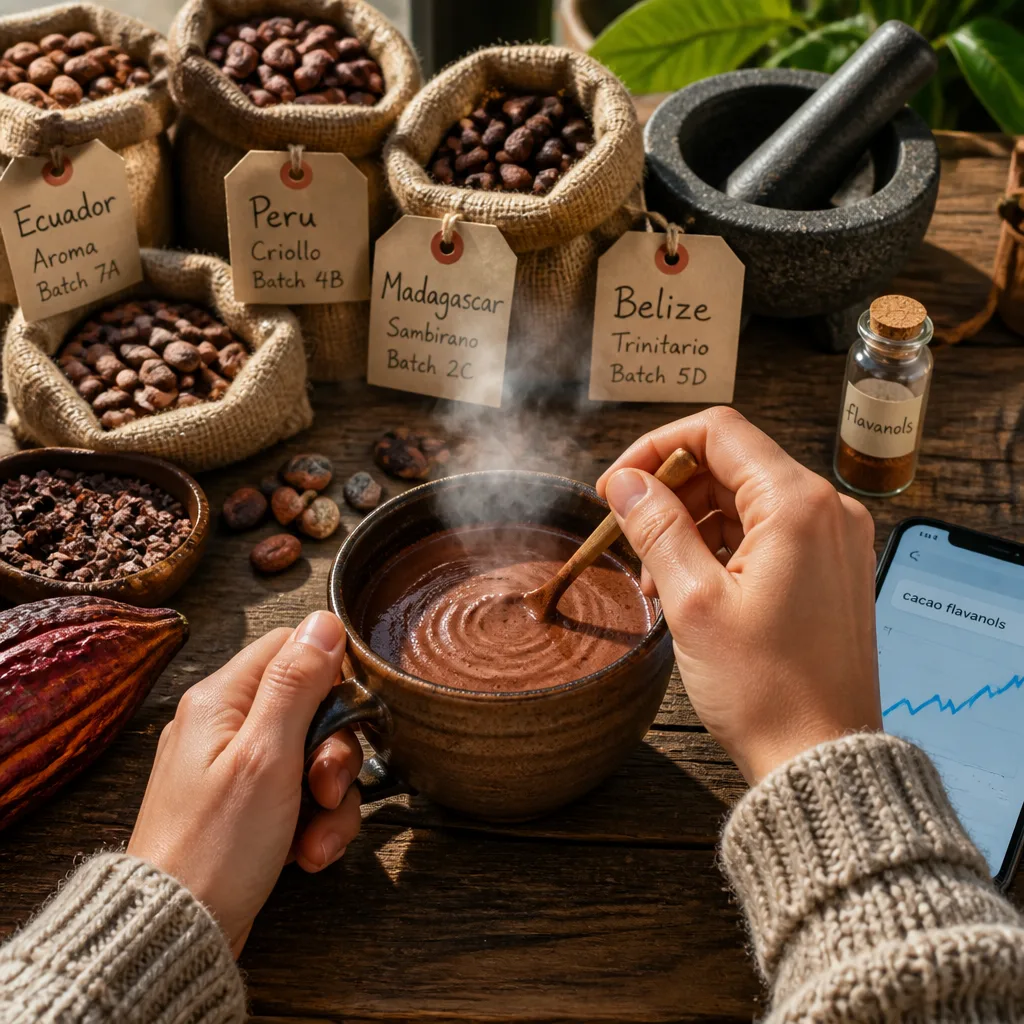
Ceremonial cacao — a minimally processed form of cacao traditionally consumed as a hot paste rather than eaten — is quietly reshaping conversations in the confectionery and beverage industries. Search interest has climbed year-on-year and companies are being asked to consider traceability, provenance and product formats that respect a category that resists commoditisation.
What is ceremonial cacao and why it matters
Unlike commodity cocoa that is typically roasted, alkalised and separated into cocoa powder and fat, ceremonial cacao is produced from whole beans that are stone-ground into a dense paste. The process preserves more of the bean’s original composition and is usually handled at farm or community level so the final product can be traced back to a single origin, rather than being blended into large lots for consistency and shelf stability.
Most consumption remains ritual: the paste is dissolved in hot water and whisked into a drink with cultural roots in Central and South American Indigenous practice. That usage pattern — and the product’s resistance to standard food‑industry processing — is central to why some manufacturers are hesitating to treat it as a conventional ingredient.
Evidence and claims
Scientific interest in cacao flavanols is not new. There is peer-reviewed evidence linking flavanol-rich cacao to improvements in blood flow, markers of cardiovascular health and certain aspects of cognitive performance. However, wider assertions about emotional or spiritual awakening associated with ceremonial cacao remain anecdotal and are not substantiated by controlled scientific research.
“Beyond the cup is still an open question for NPD,”
The practical takeaway for developers is that health-related claims must be distinguished from cultural and ritual dimensions. Where the science is robust — for instance, on vascular benefits related to flavanols — clear labelling and compliant health claims may be possible. Where claims are experiential or spiritual, they should be presented as tradition or consumer testimony rather than clinical fact.
Market signals and seasonality
Growth is measured and steady rather than explosive. Available trend data puts monthly searches for ceremonial cacao at around 30,000 and shows a 12% year‑on‑year increase. Interest peaks at particular times of year — especially September, December and January — which suggests the product is often sought during short, dark months and around new‑year routines rather than following a single viral moment.
| Metric | Value |
|---|---|
| Approximate monthly searches | 30,000 |
| Year‑on‑year search growth | 12% |
| Typical seasonal peaks | Sept, Dec, Jan |
The conversation is concentrated on image‑led platforms such as Instagram, where the ritual and visual aspects of ceremonial preparation can be showcased, rather than on short‑form video platforms where other food trends often spread fastest.
Implications for product development and supply chains
For product developers in bakery, confectionery and drinks, ceremonial cacao presents a dilemma. Its attributes — single‑origin traceability, minimal processing and cultural significance — run counter to the industrial priorities of uniformity, long shelf life and low unit cost. That tension suggests two likely routes for industry engagement:
- Educate consumers and invest in traceable sourcing rather than trying to scale the product purely as a commodity;
- Explore small‑batch, premium formats that retain origin stories and ritual context, rather than forcing ceremonial material into standardised mass‑market formulations.
Companies that try to flatten ceremonial cacao into a commodity run the risk of undermining the attributes that attract consumers in the first place — provenance, ritual and a perception of authenticity. Conversely, those that value traceability and education may find a distinctive niche that commands a premium.
As interest grows in the UK and internationally, the key questions for manufacturers are not only how to use ceremonial cacao, but whether they should change how they source and label cacao more generally. The category’s rise is a reminder that not all raw materials fit comfortably into industrial molds, and that consumer demand increasingly rewards transparency and stories as much as price.