Agilent Technologies has been named a founding member of the Harwell Campus CO:LABS initiative and will open a dedicated demonstration laboratory within the campus’ new 120,000 sq ft lab complex, the organisations announced.
Practical access to complex equipment for early‑stage firms
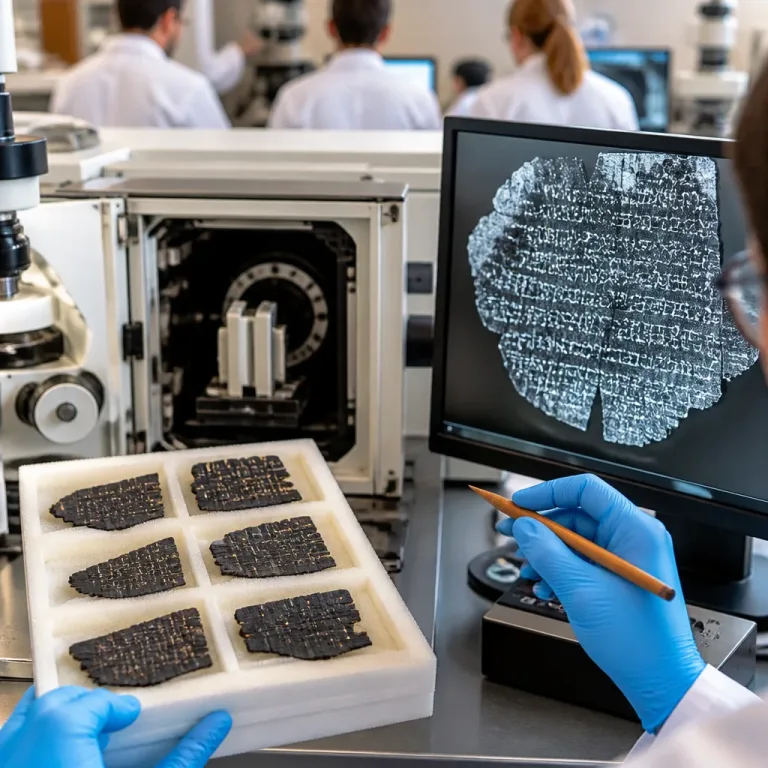
The partnership is designed to give fledgling companies based at Harwell — and across its wider scientific ecosystem — hands‑on access to analytical instruments and technical expertise that are typically hard to obtain in the earliest stages of development. The offer includes advanced spectroscopy and life‑science instrumentation together with application support and practical training.
Harwell, long established as a cluster for physical and life sciences, already hosts Agilent’s Global Centre for Raman Spectroscopy, a relationship said to trace back to technologies developed by Cobalt Light Systems, a spin‑out from the Central Laser Facility later acquired by Agilent. The instrument‑heavy nature of modern life‑science development means early ability to validate and quantify results can be decisive for start‑ups converting laboratory discovery into investable products.
"Harwell Campus has long been an important hub for scientific discovery and innovation. CO:LABS creates an exciting environment for collaboration across the Harwell ecosystem, and we look forward to working alongside companies on campus to help accelerate new ideas and scientific breakthroughs."
"Welcoming Agilent as a founding member of CO:LABS is a significant milestone for Harwell Campus. For early‑stage companies, access to world‑class expertise and advanced analytical technologies can be the difference between promising ideas and proven solutions."
What the demonstration lab will deliver
The announcement highlights several tangible elements that the demonstration laboratory will provide:
- Direct instrument access: specialised spectroscopy and life‑science equipment for use by start‑ups and researchers.
- Technical support: application expertise and hands‑on assistance to help teams generate robust data.
- Training: practical instruction so smaller teams can operate or interpret outputs from complex platforms.
These offerings respond to a familiar bottleneck in the UK innovation pipeline: early‑stage companies can have strong ideas and preliminary data but lack routine access to high‑end analytical platforms, which are expensive to acquire and require specialist training to run.
Context and consequences for the UK science base
Harwell Campus occupies a unique position as a multidisciplinary cluster where physics, space, materials and life sciences converge. The CO:LABS project, anticipated to open later this year, is positioned as a 120,000 sq ft lab development intended to host start‑ups and scale‑ups that need flexible, instrument‑rich laboratory space.
For policy makers and investors, the significance is twofold. First, locating industry‑run demonstration facilities within public or semi‑public R&D clusters can accelerate the maturation of technologies by reducing the time and cost required for early validation. Second, the presence of an established commercial partner such as Agilent within a campus ecosystem may attract follow‑on investment, partnerships and skilled personnel to the region, strengthening the campus’s role in the national innovation landscape.
Operationally, the demonstration lab model keeps capital expenditure centralised while distributing capability: multiple small companies can access the same high‑end instrumentation on a pay‑as‑you‑use or consortium basis, preserving cash for other growth activities. It also creates a conduit for knowledge transfer from a major instrument developer to emergent firms.
| Feature | Detail |
|---|---|
| Facility size | 120,000 sq ft (CO:LABS development) |
| Core offerings | Advanced spectroscopy, life‑science instrumentation, application support, training |
| Corporate partner | Agilent Technologies (founding member; hosts Global Centre for Raman Spectroscopy at Harwell) |
While the announcement does not specify the full equipment list, or the commercial terms for access, it sets a clear intent: to lower the barrier to advanced analytical capacity for companies at a formative stage. For innovators, that means earlier, higher‑quality data; for funders, clearer validation pathways; and for the national science ecosystem, a practical mechanism to convert discovery into deployable technology.
How widely this approach will be replicated across other UK science parks and whether it will materially alter funding or facilities strategies remains to be seen, but Harwell’s move signals an appetite within both public and private sectors to co‑locate technical capability where emerging companies most need it.