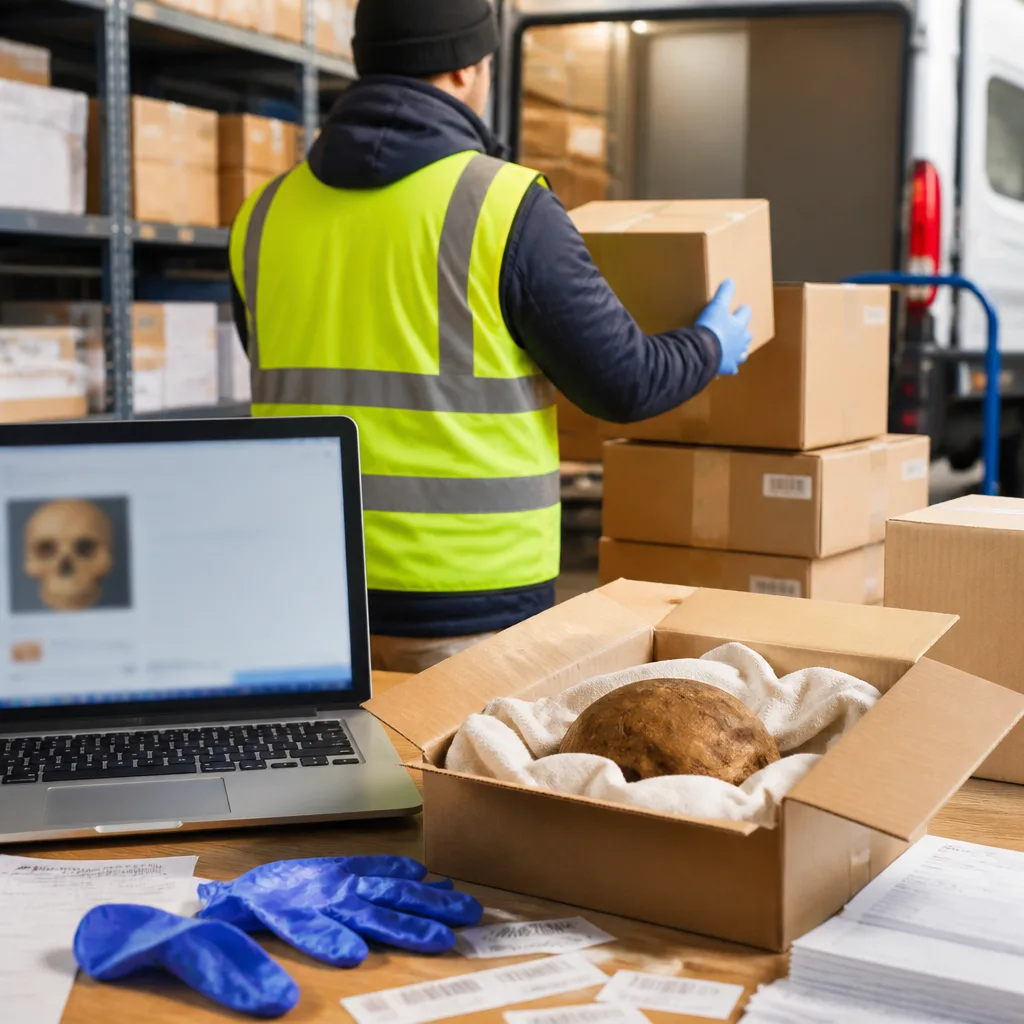
Researchers have issued a stark health warning about a growing international market in mummified human remains, saying the trade — increasingly conducted via social media, e‑commerce platforms and auction houses — exposes buyers, couriers and the wider public to biological and chemical hazards.
Study highlights dormant microbes and toxic preservatives
The peer‑reviewed article, published in the International Journal of Cultural Property and made available online by Cambridge University Press, describes a "semi‑clandestine, often illicit" industry that has been amplified in recent years by online marketplaces. The authors examined 128 online posts across Meta platforms, e‑commerce sites, web stores and auction houses and found frequent evidence of biodeterioration and an absence of seller safety information.
“a real mummy’s curse”
According to the paper, more than half of the sample — 51.6% — consisted of heads in varying states of preservation, including whole or partial mummified heads, crania with soft tissue and hair, and tsantsas (shrunken heads produced by the Shuar people of northern Peru and eastern Ecuador). Isolated hands and feet were also commonly offered.
Why mummified material can be hazardous
Mummification — whether natural or artificial — relies on a range of chemical and physical processes to delay decomposition. The study emphasises two principal hazards:
- Dormant microorganisms: centuries‑old remains can harbour fungal spores and other microbes that persist in a desiccated state and may become airborne when remains are moved or handled.
- Toxic preservatives: historical preservation techniques have used heavy metals and chemical agents, including arsenic, mercury and lead, which can present acute or chronic poisoning risks.
The authors say these risks are amplified by poor disclosure from sellers, who frequently post images showing clear signs of biodeterioration without any guidance on handling, packaging or decontamination. In many cases, postal services were used to transport items, creating potential exposure pathways beyond the immediate buyer.
Evidence and practical consequences
The research presents quantifiable findings from the online sample and situates them within a wider concern over the commodification of human remains. The paper stresses that the trade often operates in a legal grey area and is facilitated by the reach and anonymity of digital platforms.
Consequences identified by the authors include:
- Direct risk to collectors and handlers from airborne spores and toxic residues.
- Occupational exposure risks for postal and courier workers who may be unaware of the nature of packages.
- Conservation and ethical concerns regarding cultural heritage and the illicit provenance of some items.
| Metric | Value |
|---|---|
| Online posts examined | 128 |
| Proportion of posts showing heads | 51.6% |
The study does not claim to establish infection outbreaks linked to the trade, but it documents the potential for exposure and highlights that sellers typically provide no safety guidance. That gap, the authors say, increases the chance that untrained individuals, postal workers and others will come into contact with hazardous material.
What the findings mean for policy and practice
The research arrives at a moment when regulators and platform operators are under renewed scrutiny for the way they police online marketplaces. The authors urge better awareness, clearer legal frameworks around the sale and transport of human remains, and guidance for anyone who may handle such material — from collectors to postal workers.
For public‑health authorities, the study is a reminder that risks can emerge in unexpected niches of the internet economy. For the platforms that enable sales, the challenge is to reconcile commerce with public safety and ethical obligations. For historians and museums, the findings add another layer to debates about provenance, repatriation and the responsible stewardship of human remains.
The paper stops short of proposing specific regulatory measures, but its documentation of the scale and character of the online market provides a factual basis for policymakers to consider targeted interventions, awareness campaigns and cross‑sector cooperation between cultural heritage bodies, public‑health agencies and logistics companies.