Top-level review flags R&R, water and accessibility as priorities
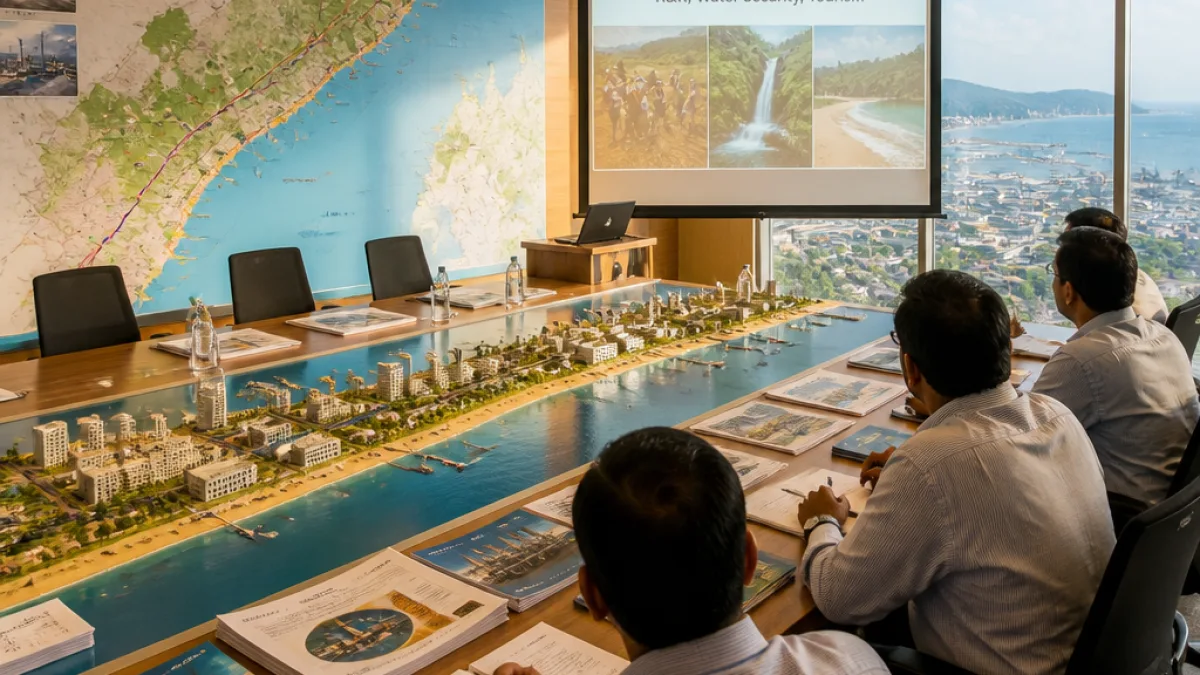
Visakhapatnam, Aug 10: A NITI Aayog delegation reviewed progress on the Visakhapatnam Economic Region (VER) at the Visakhapatnam Metropolitan Region Development Authority (VMRDA) office on Monday and emphasised that incoming industrial investment must be paired with adequate Rehabilitation and Resettlement (R&R) arrangements and long-term drinking water security.
Speaking at the meeting, NITI Aayog member V. Bala Subramanyam described the VER as "a driver of inclusive growth" and urged the State and local authorities to accelerate tourism initiatives to strengthen Andhra Pradesh’s brand and ensure infrastructure is accessible to all sections of society, including persons with disabilities.
"A driver of inclusive growth,"
The three-hour review on August 10 brought together senior officials and project stakeholders. N. Yuvraj, Chief Executive Officer of the VER, outlined the three-tier governance framework — State-level Steering Committee, Executive Committee and Implementation Committee — and provided updates on flagship projects.
Projects, progress and administration
Officials highlighted a set of large-scale initiatives expected to shape economic activity across the region:
- Mittal steel plant and its R&R mechanism — presented as a core industrial anchor;
- Visakhapatnam Bay City — projected to boost coastal economic activity;
- Urban infrastructure works presented by GVMC, including underground drainage networks, Central Business District development and slum redevelopment;
- Proposed Visakhapatnam Metro Rail and measures addressing drinking water scarcity;
- Tourism measures, with the AP Home Stay scheme noted as gaining popularity.
GVMC Commissioner Ketan Garg detailed ongoing urban projects, while District Tourism Officer Madhavi Lata highlighted tourism initiatives. NITI Aayog programme director Kishore and Visakhapatnam Port deputy chairman Roshini Aparanji were among other participants representing trade bodies, ports, industry chambers, petroleum firms, hospitality and banking sectors.
Implications for residents and investors
The review stressed that large investments must be accompanied by social safeguards and basic services. Officials said the Mittal steel plant’s R&R framework was discussed in the meeting, but no fresh timelines or financial figures were announced. Observations from NITI Aayog underlined three immediate priorities for local planners:
- R&R transparency: clear, timely compensation and resettlement plans for families affected by industrial and infrastructure projects;
- Water security: long-term sourcing and distribution plans to prevent periodic shortages as urban and industrial demand rises;
- Accessibility and inclusion: infrastructure design that serves persons with disabilities and marginalised communities.
For residents, these priorities translate into practical expectations: if R&R processes are strengthened, displaced families should face less disruption; better water planning aims to reduce supply interruptions; while accessibility measures could improve daily mobility for many citizens.
Administration and capacity building
Mr. Bala suggested leveraging academic institutions for capacity building, naming IIT Tirupati as a potential partner for specialised courses in project management and legal frameworks. The VER CEO noted that Chief Minister N. Chandrababu Naidu has reviewed the programme on multiple occasions, signalling continued state-level oversight.
| Item | Noted at meeting |
|---|---|
| Governance structure | Three-tier (Steering, Executive, Implementation) |
| Flagship projects | Mittal steel plant, Visakhapatnam Bay City, Metro proposal |
| Key priorities | R&R, water security, accessibility, tourism acceleration |
The review did not include new financial commitments or revised project schedules. Participants outlined progress and concerns, while NITI Aayog urged concrete plans for social safeguards and essential services before further scaling up investments.
Stakeholders said further consultations with industry, communities and technical institutions will be necessary to align project timelines with rehabilitative and infrastructural requirements identified during the review.