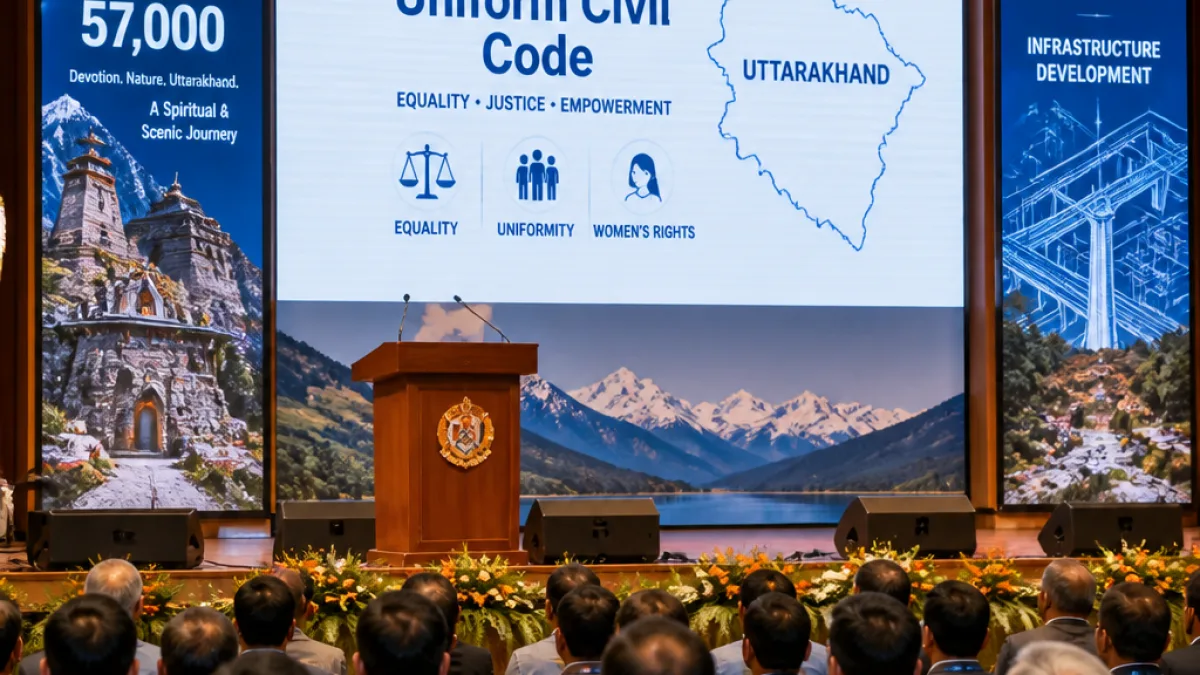
UCC adoption, development claims and infrastructure on stage
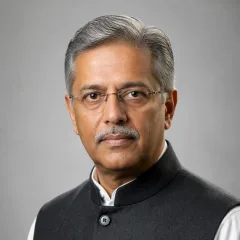
Uttarakhand Chief Minister Pushkar Singh Dhami said the state’s Uniform Civil Code (UCC), introduced in 2024, is serving as a model for other states and is helping to shape a broader national push for common civil laws. Speaking at the Economic Times World Leaders Forum, Dhami framed the law as an instrument to promote equality and reduce discrimination against women.
"The law is aimed at ensuring equality and reducing discrimination against women."
Dhami pointed to the legislative momentum elsewhere, noting that Madhya Pradesh has passed its own UCC Bill. The Madhya Pradesh legislation, cleared by the state Assembly on July 21, seeks a uniform set of civil laws across faiths and includes a provision to register live-in relationships. That Bill has been reserved for the President’s assent and contains an exemption for tribal communities to protect customary practices, according to the reports cited by the Chief Minister.
Development rankings and tourism numbers highlighted
The Chief Minister also highlighted Uttarakhand's performance on development metrics, saying the state ranks first among Himalayan states and 11th nationally on the Sustainable Development Goals (SDGs). He used these indicators to underline the state's suitability for investment and tourism promotion.
Dhami cited specific infrastructure achievements and projects to support the claim, including the Delhi–Dehradun Expressway, the upgrade of the Char Dham all‑weather roads, and the proposed Hemkund Sahib ropeway. He drew attention to rising visitation numbers at pilgrimage sites as evidence of improved access and connectivity.
Visitor growth at Adi Kailash
As an example of rising footfall, Dhami said that visits to Adi Kailash have jumped sharply — from roughly 500–600 earlier to about 57,000 in the latest year. He presented this as an outcome of better roads and connectivity that have opened up the region to more tourists and pilgrims.
| Indicator / Project | Detail (as cited by CM) |
|---|---|
| UCC implementation | Uttarakhand implemented UCC in 2024; model cited by other states |
| SDG ranking | No. 1 among Himalayan states; 11th nationally |
| Adi Kailash visitors | Around 500–600 earlier; about 57,000 in the recent year |
| Key infrastructure | Delhi–Dehradun Expressway, Char Dham all‑weather roads, Hemkund Sahib ropeway (upcoming) |
Context: what the UCC change entailed
The Uttarakhand UCC, which came into force in 2024, replaced separate personal laws for marriage, divorce, inheritance and live‑in relationships with a single statutory framework, according to the Chief Minister’s account. Dhami reiterated that the stated objective of the UCC is to ensure equal treatment across genders and reduce discriminatory practices that he said were embedded in varied personal laws.
He also highlighted that the UCC discourse has shaped legislative activity in other states, with the Madhya Pradesh Bill cited as a recent example. The Madhya Pradesh legislation retains exemptions for tribal populations, a clause the Chief Minister referenced while describing how states are tailoring their approaches.
Political implications and reactions
The CM's comments come amid an intensifying national conversation on the Uniform Civil Code, which has both legal and political dimensions. While proponents present UCC as a step towards uniform rights and gender justice, critics have raised concerns about cultural and religious sensitivities, and the pace and manner of implementation. Dhami's address at a high‑profile business forum framed Uttarakhand’s experience as both a governance achievement and a selling point for investors and tourists.
What this means for Uttarakhand
- Policy leadership: Dhami's claim positions Uttarakhand as an early implementer of UCC, with potential influence on other states' legislation.
- Investment pitch: The CM used development rankings and infrastructure projects to attract business interest and boost tourism prospects.
- Social and legal debate: Adoption of UCC continues to generate debate on rights, exemptions for tribal customs and the law's practical effects on citizens.
Dhami addressed the Economic Times forum to an audience of business and policy leaders; his remarks tie a controversial social reform — the UCC — to economic and infrastructural narratives the state is promoting. Further details on implementation, legal challenges or administrative rules stemming from Uttarakhand’s UCC were not provided in the remarks cited at the forum.
State authorities and legal commentators are likely to be asked for clarification as other states pursue similar laws and as implementation issues surface on the ground.