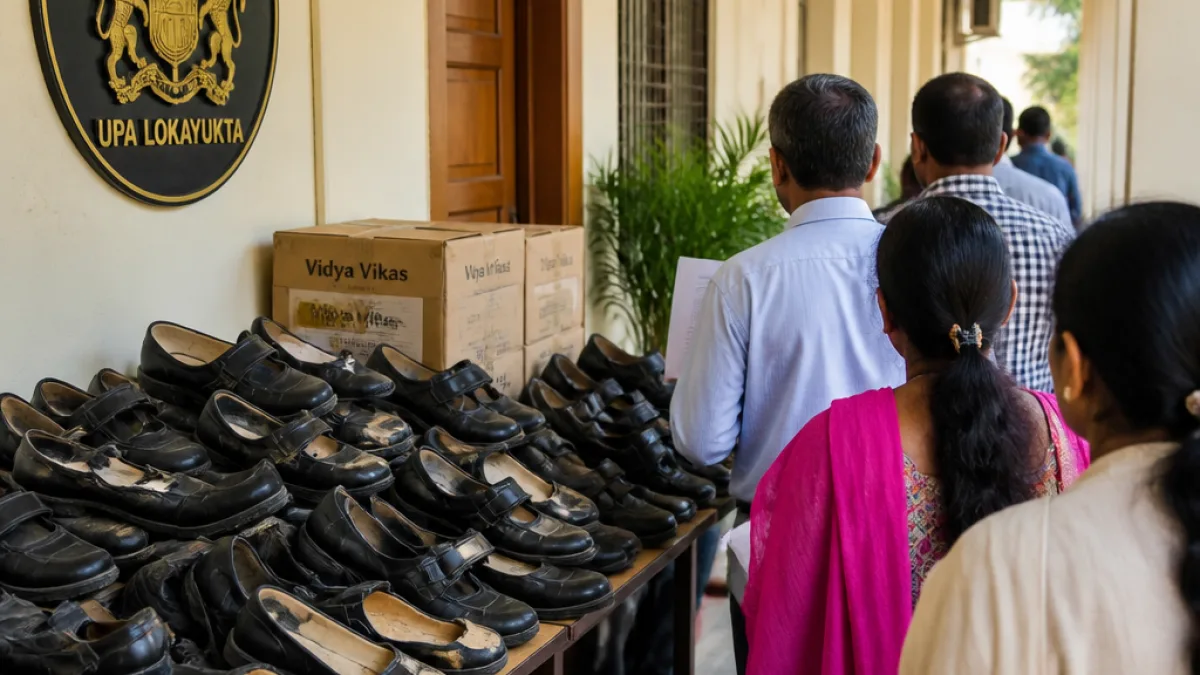
Bengaluru: The office of the Upa Lokayukta has taken suo motu notice of complaints that footwear distributed free to schoolchildren under the Karnataka government's Vidya Vikas scheme is of substandard quality, with parents alleging that shoes are tearing and soles are detaching within days of use. The controversy affects a welfare drive that provides one pair of shoes and two pairs of socks to government-school pupils from Class 1 to 10.
Scale of the programme and nature of complaints
The Vidya Vikas footwear component covers 36,56,613 students across the State, according to programme figures cited in media reports. Parents and caregivers have complained about several defects, including:
- soles coming off within days of wear;
- stitching and adhesives failing early;
- oversized or ill-fitting pairs being supplied;
- reported decline in quality compared with footwear distributed in earlier years.
News reports summarised the grievances with the line:
"Soles coming off within days".The defects, parents say, undermine the scheme's objective of encouraging attendance and easing the financial burden on low-income households.
Administrative response and oversight
Upa Lokayukta Justice K. N. Phaneendra has taken the matter suo motu, the reports said, signalling an early-stage administrative review. Suo motu action by the Upa Lokayukta normally triggers an initial inquiry to determine whether an investigation or further directions to departments are warranted.
The footwear distribution is part of a broader set of incentives the State uses to bolster enrolment and retention in government schools, which also include mid-day meals, uniforms and textbooks. The intention behind supplying footwear is to remove barriers that may prevent children from attending school regularly.
Procurement and quality-control questions
Parents and school officials have raised questions about procurement processes, quality checks at delivery points and vendor selection. If batches of footwear are failing prematurely, it points to weaknesses either in vendor compliance, testing on receipt or post-dispatch monitoring at the school/cluster level.
Key procedural areas that may come under scrutiny include:
- whether suppliers met technical specifications in tenders;
- the nature and rigour of quality checks on receipt at district warehouses or schools;
- records of complaints and follow-up remedial actions by education officials.
Impact on students and families
For many families relying on the free issue, defective footwear imposes an immediate challenge. Parents of young children who are required to wear shoes to school could face additional expense to replace unusable pairs. Educators and block-level officers told media that ill-fitting shoes can also cause discomfort and may affect attendance and participation.
What comes next
Following the Upa Lokayukta's suo motu action, the likely administrative steps include a preliminary fact-finding, calls for procurement records from the Department of Public Instruction, and directions to the supplier(s) to respond. If deficiencies are established, remedies could range from replacement of footwear to termination of contracts or financial penalties, depending on contract terms and legal advice.
| Item | Benefit |
|---|---|
| Shoes | 1 pair per student (Classes 1–10) |
| Socks | 2 pairs per student (Classes 1–10) |
| Coverage | 36,56,613 government-school students |
Parents and local school authorities have been urged to register formal complaints with the district education offices so that the volume and nature of defects can be documented. That record will be central to any remedial action ordered by oversight authorities.
The footwear controversy underscores the operational challenges in delivering large-scale welfare in a State where logistics, contract compliance and on-ground monitoring must work in concert to ensure intended benefits reach beneficiaries. The Upa Lokayukta's intervention is likely to focus administrative attention on quality assurance mechanisms within the scheme.
Further updates are expected once the Upa Lokayukta's preliminary proceedings are completed and the Department of Public Instruction responds to queries on procurement and supply-chain safeguards.