Government directs medical colleges to link with peripheral health facilities
Bengaluru: The Karnataka departments of Health and Family Welfare and Medical Education have issued a joint circular directing all government and private medical colleges in the State to adopt taluk hospitals, community health centres (CHCs) and primary health centres (PHCs) and provide specialist clinical services, training and quality-improvement support, according to an office order released on Friday.
The move, listed as part of the Chief Minister’s 100-day programme, is aimed at strengthening secondary-level healthcare at the taluk and community level and reducing the burden on district hospitals and medical colleges, the circular said.
What the circular requires
According to the circular, medical colleges will be asked to enter into written agreements with district health officers and the heads of the selected facilities. The departments said adopted centres will receive regular specialist input and other support to bolster clinical services and training.
| Requirement | Details |
|---|---|
| Facilities to be adopted | Taluk hospitals, community health centres and primary health centres (district-wise identification) |
| Frequency of specialist visits | Daily, weekly, twice-weekly or monthly rotations depending on requirement |
| Staff deployment | Consultants, senior residents, postgraduate residents and medical officers from medical colleges |
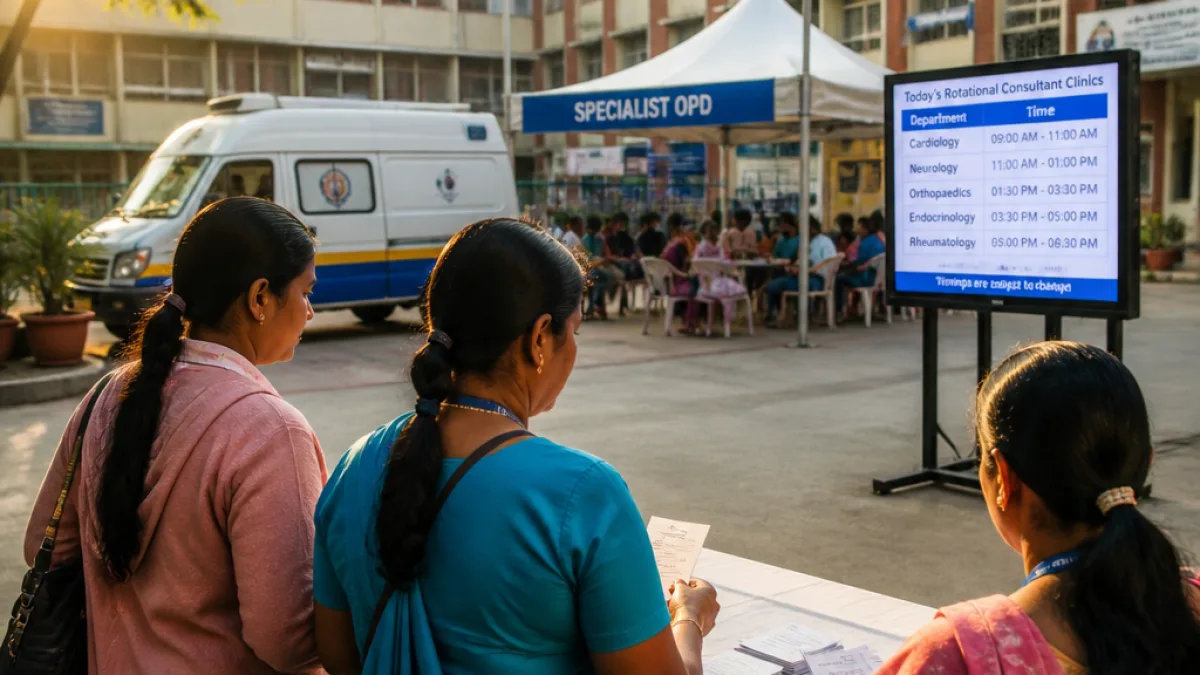
| Service focus | Specialist OPDs (gynaecology, anaesthesia, paediatrics, orthopaedics and other specialties as needed) |
The circular sets out that each adopted centre should run fixed-day specialist outpatient services and that a monthly schedule be prepared in advance so that patients can be identified and registered before specialists arrive. Accredited Social Health Activists (ASHA) and other grassroots health workers may be used to identify and register patients ahead of specialist visits.
Operational aims and expected benefits
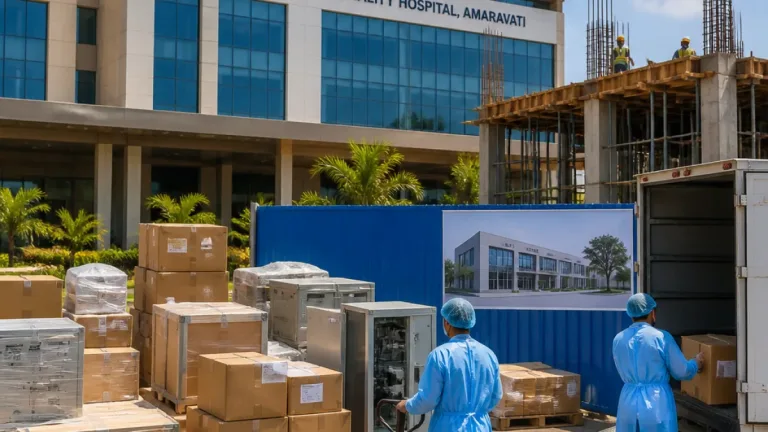
Health officials expect the arrangement to increase the availability of specialist doctors at the taluk and CHC/PHC levels and to reduce patient travel to district hospitals and medical colleges for specialised care. The departments highlighted expected improvements in management of chronic diseases and strengthened surgical services at secondary-care facilities.
- Improve access: Specialist services closer to communities to cut travel time and costs for patients.
- Strengthen infrastructure: Clinical mentoring and quality improvement to bolster taluk- and community-level care.
- Decongest higher centres: Reduce patient load at district hospitals and tertiary medical colleges.
Operational details — including which district-wise facilities will be adopted and the precise terms of the agreements between medical colleges and district health offices — will be finalised as the departments conclude the identification process, the circular said.
Scope and implementation
The joint circular covers both government-run and private medical colleges. One media account of the circular stated that every government and private medical college will adopt one taluk hospital, one CHC and one PHC, while a separate report said the circular asked each medical college to adopt one CHC or PHC. The departments have emphasised that district health officers and college heads will finalise adoption lists and agreements.
Medical colleges are expected to deploy a mix of consultants, senior and postgraduate residents and medical officers on a rostered basis — daily, weekly, twice a week or monthly — according to the needs of the adopted facility. The departments also recommended preparing monthly advance schedules so that outreach and patient registration can be coordinated with ASHA workers and other frontline staff.
Next steps and accountability
The Health and Medical Education departments will enter into formal agreements with medical colleges to monitor implementation and outcomes, the circular noted. No timeline for completion of the adoption process was included in the public summaries of the circular; district-level identification of centres will proceed as directed by the departments.
Officials said the initiative is part of a broader effort to decentralise specialist care and improve the quality of services available at the taluk level, but further details on targets, monitoring metrics and funding arrangements were not disclosed in the circular’s public description.
Implementation will be watched closely by district health teams and hospital administrators as the State moves to operationalise specialist outreach from teaching institutions to peripheral health facilities.