Bengaluru: The Karnataka government on Saturday issued orders for a door-to-door re-verification of beneficiaries enrolled under the Gruha Lakshmi scheme using biometric and facial authentication, officials said. The exercise, which begins from August 30, is to be completed within a month, according to the order issued on August 28.
Implementation, oversight and technology
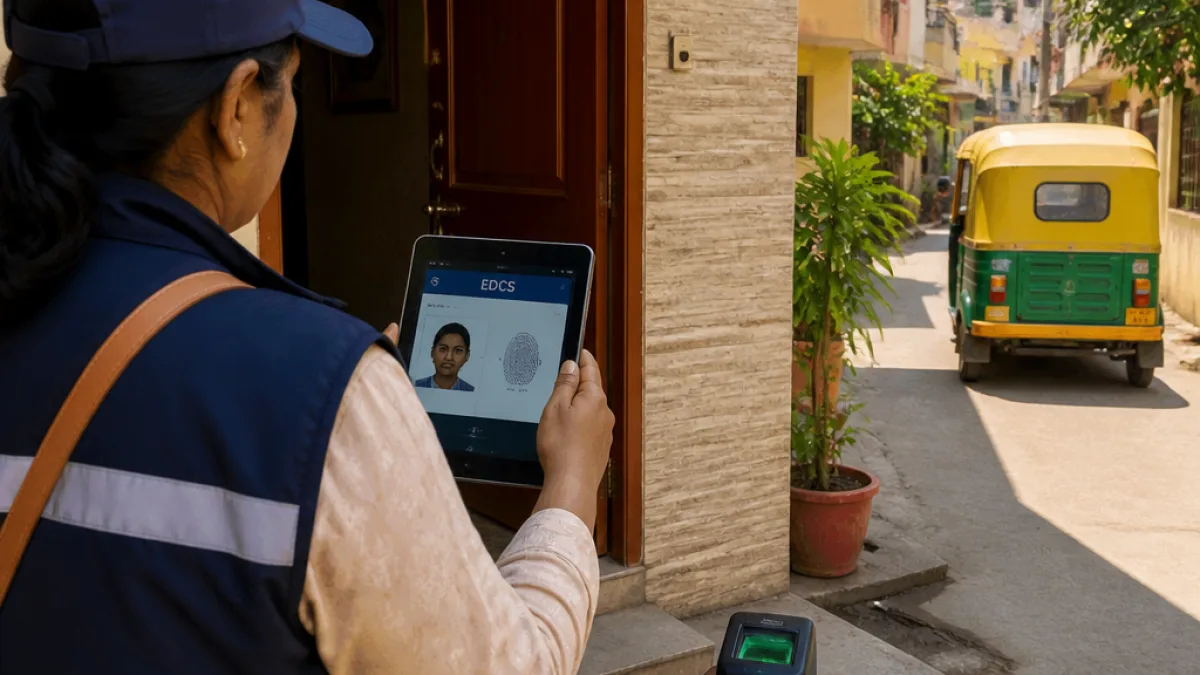
The re-verification will be carried out through a web application and mobile application developed by the Directorate of Electronic Delivery of Citizens Services (EDCS), the order stated. The Department of Women and Child Development has been tasked with overall supervision, while the e-Governance Department will provide technical and operational support.
The government said the process is designed to identify and remove beneficiaries who are no longer eligible for the scheme. The exercise will take place through two modes:
- door-to-door surveys; and
- verification at designated service centres — Grama One, Karnataka One, Bengaluru One and CSC (Bapuji Seva Kendras).
"In view of the matters explained in the proposal, administrative approval is hereby accorded for re-verification of beneficiaries registered under the Gruha Lakshmi Scheme through biometric/facial authentication to identify eligible beneficiaries," the government order said.
Process, forms and expenditure
As per the Standard Operating Procedure (SOP) approved by Chief Minister D K Shivakumar, enumerators will visit beneficiary households and provide printed enumeration forms that must be filled and returned. If the named beneficiary is not present, another family member may complete the form on their behalf. The SOP also makes household visits and distribution and collection of forms mandatory, specifying that visits cannot be skipped even if some information is already available through other sources.
The re-verification is to be carried out within a grant limit of ₹20 crore, the order noted. Officials said the exercise follows a detailed examination of a proposal submitted to the government seeking Cabinet approval.
Scope and administrative objectives
State authorities framed the re-verification as a measure to ensure that the Gruha Lakshmi scheme continues to reach eligible women and households. By introducing biometric and facial authentication, the government aims to strengthen verification and reduce inclusion errors.
The order directs that the verification be undertaken in accordance with the SOP approved by the Chief Minister. Specific operational details, such as the workflow for data capture, storage and the handling of disputes or appeals arising from the re-verification, were not detailed in the order released with the announcement.
What beneficiaries should expect
Beneficiaries can expect enumerators to visit homes and hand over printed forms. Those who prefer or are unable to complete forms at home can visit the listed service centres. The use of a central EDCS application implies that records will be captured digitally during the fieldwork.
| Item | Detail |
|---|---|
| Start date | August 30 (as per government order) |
| Duration | To be completed within one month |
| Verification methods | Biometric and facial authentication; door-to-door survey; service centres |
| Technical support | Directorate of EDCS; e-Governance Department |
| Supervision | Department of Women and Child Development |
| Budget cap | ₹20 crore |
Officials emphasised that the re-verification is administrative in nature and intended to align beneficiary lists with current eligibility criteria. No mention was made in the order of any automatic removal mechanism; rather, the government indicated that the identification of ineligible beneficiaries would follow the SOP procedures.
Context and implications
The Gruha Lakshmi scheme is a state welfare initiative aimed at supporting women-headed households and improving household financial security; the re-verification signals the administration's push to tighten beneficiary rolls. The deployment of biometric and facial authentication reflects a broader trend in state-level welfare monitoring that combines field enumeration with digital verification tools.
How the exercise will handle cases of disputed eligibility, data mismatches or technical glitches in biometrics remains to be seen. The SOP and the EDCS application will be central to the process, and the Department of Women and Child Development will be responsible for addressing operational challenges during the month-long verification drive.
Further operational directives and clarifications are expected from the departments overseeing the exercise as the door-to-door work commences across districts.