Annual safety exercise at sacred precinct draws scrutiny
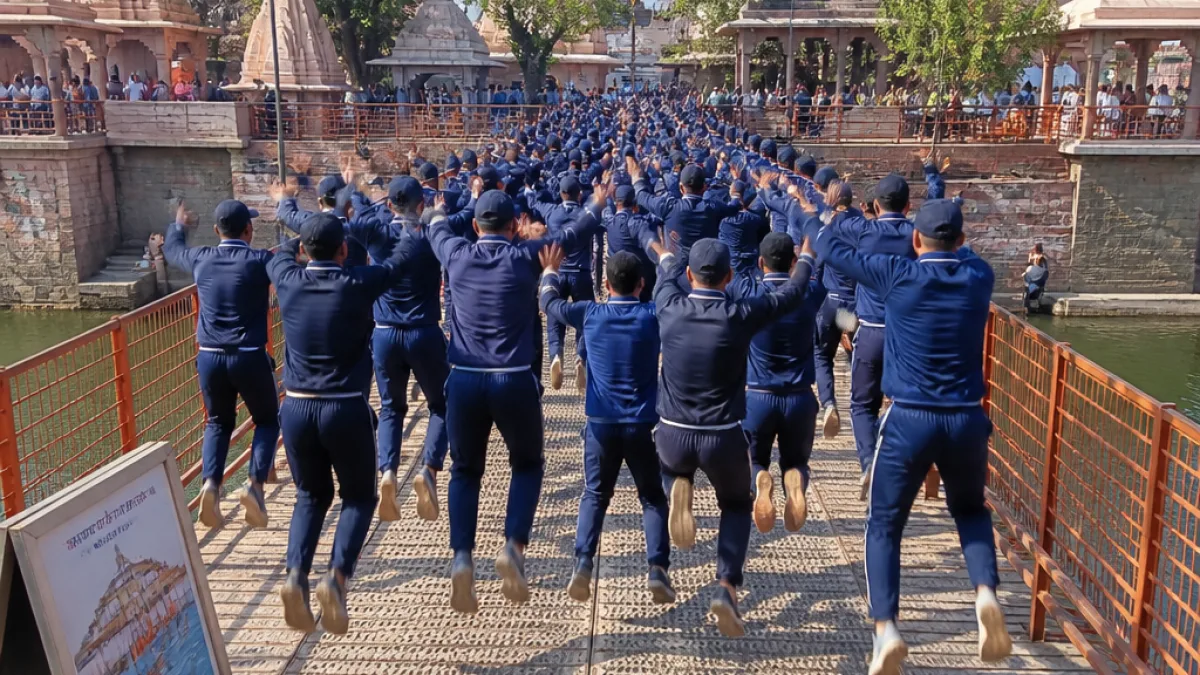
Ujjain's Mahakaleshwar temple management carried out an unusual load test on a foot overbridge inside the complex ahead of the Nag Panchami festival, asking about 300 security guards to jump together on the span to simulate the pressure of heavy pilgrim movement, according to local reports.
The iron overbridge, described in media accounts as about 91 feet long, is primarily used during Nag Panchami when thousands of devotees visit the nearby centuries‑old Nagchandreshwar shrine. The bridge, built nearly 25 years ago to ease crowd movement, is subject to an annual safety check by the temple committee, and the jumping exercise has been carried out in previous years as a method to reassure visitors about structural stability, the reporting said.
- What was done: Roughly 300 security personnel were positioned on the overbridge and asked to jump together for about 15 minutes as part of the durability check.
- Why it was done: Temple management said the exercise was intended to simulate the live load and dynamic forces the structure could face during festival crowds.
- Public reaction: Viral footage of the exercise drew criticism from social media users, who questioned the method in an era of engineering laboratories and standardised structural testing.
The exercise and its social media circulation prompted political commentary beyond Ujjain. A video clip of the test led to remarks by Hyderabad MP Asaduddin Owaisi on X (formerly Twitter), which were characterised by some reports as a mocking reaction. BJP MP Anil Firojiya, quoted in local coverage, defended the test and said ensuring public safety was the administration's primary objective, adding that the bridge had been tested “in every possible way” before engaging the security personnel.
"We had the employees jump on it, while ensuring their safety was fully prioritised... Public safety is our paramount duty. That is why we conducted the test," a quoted statement said.
Temple sources reported the test is an annual practice meant to identify any immediate risk before large numbers of devotees use the structure during festival days. The bridge was constructed about a quarter century ago after rising pilgrim numbers made entry routes inside the main temple impractical.
Technical and public-safety questions
Engineers and structural experts were not directly quoted in the available reports, but social media commentary and observers raised questions about the methodology. In modern structural engineering, load testing usually involves instrumented static and dynamic tests, non‑destructive evaluation and laboratory analysis rather than relying solely on human-induced vibration. Critics argued that such an endurance test can be seen as risky to participants and may not substitute for instrumented inspections.
Supporters of the temple committee's approach say the exercise is practical, low‑cost and demonstrates the bridge's behaviour under live pedestrian movement — a factor that can be difficult to reproduce precisely in laboratory settings. The temple management's stated priority, as reflected in local reporting, is avoiding any structural failure during mass gatherings.
| Detail | Reported figure |
|---|---|
| Foot overbridge length | 91 feet |
| Number of personnel involved | About 300 |
| Duration of the jump exercise | Approx. 15 minutes |
| Year since construction (approx.) | 25 years |
Local authorities and the temple committee will need to balance public reassurance with adherence to contemporary engineering practice. With thousands of devotees expected during Nag Panchami, any failure could have serious consequences, which helps explain the committee's insistence on a thorough check.
For residents and pilgrims, the episode highlights broader issues around festival infrastructure in Ujjain: the need for routine maintenance of heritage and crowd‑management structures, clarity on safety protocols, and transparency about test methods used to certify public access. Temple management has publicised the exercise in past years to reassure devotees; the recent social media reaction has now renewed debate over whether alternative, instrumented testing should be used alongside or instead of human‑based demonstrations.
Officials involved in managing temple security and infrastructure did not provide additional technical details in the reports reviewed. As festival preparations continue, local authorities and the temple committee may consider publishing technical inspection reports or inviting independent engineers to validate the bridge's condition to bolster public confidence.