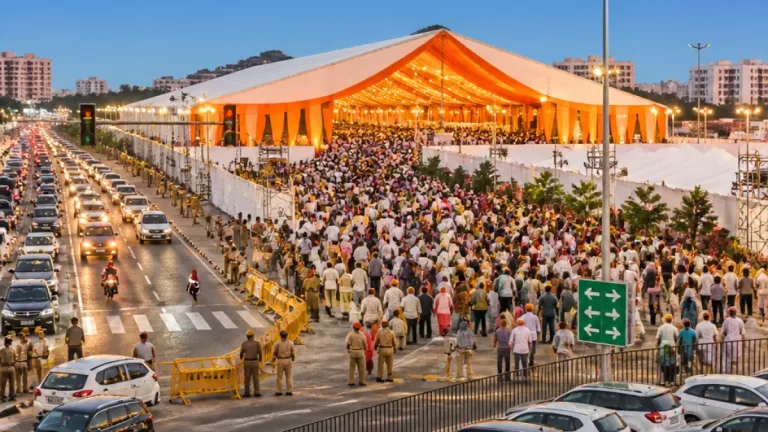
Mandsaur/Ujjain, Madhya Pradesh: Two prominent temples in Madhya Pradesh marked the nation’s Independence Day on 11 August this year, four days ahead of the national observance on 15 August, following a Hindu calendar date that priests say corresponds to 15 August 1947.
Tradition tied to the lunar calendar
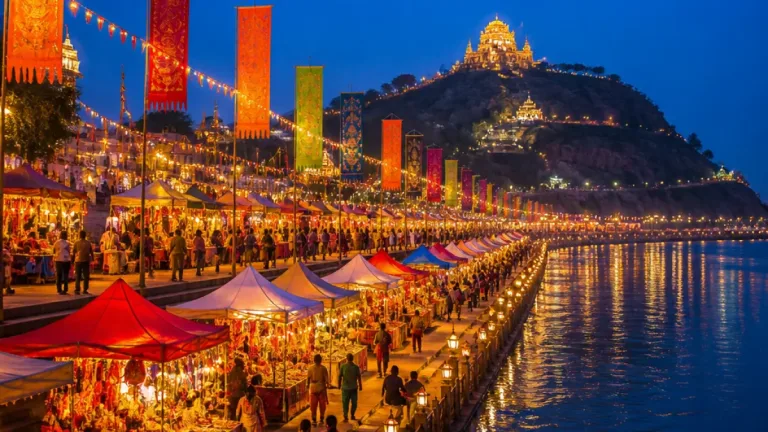
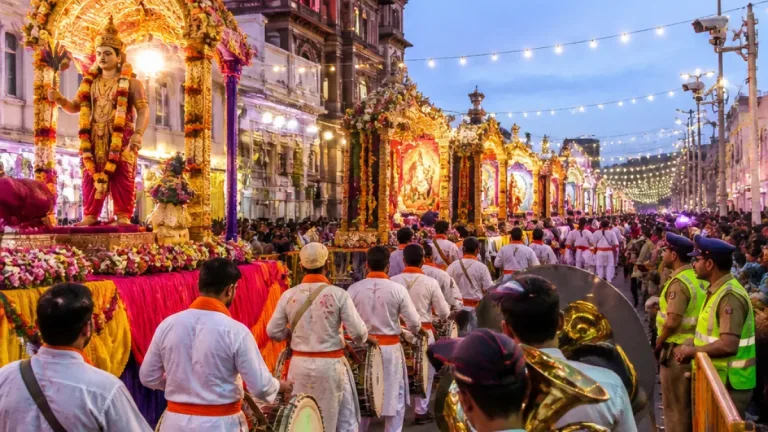
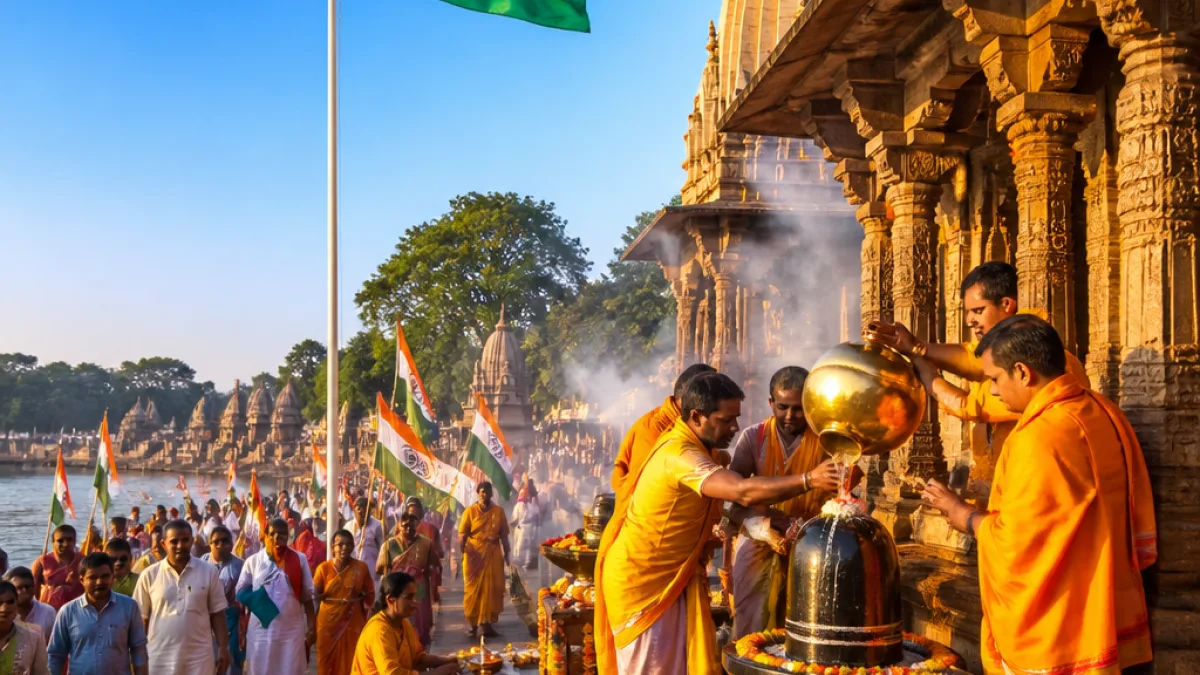
The Pashupatinath Temple on the banks of the Shivna river in Mandsaur and the Bade Ganesh Temple in Ujjain performed special rituals, prayers, flag-hoisting and a Tiranga yatra on 11 August, which this year fell on Shravan Krishna Chaturdashi in the Hindu calendar. Temple authorities said the lunar date is traditionally observed at these shrines as the day corresponding to India’s independence in 1947.
According to reporting by PTI, priests at both temples noted that the day on which India attained freedom—15 August 1947—fell on Shravan Krishna Chaturdashi that year. The same tithi (lunar day) recurs in the Hindu calendar and this year it landed on 11 August, prompting the early observance at the two temples.
Rituals and public participation
At the ancient Pashupatinath Temple in Mandsaur, about 250 devotees attended the special programme. The eight-faced Shivling was specially decorated and an abhishek (sacred bath) was performed with water containing durva grass while Vedic hymns were chanted. Prasad was distributed after the ceremony.
"We performed an abhishek of the Shivling with water containing 'durva' while chanting Vedic hymns. We prayed for India to become a developed nation by 2047," said Umesh Joshi, president of the Jyotish and Karmakand Parishad, according to PTI.
At Ujjain’s Bade Ganesh Temple, the management held traditional observances coupled with a Tiranga yatra through the temple precincts. Priest Akshat Vyas told PTI that the shrine had followed the decades-old practice of marking national festivals according to the relevant tithi in the Hindu calendar.
Why the observance date varies
The Hindu calendar is lunisolar, so lunar dates (tithis) shift in relation to the Gregorian calendar each year. Where temples and communities fix observances to a tithi rather than a fixed Gregorian date, festival days can fall on different Gregorian dates from year to year. In this instance, the tithi associated with India’s 1947 independence occurred on 11 August in 2026.
| Temple | Location | Observed Date (2026) | Traditional Tithi |
|---|---|---|---|
| Pashupatinath Temple | Mandsaur | 11 August | Shravan Krishna Chaturdashi |
| Bade Ganesh Temple | Ujjain | 11 August | Shravan Krishna Chaturdashi |
Local significance and community response
The observances drew local devotees and reaffirmed the blending of religious custom with civic sentiment in these temple towns. Temple leaders framed the early celebrations as devotional remembrance of the independence event according to traditional chronology, while also expressing contemporary hopes for national development—in one reported instance, a prayer for India to reach developed-nation status by 2047.
- Both temples combined ritual worship with public elements such as flag-hoisting and processions.
- The practice has been maintained at the Pashupatinath Temple since at least the 1980s, temple officials said.
- Devotees received prasad and took part in community prayers during the programme.
The Pashupatinath tradition of observing Independence Day on Shravan Krishna Chaturdashi has been reported as continuing since 1985, temple representatives told PTI. The continuity of such practices highlights how local religious calendars and customs can shape public commemorations in parts of rural and small-town India.
Context for readers
While the nation observes Independence Day officially on 15 August with flag-hoisting ceremonies across government institutions and public spaces, several communities and religious institutions sometimes mark the anniversary on historically or ritually significant days in regional calendars. In Madhya Pradesh, where temple festivals and tithis guide much of communal life in smaller towns, such deviations are not uncommon and are observed with local participation.
Reporting for this article is based on accounts published by PTI and republished by local news outlets. The ceremonies at Mandsaur and Ujjain illustrate the intersection of ritual timekeeping and national memory in the state’s cultural life.