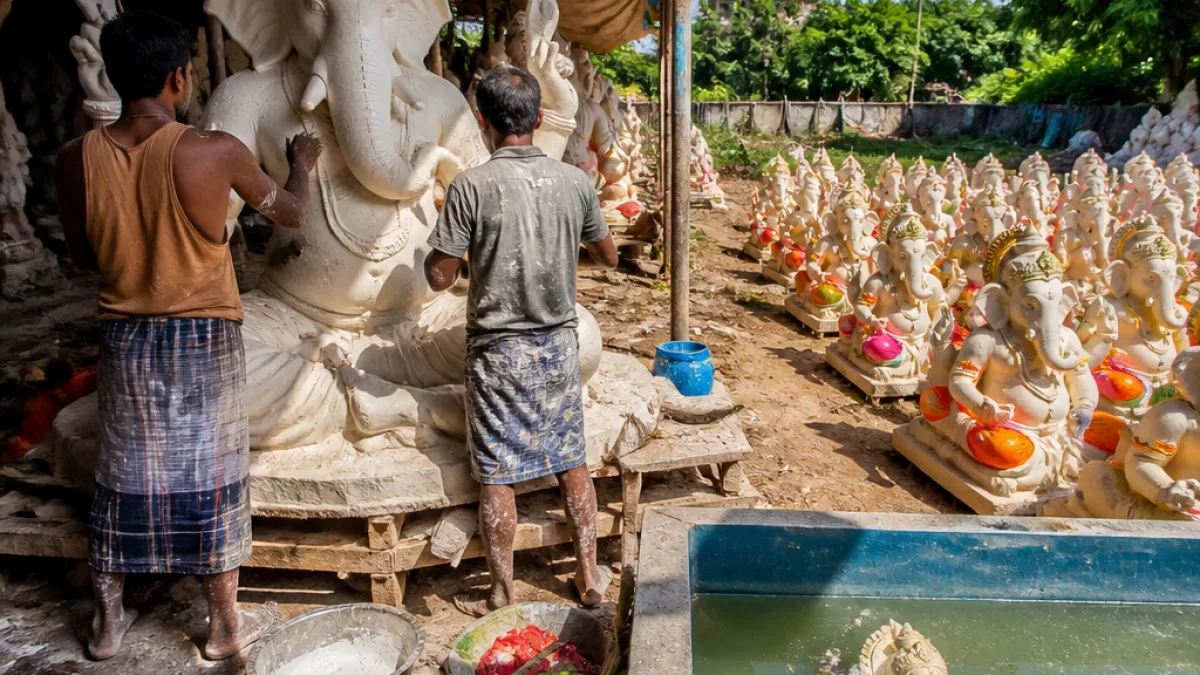
Tiruchirappalli, August 19: Artisans in Tiruchirappalli district are preparing a new batch of environment-friendly Ganesha idols for Vinayaka Chaturthi, crafting figures from tapioca flour paste that organisers say dissolve quickly after immersion and reduce debris in local water bodies.
Traditional craft adapts to environmental rules
The idols, produced in sizes ranging from 3 feet to 10 feet, are being made following guidelines issued by the Tamil Nadu government aimed at protecting rivers, lakes and tanks during the festival. Makers said they use tapioca flour processed into a paste to mould the figures and apply decorations using rangoli colours chosen to limit environmental impact.
Speaking about the process, veteran Ganesha idol creator and designer Periyasamy — who identified himself as having worked in the profession for nearly 45 years — described the tapioca-based method and highlighted the product's biodegradability. He said the idols dissolve completely in water in about 30 minutes after immersion, thereby reducing accumulation of debris in water bodies.
"I have been involved in the idol-making profession for nearly 45 years. Every year, we create Ganesha idols in different designs ahead of Vinayaka Chaturthi," Periyasamy said, adding that the idols are crafted entirely using tapioca flour.
Bookings fall; artisans seek policy relief and support
Despite the environmental advantages, artisans in the district reported a fall in advance bookings this year. Periyasamy cautioned that the traditional craft is gradually declining and appealed to the State government for relief from strict regulations that, he said, restrict the locations where idols can be installed. He also urged that financial assistance or subsidies be considered to support artisans and sustain the occupation.
- Material used: Tapioca flour paste
- Height range: 3 ft to 10 ft
- Dissolution time: About 30 minutes after immersion
- Decorations: Rangoli colours selected to minimise pollution
Local consequences and context
The move towards biodegradable idols aligns with Tamil Nadu's ongoing efforts to safeguard water bodies from festival-related pollution. In Tiruchirappalli — a city with several tanks and a network of water resources used for drinking, irrigation and cultural ceremonies — reducing solid waste and chemical runoff during immersion events is a local priority.
Artisans say that eco-friendly alternatives can reduce the need for post-festival clean-up and lower the burden on civic bodies. However, they also note that changes in consumer preference, regulatory constraints on installations and economic pressures threaten the continuity of traditional idol-making livelihoods unless policy measures and market support are provided.
| Attribute | Detail |
|---|---|
| Primary material | Tapioca flour paste |
| Available sizes | 3 feet to 10 feet |
| Dissolution time (approx.) | 30 minutes after immersion |
As the festival approaches, artisans in Tiruchirappalli said they were adding finishing touches and preparing deliveries across the district, expressing hope that increased public awareness of environmental protection will prompt more devotees and organisers to opt for biodegradable idols. They asked the government to consider easing some installation restrictions and to provide fiscal help to preserve the craft.
Officials from the municipal and district administration were not quoted in the report; the information on material, sizes, dissolution time, and the artisans' appeals were provided by local craftsmen involved in production.