Chennai, Aug 18: Tamil Nadu's Revenue and Disaster Management Department will introduce a three-tier system of officials to speed up the delivery of certificates and services, and aim to provide all necessary certificates within a fixed timeframe, Minister for Revenue and Disaster Management K.A. Sengottaiyan told the Assembly on Monday during Demand for Grants.
New offices, staffing and digital push
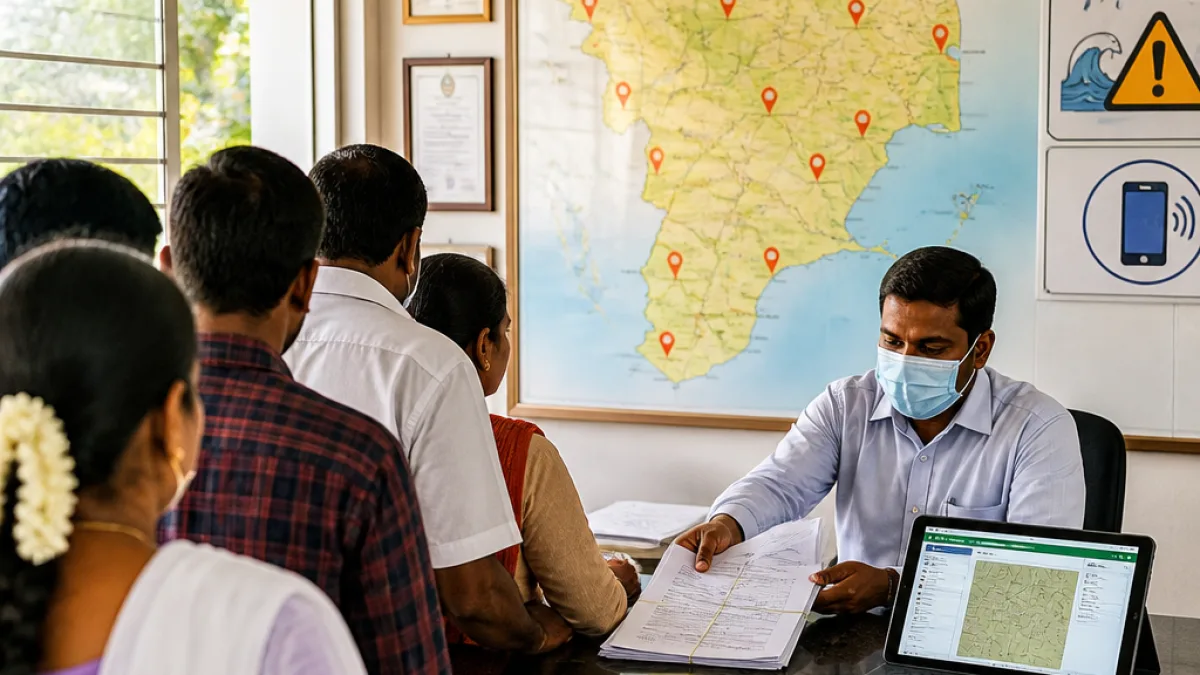
The Minister said as an initial measure the department will set up 12 sub-taluk offices at a cost of ₹1.02 crore, each headed by a Deputy Tahsildar, to dispatch essential certificates to residents at their place of dwelling. In a significant digitalisation push, the State plans to equip revenue field staff with tablets — covering 12,466 village administrative officials and 1,253 taluk revenue inspectors — at a cost of ₹688.63 crore.
“As a start, 12 sub taluk offices would be set up at a cost of ₹1.02 crore under a Deputy Tahsildar to dispatch essential certificates for the public in the place where they are dwelling,” Mr Sengottaiyan said.
The Minister characterised the measures as part of the government’s long-term vision to ensure timely issuance of certificates and to rectify errors introduced during earlier computerisation of land records.
Land rights, pattas and legislative changes
Sengottaiyan said the department will ensure more than 20 lakh poor eligible families, who have constructed houses on vacant village natham lands, will be issued pattas. He also announced that the errors that have crept into land records during computerisation will be corrected.
On the legal front, the Minister said a Special Job Security Act will be enacted to protect revenue officials acting in the discharge of their duties. He added that Sections 37A and 37B of the Tamil Nadu Land Reforms (Fixation of Ceiling on Land) Act, 1961, will be simplified.
Disaster management upgrades and flood mitigation
To strengthen disaster preparedness, the State will implement an Integrated Multi-Hazard Early Warning System (MHEWS) – RTDAS (Real Time Data Acquisition System) at a cost of ₹80 crore. In addition, the department will prepare a detailed project report for flood mitigation in vulnerable districts, with a stated outlay of ₹3.90 crore for the DPR covering Cuddalore, Nagapattinam, Thoothukudi and Kanniyakumari.
Other administrative measures
The Revenue Minister said guidelines for land acquisition to build highways will be simplified to expedite infrastructure projects. He also announced measures intended to safeguard revenue officials from undue litigation or harassment while performing official duties.
- 12 sub-taluk offices to be opened (cost: ₹1.02 crore).
- 13,719 revenue staff to receive tablets (cost: ₹688.63 crore).
- Over 20 lakh poor families to be issued pattas for houses on natham lands.
- MHEWS – RTDAS to be implemented (cost: ₹80 crore).
- Flood mitigation DPRs for four coastal/delta districts (₹3.90 crore).
- Special Job Security Act to protect revenue officials; simplification of Land Reforms Act sections.
Financial allocations — summary
| Item | Allocation |
|---|---|
| 12 sub-taluk offices | ₹1.02 crore |
| Tablets for revenue staff | ₹688.63 crore |
| MHEWS – RTDAS | ₹80 crore |
| Flood mitigation DPRs (Cuddalore, Nagapattinam, Thoothukudi, Kanniyakumari) | ₹3.90 crore |
Officials in the department will be expected to implement the digital and administrative measures to accelerate citizen services, Mr Sengottaiyan said.
Implications for citizens and administration
The tablet distribution and sub-taluk offices aim to decentralise service delivery and reduce the need for citizens to travel to taluk headquarters for routine certificates. Issuance of pattas to families on natham lands could regularise tenure for many low-income households, affecting land records and local governance.
Legal simplifications and the proposed Special Job Security Act are likely to affect the working environment of revenue officials, potentially reducing litigation-related delays in land administration. The multi-hazard early warning system and flood DPRs are intended to strengthen the State’s disaster response and preparedness, particularly in coastal and delta districts prone to cyclones and floods.
Mr Sengottaiyan presented these measures as part of the department’s Demand for Grants in the Assembly session; further details and timelines for implementation will be released by the Revenue and Disaster Management Department as projects proceed.
Selvan Murugesan is the Tamil Nadu correspondent reporting from Chennai.