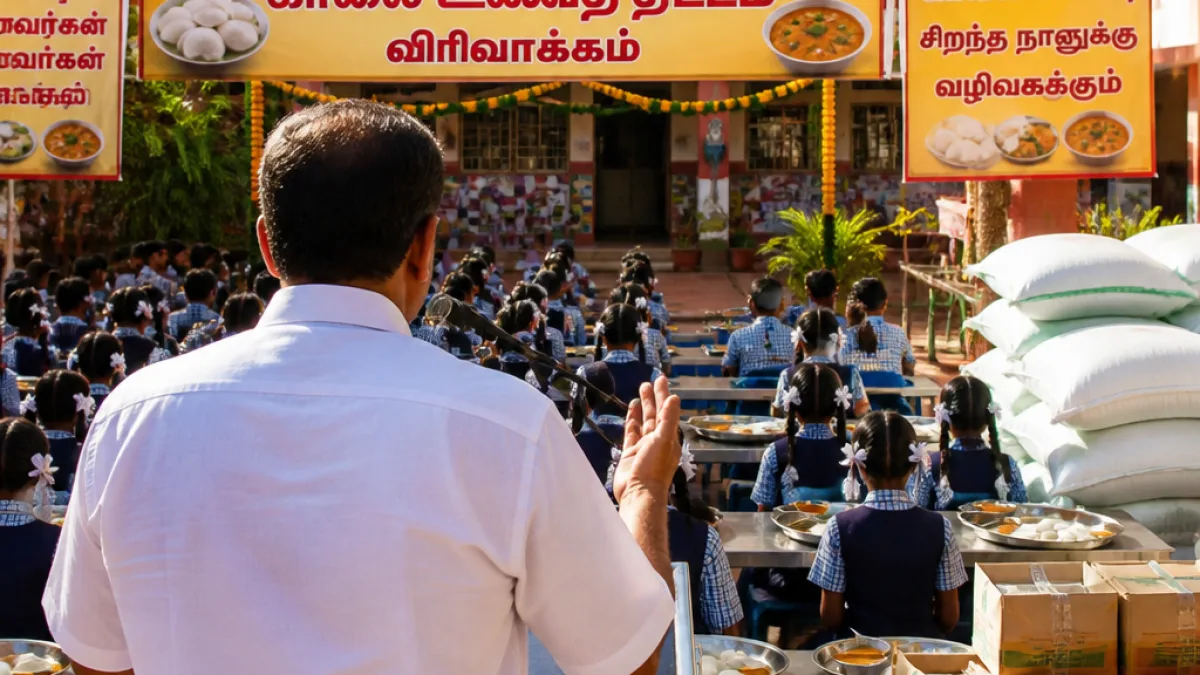
Chennai, 22 September: The Tamil Nadu government on Tuesday launched a major expansion of its school breakfast programme, with Chief Minister C Joseph Vijay scheduled to inaugurate the widened Perunthalaivar Kamarajar Breakfast Scheme at 8:30 am at the Government Middle School in Gandhi Gramam, Thiruvanmiyur.
Scope and scale of the expansion
The scheme, earlier providing free morning meals to pupils in Classes 1 to 5, will now cover children in Classes 6 to 8 in government and government-aided schools across the state. The government expects approximately 1.53 million additional students in 15,454 schools to receive breakfasts under the expanded programme.
To meet the expansion, the state has sanctioned an additional ₹217.63 crore in the current financial year, raising the scheme’s total budget to ₹724 crore. The scheme has also been renamed from the Chief Minister’s Breakfast Scheme to the Perunthalaivar Kamarajar Breakfast Scheme, in tribute to former Chief Minister K. Kamaraj, noted for his contributions to expanding school education and midday-meal initiatives in the state.
Implementation and exclusions
Officials said the statewide rollout will begin on Tuesday, with the exception of Chengalpattu and Tiruppur districts where implementation has been deferred because the Model Code of Conduct is in force ahead of impending Assembly by-elections. The Social Welfare and Women Empowerment Department has directed district administrations to finalise preparations for the expansion and to ensure hygiene and cleanliness in school kitchens and food-serving areas.
- New beneficiary cohort: Classes 6–8
- Additional beneficiaries: 1.53 million students
- Additional schools covered: 15,454
- Additional budgetary allocation: ₹217.63 crore
- Total scheme budget for the year: ₹724 crore
Objectives and expected impact
The government has framed the expansion as a measure to address nutritional needs of older primary and lower secondary students, and to support regular school attendance and classroom concentration by reducing hunger in the morning. The scheme complements existing school meal programmes and aims to maintain continuity of nutrition support as children move into higher classes.
Administration and quality safeguards
District administrations have been asked to ensure that kitchens and serving areas meet prescribed standards of cleanliness and hygiene. The Social Welfare and Women Empowerment Department’s instructions seek to prevent food-safety lapses and to ensure consistent delivery of the breakfast across the newly covered schools. Specific operational details — such as menu composition, daily per-student cost or vendor arrangements — were not released in the state orders made public ahead of the launch.
| Item | Figure |
|---|---|
| Additional students covered | 1.53 million |
| Additional schools | 15,454 |
| Additional allocation (current year) | ₹217.63 crore |
| Total budget for scheme (current year) | ₹724 crore |
Political and administrative context
The expansion was originally slated for 17 September but the launch was postponed to 22 September. The renaming of the programme underscores the state administration’s emphasis on linking current welfare initiatives to historical figures who shaped Tamil Nadu’s education policy. In official communications, the government highlighted K. Kamaraj’s role in advancing school education and meal programmes, framing the renaming as recognition of that legacy.
Officials emphasised that the scheme is designed to bolster learning by ensuring children do not start the school day hungry. Education and health outcomes monitoring will be needed to assess the longer-term impact of the move, particularly as students transition to higher classes.
As the expanded scheme rolls out, parents, school authorities and municipal bodies will play a key role in maintaining the hygiene and logistics necessary to sustain daily breakfast delivery across the additional 15,454 schools now under the programme.
Reporting from Chennai.