Gangtok: The Supreme Court on Monday dismissed a public interest litigation challenging the Election Commission of India’s decision to retain 2002 as the base year for the special intensive revision (SIR) of electoral rolls in Sikkim, PTI reported.
Bench upholds uniform national approach
The three-judge bench — Chief Justice Surya Kant and Justices Joymalya Bagchi and V Mohana — said the poll body’s selection of 2002 as the common baseline across the country could not be disturbed. The bench observed that the "goal post cannot be shifted in the middle of the exercise," according to PTI.
“The goal post cannot be shifted in the middle of the exercise.”
The petition had been filed by a Sikkim-based non-governmental organisation seeking a direction to the Election Commission to adopt 1993 as the base year for Sikkim, rather than 2002. The petitioner argued that Sikkim’s demographic profile and population data differed sufficiently from other states to merit a different baseline, Live Law reported.
Court points to continued participation of electors
The bench noted that electors included in the 2002 roll had participated in subsequent elections in Sikkim. It said the court would not substitute its judgment for the Election Commission’s decision taken for the nationwide exercise but indicated the petitioner could approach the poll panel seeking a "reasonable exemption" for the state.
Numbers at a glance
| Statistic | Figure |
|---|---|
| Voters before SIR | 4.7 lakh |
| Voters in draft roll | 4.3 lakh |
| Electors removed from draft | More than 37,000 (about 8%) |
Revision timeline and process
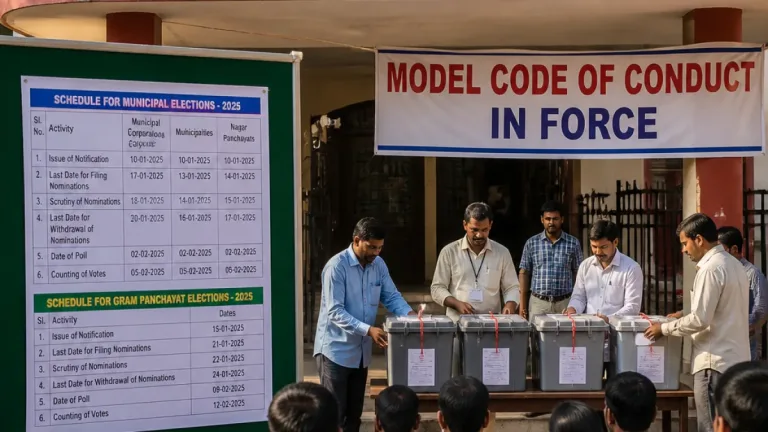
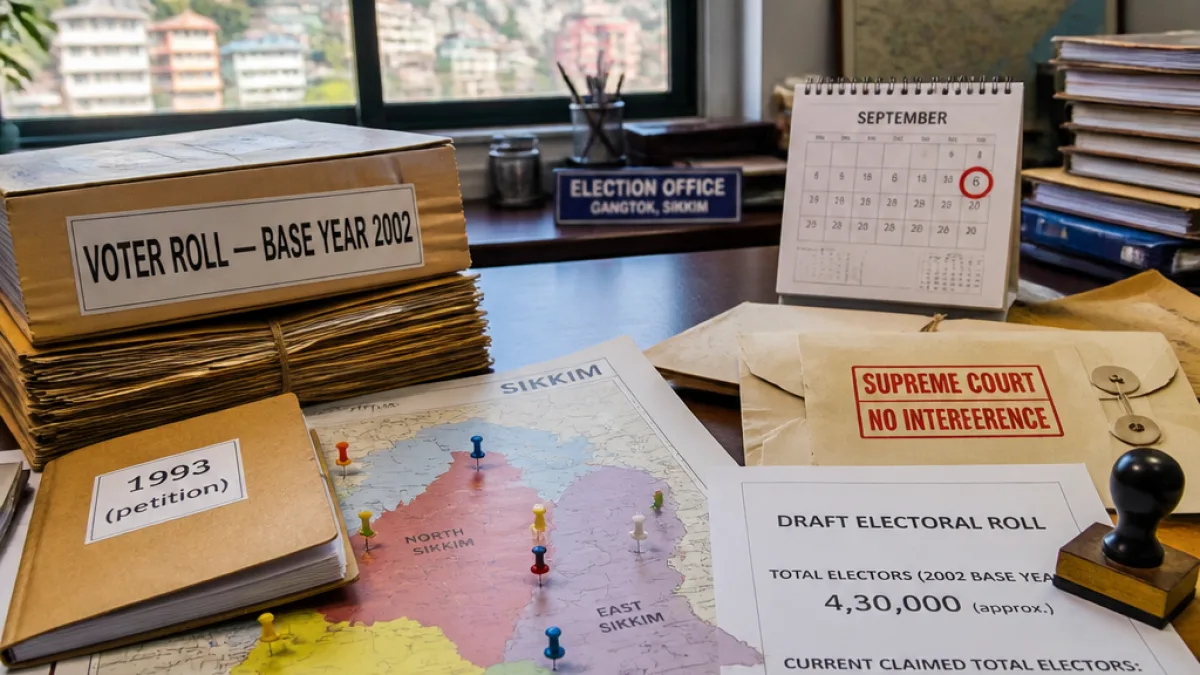
- The draft electoral roll for Sikkim was published on 5 July.
- The final electoral roll is scheduled to be published on 6 September.
- Hearings on claims and objections to removal from the draft list are currently underway in the state.
According to PTI, Sikkim is one of 16 states where this third phase of the SIR exercise is being conducted. The exercise, initiated by the Election Commission, aims to update and clean up electoral rolls nationwide using 2002 as the reference year for inclusion.
What the judgment means locally
For Sikkim voters and political actors, the court’s dismissal preserves the status quo set by the Election Commission: those who were enrolled in the 2002 roll remain the primary reference for assessing continuance on the rolls. Removal of over 37,000 electors from the draft—about 8% of the earlier list of 4.7 lakh voters—has already reduced the draft to about 4.3 lakh electors.
Electors whose names have been omitted can pursue the statutory claims-and-objections process that the state election machinery is conducting at present. The Supreme Court explicitly pointed to the administrative remedy of approaching the Election Commission for any request for special consideration.
Legal and political context
The petitioners’ case, as reported, emphasised Sikkim’s unique demographic circumstances and asserted discrepancies between population figures and electoral data. The court’s decision reflects a reluctance to interfere with decisions of the Election Commission that are framed as uniformly applicable across India during an ongoing, live administrative exercise.
The bench’s suggestion to take up the matter with the poll panel leaves open a non-judicial route for the NGO to press for an exemption or special dispensation, but any change would rest with the Election Commission rather than the judiciary.
This report is based on PTI coverage and related legal reporting cited in news dispatches.