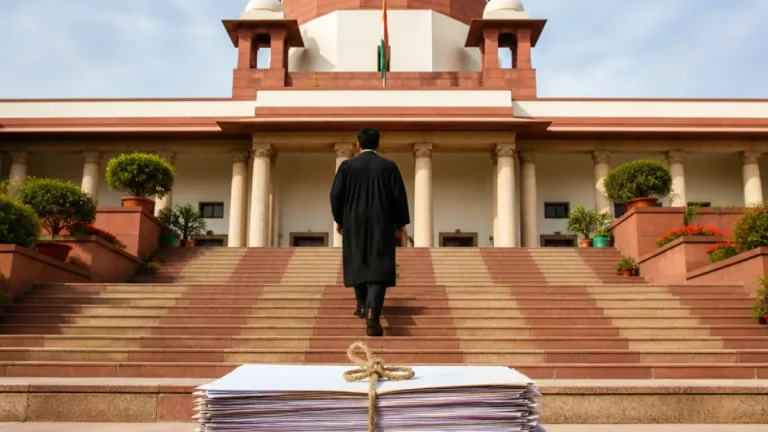
New Delhi: The Supreme Court on Tuesday agreed to take up a public interest litigation (PIL) challenging the Odisha government’s handling of the selection process for the state’s Director General of Police (DGP), with senior counsel alleging the procedure violated directions in the apex court’s landmark Prakash Singh judgment of 2006.
Allegation of procedural breach
Senior Advocate P. Chidambaram urged a bench led by Chief Justice Surya Kant to list the PIL for urgent hearing, submitting that the State of Odisha had withdrawn an earlier list of probable candidates and was preparing a fresh panel that would include a junior officer who was not eligible under the prescribed criteria. The counsel told the court that the incumbent DGP, Y. B. Khurania, is due to demit office this month; reports provided to the bench gave the date as either 16 August or 31 August.
"The State of Odisha is breaching the Prakash Singh judgment," the petitioner's counsel submitted.
The petitioner alleged that the state was seeking to promote an Additional Director General of Police (ADGP) and include that officer in the fresh list sent to the Union Public Service Commission (UPSC), thereby circumventing the established seniority and empanelment norms.
What the Prakash Singh framework requires
The 2006 judgment and subsequent clarifications require that a state DGP be selected by the government from among the three senior-most officers who have been empanelled by the UPSC to the rank. The court has further held that the person selected for the DGP post should normally have a minimum tenure of two years, irrespective of the date of superannuation, and that states must follow the prescribed procedure even where the pool of eligible officers is limited.
The bench observed that earlier orders require the UPSC to approach the court in the event of non-compliance with the directions and indicated that the matter would be listed for hearing. The court has on previous occasions reiterated that the UPSC must prepare a panel of eligible officers and the state government must appoint the DGP from among those empanelled.
Timeline presented to the court
| Event | Date / Detail |
|---|---|
| UPSC meeting to consider panel | Scheduled for 7 August (as represented to the court) |
| Withdrawal of earlier list by state | Reported to have been done before UPSC meeting |
| Incumbent DGP due to demit office | Reported as either 16 August or 31 August in material placed before the bench |
Legal and administrative implications
If the court finds that the state attempted to include an ineligible officer in the panel, it may direct the UPSC and Odisha government to adhere strictly to the empanelment and seniority criteria laid down in the Prakash Singh line of judgments. The bench has in the past required the UPSC to make recommendations within stipulated timeframes where states have submitted revised proposals.
Centre-state and institutional practices for police appointments have frequently drawn judicial scrutiny because of the need to keep the police functionally independent of executive interference while also ensuring accountability. The present challenge places Odisha’s immediate administrative process under judicial review and could determine who leads the state police at a time when continuity in leadership is considered important for law and order management.
Practical context for Odisha residents
For citizens of Odisha, the dispute concerns the integrity of the process by which senior police leadership is chosen. A legally endorsed process aims to preserve operational independence and stability in police leadership. Until the court rules, the state will either have to proceed with a compliant panel or await judicial direction. Those concerned about governance and rule of law can follow the matter as it is listed before the Supreme Court.
What to watch next
- When the Supreme Court lists the PIL for hearing and whether an interim order is passed concerning the impending DGP transition.
- Whether the Odisha government provides a fresh list to the UPSC conforming to the empanelment criteria.
- Any directions from the court to the UPSC about the timing and composition of its recommendations.
The bench on Tuesday comprised Chief Justice Surya Kant and Justices Joymalya Bagchi and V. Mohana. The Supreme Court has previously emphasized that prescribed eligibility criteria for appointment to the top police post cannot be bypassed merely because the number of eligible officers is limited.
Reporting to the court, senior counsel asked that the PIL be listed urgently; the bench agreed to hear the matter. Further orders will determine the next steps in the selection process for Odisha’s top police post.