Balaghat, Madhya Pradesh: At least six children between the ages of one and 14 have died in four Baiga tribal villages in Balaghat district over the past six weeks, while more than 100 other children and adolescents have been treated at government health facilities after falling ill with multiple infections, health officials said on Tuesday.
Pattern of fatalities and illness
All six deaths were recorded between 26 June and 6 August and originate from villages with a majority Baiga population. The worst‑affected habitations include Bondari (three deaths), Kundekasa (one death) and Korka (one death). Illnesses among those aged up to 17 years have also been reported from Machhurda and Adori.
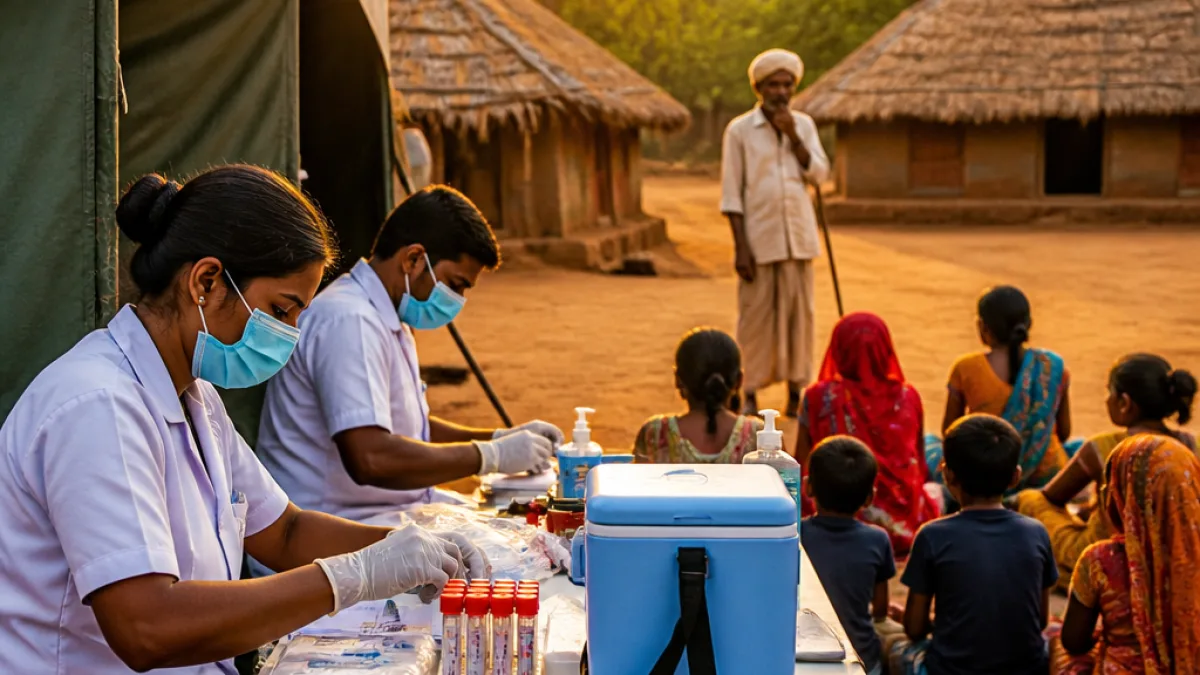
Local health authorities said the children presented with a mix of symptoms described as similar to malarial fever, alongside signs of contagious scabies and indications of nutritional deficiency. Medical teams have been providing treatment at district health facilities and a makeshift health centre has been established at a government school in Kundekasa to handle the surge in cases.
“Those children who died and those who have been admitted at hospitals have shown symptoms of multiple infections, similar to symptoms of Malarial fever, scabies skin infection, besides symptoms of nutritional deficiencies as well. Blood and water samples have subsequently been sent to multiple advanced testing facilities across the country, including an ICMR institution in Kolkata and the National Institute of Virology (NIV‑Pune) and reports are awaited,” said Dr Paresh Uplap, Balaghat district chief medical and health officer (CMHO).
Laboratory testing and specialist involvement
District health officials have dispatched blood and water specimens to several higher‑level laboratories for confirmatory testing. Samples were sent to an Indian Council of Medical Research (ICMR) institution in Kolkata and to the National Institute of Virology, Pune. Teams from the ICMR‑National Institute for Tribal Health Research (NITHR), the Integrated Disease Surveillance Programme (IDSP) in Bhopal and the Jabalpur Medical College reportedly visited the affected villages, collected samples and returned for laboratory analysis. Authorities are awaiting the results to determine the precise aetiology of the outbreak.
On‑ground response and public‑health measures
Health officials have scaled up active case finding and treatment in the five affected villages. A temporary medical centre at a school in Kundekasa is functioning to triage patients and provide basic care. District authorities have also notified higher health departments and engaged surveillance teams to monitor new cases.
- Immediate actions: Temporary health centre in Kundekasa; referral of severe cases to district hospitals.
- Diagnostic steps: Blood and water samples sent to ICMR and NIV; specialised teams have visited for sample collection.
- Surveillance: IDSP and NITHR involvement for outbreak investigation and reporting.
Vulnerability and local context
The Baiga are one of Madhya Pradesh’s particularly vulnerable tribal groups (PVTGs). Chronic under‑nutrition, limited access to safe drinking water and gaps in primary healthcare can increase susceptibility to infectious diseases and complicate recovery. Officials noted the presence of signs consistent with nutritional deficiency among sick children, highlighting the need to address both acute clinical care and underlying determinants.
Data snapshot
| Parameter | Detail |
|---|---|
| Number of deaths | 6 (children aged 1–14) |
| Reported illnesses | More than 100 children and adolescents treated |
| Villages affected | Korka, Kundekasa, Bondari, Machhurda, Adori |
| Samples sent to | ICMR institution (Kolkata), NIV‑Pune; teams from NITHR, IDSP, Jabalpur Medical College involved |
District health officials emphasised that causation cannot be confirmed until laboratory reports are received. The mix of presenting features has prompted authorities to test for multiple pathogens and to examine environmental and nutritional factors, including water quality.
What residents and concerned parties should know
Authorities have urged residents of the affected villages to seek immediate medical attention for children showing fever, skin eruptions, excessive itching or signs of weakness and poor feeding. Public‑health teams are expected to continue active surveillance and to disseminate guidance on hygiene, scabies prevention and nutrition support once investigations yield conclusive findings.
Further updates will depend on laboratory confirmations from the national institutes handling the samples. District and state health departments have been notified and are monitoring the situation closely.
Reporting from Balaghat; Shweta Verma is the WE NEWS correspondent covering health and tribal affairs in Madhya Pradesh.