
Shortfall of staff, stalled recruitment and infrastructure requests trigger statewide action that shuts Siliguri courts for 48 hours
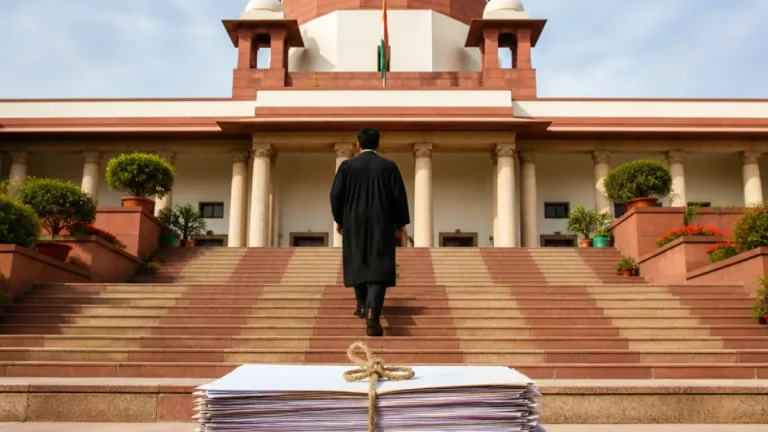
Siliguri witnessed suspension of routine judicial work from August 24 as court employees joined a 48‑hour closure protest called by the West Bengal Court Employees Association (WBCEA) and allied bodies. The demonstrative shutdown, running through August 24–25, forms part of a statewide agitation over long‑pending demands including fresh recruitment, time‑bound promotions, amendments to service rules and construction of a new court complex.
According to the secretary of the Siliguri Court Employees Association, the last recruitment in Darjeeling district was held in 2019. Since then, retirees have not been replaced, resulting in acute manpower shortages that, the association says, impair day‑to‑day court functioning.
- Sanctioned posts in the district courts: approximately 135.
- Staff presently at work: about 50, the association reported.
- Key demands: immediate recruitment, time‑bound promotions, amendment and prompt publication of the revised Service Rules, 2015, dedicated technical posts, regularisation of Fast Track Court staff, and a new court building for Siliguri.
"Only around 50 employees are currently working against approximately 135 sanctioned posts, putting additional pressure on the functioning of the courts," the association said.
Employee representatives told local media that the staff shortage has forced existing employees to shoulder multiple roles, leading to delays in both judicial and administrative tasks. The increasing reliance on technical systems such as e‑Courts, CIS, central filing and server operations has further stretched capacity because there are insufficient dedicated technical posts to manage these systems, they said.
One of the protest’s central points is the demand for separate permanent technical positions so that clerical and court‑facing staff are not diverted to specialised IT duties. The association argued that without such posts, manual and clerical workloads grow, and the efficiency gains intended by digitalisation are compromised.
Another long‑standing grievance relates to infrastructure. Court employees reiterated the call for a new dedicated court building in Siliguri, noting that approvals have not been forthcoming despite repeated representations to district authorities and the Calcutta High Court’s Registrar General. The employees said many requests and letters have been submitted at both district and high‑court levels but yielded no decisive action.
The protesting groups also raised the issue of staff working in Fast Track Courts who have been on extended assignments without regularisation. They demanded formal absorption into permanent posts where posts and performance warrant such steps, highlighting job security for those engaged in expedited adjudication of cases.
Representatives said the agitation has been escalated after persistent attempts to obtain redressal through administrative channels. They indicated that copies of their memoranda have been forwarded to district authorities as well as the Registrar General of the Calcutta High Court, but substantive responses remain awaited.
| Metric | Figure |
|---|---|
| Sanctioned posts (approx.) | 135 |
| Employees currently at work (approx.) | 50 |
| Last recruitment in Darjeeling district | 2019 |
For Siliguri residents, the immediate effect of the protest is tangible: routine hearings, filings and administrative services at local courts were paused for the duration of the shutdown. Lawyers, litigants and litigant‑public dependent on timely court disposal face temporary inconvenience, while case backlogs risk growing if the staffing shortfall persists.
Observers note that the dispute touches on wider issues for the state judiciary: balancing digital modernisation with adequate human resources, ensuring infrastructure keeps pace with caseload growth, and addressing career progression and job security to retain experienced staff.
The WBCEA and allied organisations have framed the stoppage as a pressure tactic to compel faster action from district and high‑court authorities. The association said it would continue to press for an early meeting with relevant officials to seek commitments on recruitment schedules, publication of revised service rules and clear timelines for the new building project.
As the two‑day closure proceeded, courts in Siliguri and other parts of West Bengal adjusted short‑term calendars. Whether the protest yields the administrative responses the employees seek will depend on negotiations between the associations and judicial administration in the coming days.