Sukna (Darjeeling foothills): The Union government on Saturday announced the constitution of a committee to draft an agreement and finalise modalities for a "permanent political solution" to the longstanding Gorkha identity issue in the Darjeeling hills and adjacent areas, following a tripartite meeting chaired by Union Home Minister Amit Shah.
High-level meeting in the hills
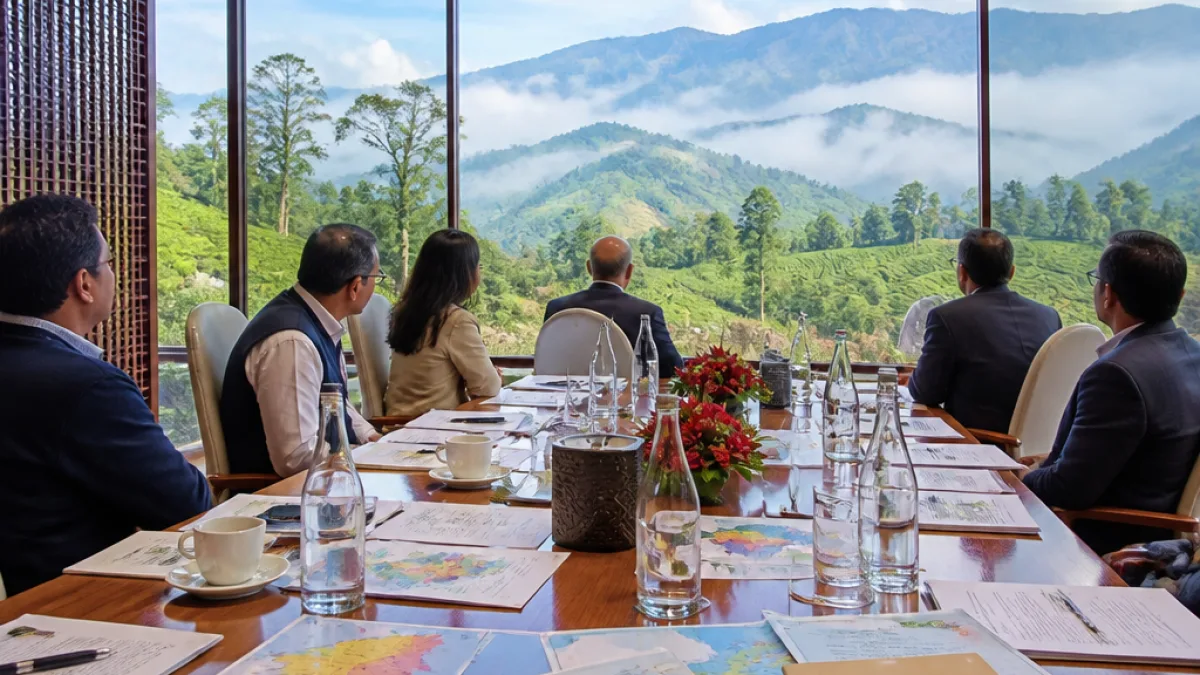
The meeting, held at a hotel in Sukna on the third and final day of Amit Shah's visit to West Bengal, was attended by Chief Minister Suvendu Adhikari, leaders from Gorkha political outfits and other stakeholders from the hill region. Officials said the deliberations focused on demands relating to a distinct identity for the hill population, recognition under the Constitution and what the BJP has described as a "permanent political solution."
According to a statement issued by the Ministry of Home Affairs (MHA), the Centre committed to take forward the process under constitutional parameters and to provide adequate funding to address pending issues affecting the hill areas.
"To finalise modalities, it was decided to form a committee under Shri Pankaj Kumar Singh, former deputy national security advisor and current interlocutor, to finalise the details regarding the final agreement that will be drafted towards a permanent political solution for the people of the hill areas of West Bengal under the Constitution of India."
Committee, mandate and expectations
The committee is to be led by Pankaj Kumar Singh, who the MHA described as a former Deputy National Security Advisor and the government's interlocutor for the matter. Officials said the panel's brief will include drafting the final agreement and determining modalities to implement a political arrangement acceptable to stakeholders in the hills.
While the MHA statement did not detail the exact composition of the committee beyond its chair, it said the interlocutor would finalise the details of the agreement and that the Centre would sympathetically examine other demands of the community, with provision of adequate central funds to resolve outstanding issues.
Stakeholder presence and political context
The meeting was described as tripartite and included leaders from various hill parties. The Gorkha Janmukti Morcha (GJM) was represented; the MHA release named GJM chief Bimal Gurung among participants. State and Union leaders deliberated on questions of identity, autonomy and constitutional recognition that have bedevilled the hills for decades.
Darjeeling and neighbouring hill areas have seen repeated demands for administrative arrangements to recognise the distinct socio-cultural identity of the hill population. Past accords and interim arrangements have not produced a permanent settlement acceptable to all stakeholders, leading to periodic agitation and political uncertainty.
Practical implications for the hills
Officials said the emphasis in the Sukna discussions was on devising a durable, Constitutionally-framed arrangement that would address identity concerns while ensuring administrative feasibility. The Centre's pledge to ensure "adequate funding" signals possible future financial packages or development initiatives as part of the settlement.
For residents of the hills — a mosaic of tea garden communities, Nepali-speaking Gorkha populations and other ethnic groups — the announcement raises expectations of clarity on representation, developmental resources and cultural recognition. The process will be closely watched by political parties operating in the region, state administration in Kolkata and civil society actors in Darjeeling town, Kalimpong and Kurseong.
Next steps and timeline
The MHA statement said the newly constituted committee would finalise modalities and draft the final agreement. No public timeline for submission of the committee's recommendations was provided in the release. Officials at the meeting said the interlocutor's role will be to consult stakeholders and produce a detailed roadmap that can be translated into a constitutional instrument.
- Lead: Pankaj Kumar Singh (former Deputy National Security Advisor; interlocutor)
- Chair of meeting: Union Home Minister Amit Shah
- State representation: West Bengal Chief Minister Suvendu Adhikari
| Item | Details |
|---|---|
| Venue | Sukna (hotel), Darjeeling foothills |
| Objective | Draft agreement and finalise modalities for a permanent political solution under the Constitution |
| Funding | Centre to provide adequate funding for pending issues |
The formation of a committee under a senior interlocutor suggests the Centre is seeking a structured, consultative approach rather than an immediate political proclamation. However, specifics on the scope of the constitutional recognition sought by hill leaders, or the form that a permanent political solution might take, were not specified in the MHA release.
As the interlocutor begins consultations, stakeholders in the hills and political formations in the plains will be watching for both the substance of proposals and the timeline for implementation. The outcome could reshape governance and development priorities for the Darjeeling hills, where identity and administration have long been intertwined with local politics and livelihoods.
Reporting from Siliguri and Sukna by the state correspondent contributed to this dispatch.