Union minister lands in Siliguri amid focus on the ‘Chicken’s Neck’ and frontier projects
SILIGURI — Union Home Minister Amit Shah will undertake a three-day visit to Siliguri that underscores the city’s strategic significance as the gateway to India’s North-East and its proximity to international borders with Nepal and Bhutan. The itinerary, released by organisers, combines security reviews, project foundation ceremonies and public outreach on legal reforms.
Mr Shah is scheduled to arrive at Bagdogra airport from Chennai on the evening of Thursday and will stay overnight at New Chumta near Sukna. On 21 August the home minister will visit the Sashastra Seema Bal (SSB) frontier headquarters in Siliguri between 11:45 am and 1:00 pm to attend foundation-laying ceremonies for multiple projects, followed by a communal meal or bara khana with jawans. He will then address a public meeting on the Bharatiya Nyaya Sanhita at Kawakhali ground between 3:00 pm and 4:30 pm before returning to Sukna for two review meetings. On 22 August Mr Shah will hold two further meetings and depart for New Delhi from Bagdogra at about 2:00 pm by an IAF aircraft.
| Date | Event | Time / Detail |
|---|---|---|
| Arrival day (Thu) | Arrival at Bagdogra; stay at New Chumta (Sukna) | Evening |
| 21 August | Visit SSB HQ — foundation ceremonies; public meeting at Kawakhali | 11:45–13:00; 15:00–16:30 |
| 22 August | Two review meetings; depart for New Delhi | Departure ~14:00 |
The visit carries operational and political strands. Operationally, Siliguri sits adjacent to the so-called Siliguri Corridor — the narrow overland link to the North-East widely known as the “Chicken’s Neck” — making frontier security a priority. The SSB guards both the Nepal and Bhutan frontiers in this region, and the minister’s schedule includes an inspection of infrastructure projects and interaction with border personnel.
Politically, the tour follows closely on Mr Shah’s July visit when he inspected surveillance technology at the Jhumagachh outpost, laid foundations for Border Security Force projects worth about ₹77 crore, and indicated that the Centre’s “smart borders” security grid would be rolled out first in West Bengal. The current visit is therefore being watched for further announcements on funding, project timelines and deployment of surveillance systems in North Bengal.
The trip also intersects with hill politics. Gorkha Janmukti Morcha (GJM) general secretary Roshan Giri signalled the party’s intent to press regional demands during the visit. According to the report, the GJM will seek an appointment with the home minister to press for a permanent political solution (PPS) and call for the scrapping of the Gorkhaland Territorial Administration (GTA).
“We will seek to meet the minister, push for PPS and demand that GTA be scrapped,” said Roshan Giri.
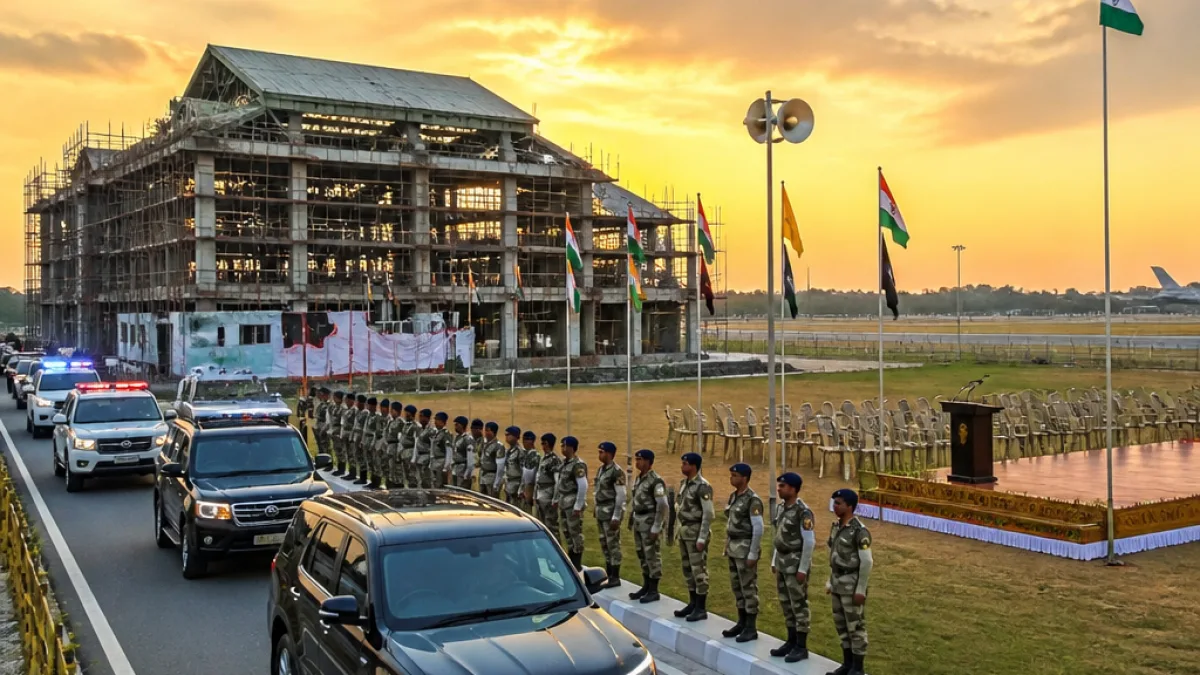
The presence of the home minister is likely to bring heightened security arrangements across Siliguri and its approaches, including at Bagdogra airport and key public venues such as Kawakhali ground. Local administration and security agencies customarily coordinate logistics and crowd management for such high-profile visits.
For residents of Siliguri and the Darjeeling hills, outcomes to watch include concrete timelines for SSB infrastructure projects, announcements on the Centre’s border-security initiatives and any responses to the GJM’s political demands. Previous project commitments in the border security domain, public meetings to explain legal reform and interactions with jawans reflect a blended approach to security, public outreach and regional politics in this strategically sensitive district of North Bengal.
- Where: Siliguri — Bagdogra airport, SSB frontier headquarters, Kawakhali ground, Sukna (New Chumta)
- When: Three-day tour with principal events on 21–22 August
- Main focus: Border-security reviews, SSB project foundations, public meeting on Bharatiya Nyaya Sanhita
The visit will be closely followed by local media, public stakeholders and political formations in North Bengal given Siliguri’s centrality to both border management and regional political negotiations.